Health Catalyst (HCAT) — Customer Relationships, Cashability and Risk for Investors
Health Catalyst sells a healthcare data platform (Ignite), modular analytics applications, and professional services; it monetizes primarily through cloud and time‑based subscriptions plus recurring professional services, with Tech‑Enabled Managed Services (TEMS) and one‑time license work supplementing recurring ARR. For investors, the story is clear: high revenue visibility from subscriptions, meaningful upsell opportunity from service-led expansion, and concentrated execution risk tied to platform migrations and TEMS margin timing. For a deeper read on commercial relationships and client evidence, visit https://nullexposure.com/.
How HCAT structures commercial exposure and what that means for returns
Health Catalyst operates a mixed licensing model built around subscriptions and long‑term commitments. More than 90% of revenue is recurring and most technology and services contracts run on three‑ to five‑year terms, often with built‑in annual escalators and renewal levers that drive predictable growth in technology access fees. The company combines a cloud‑native platform with a suite of higher‑margin analytics applications and delivery teams that drive downstream services revenue and expansion.
Key operating model characteristics:
- Contracting posture: Subscription‑first with time‑based leases and occasional perpetual licenses; contracts commonly include service level commitments and are ratable over multi‑year terms. This creates high visibility but also creates migration and renewal exposure during platform transitions.
- Concentration and materiality: No single client exceeded 10% of revenue in 2024, yet the three largest clients comprised 13.8% of revenue in aggregate, producing a moderate concentration that amplifies importance of renewals.
- Criticality: The Ignite platform is central to the value proposition; clients rely on the platform for clinical, financial, and operational data and the company frames platform adoption as critical to future expansion.
- Maturity and posture: Many client relationships are long‑term and enterprise scale; HCAT pursues pilots and smaller module sales as pathways to multi‑year platform contracts.
These company‑level signals come from recent company filings and the 2024–2025 public disclosures that set out revenue mix, contract terms, and the shift toward TEMS and Ignite migration.
Customers cited on the 2025 Q3 earnings call (what HCAT is selling in public view)
Below are the customer mentions extracted from the 2025 Q3 earnings call. Each entry is summarized in plain English with the original call as the source.
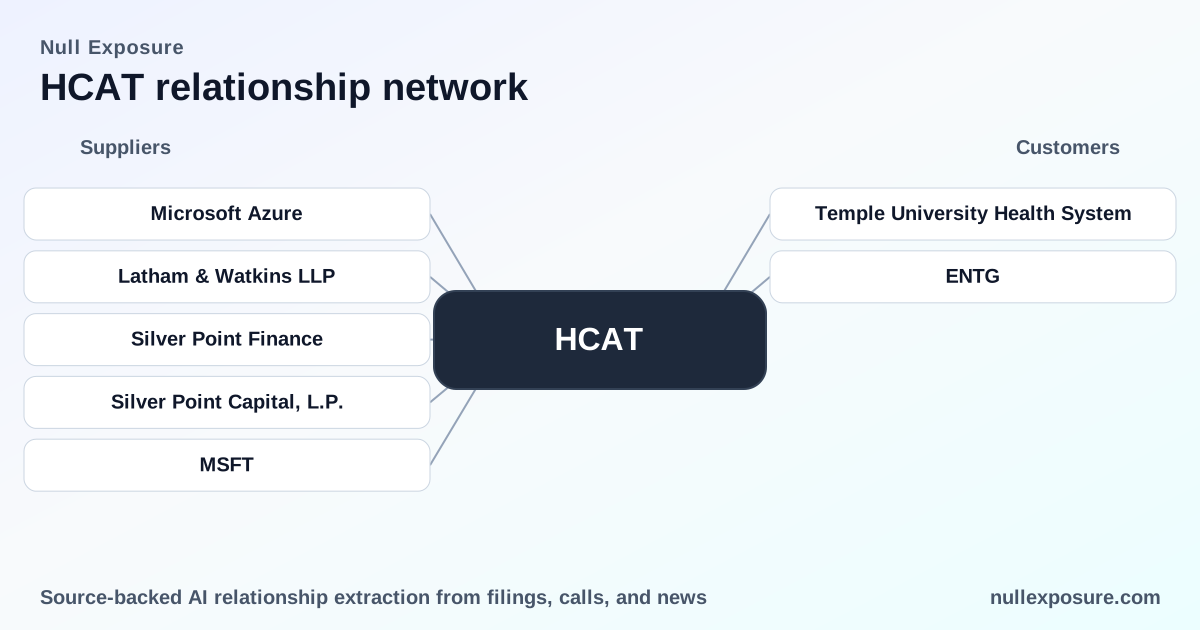
Temple University Health System
Temple University Health System deployed PowerCosting and the POP Analyzer to improve billing capture and medication cost control, achieving $7.5 million in savings through better charge capture, faster collections, and lower medication spend. Source: Earnings call, Health Catalyst 2025 Q3.
Entegris Health (inferred ticker ENTG)
Entegris Health used Health Catalyst’s PowerLabor offering to reduce reliance on contingent labor and improve cost per discharge, resulting in $30 million in labor savings while maintaining care standards. Source: Earnings call, Health Catalyst 2025 Q3 (inferred ENTG).
ENTG (duplicate extraction)
The transcript contains a duplicate extraction for Entegris Health stating the same outcome: a PowerLabor deployment that produced $30 million in labor savings by cutting contingent staff and improving discharge economics without sacrificing quality. Source: Earnings call, Health Catalyst 2025 Q3.
What these customer examples mean for revenue quality and go‑to‑market execution
The two customer callouts reveal two commercial dynamics that drive investor returns:
- Product → service flywheel: PowerCosting and PowerLabor are examples of analytic applications that deliver measurable ROI and create a commercial pathway for subscription expansion and TEMS engagements. Each measurable improvement converts into renewal momentum or additional ARR.
- Outcome‑based messaging: The company is selling measurable savings (dollar outcomes) rather than feature sets; this supports upsell economics and justifies TEMS as a growth engine, while exposing HCAT to implementation and performance expectations.
Risk vectors investors must watch
Health Catalyst’s operating model creates the following priorities for active monitoring:
- Ignite migration execution: The transition of legacy DOS clients to Ignite drives near‑term margin pressure (hosting and migration costs) but is positioned as long‑term margin accretive. Execution missteps could reduce renewals and temporarily compress gross margin.
- TEMS margin timing: TEMS increases professional services scale and client stickiness but depresses near‑term gross margin until operating leverage is achieved.
- Customer concentration: Individual customer risk is capped (no >10% single client), yet the top three clients account for ~14% of revenue, requiring investor attention on their renewal behavior.
- Regulatory and data risk: Heavy U.S. exposure (about 97% of revenue historically) concentrates regulatory, privacy, and reimbursement risks domestically and increases compliance costs as products interact with protected health information.
Tactical takeaways for investors
- Bull case: Recurring revenue base, measurable ROI stories (PowerCosting, PowerLabor), and a product portfolio that enables cross‑sell and TEMS expansion create durable ARR growth and improving direct margins over time.
- Bear case: Execution risk on platform migration and service delivery, short‑term margin pressure from TEMS and Azure hosting, and moderate client concentration create potential earnings volatility.
For a structured feed of customer relationship signals and to monitor changes in HCAT’s client evidence and commercial posture, explore more at https://nullexposure.com/.
Bottom line
Health Catalyst is a subscription-first, services‑enabled enterprise with high revenue visibility and tangible customer outcomes driving upsell motion. Investors should balance the recurring revenue profile and demonstrated client ROI against migration execution, TEMS margin timing, and U.S. regulatory concentration when modeling growth and profitability.