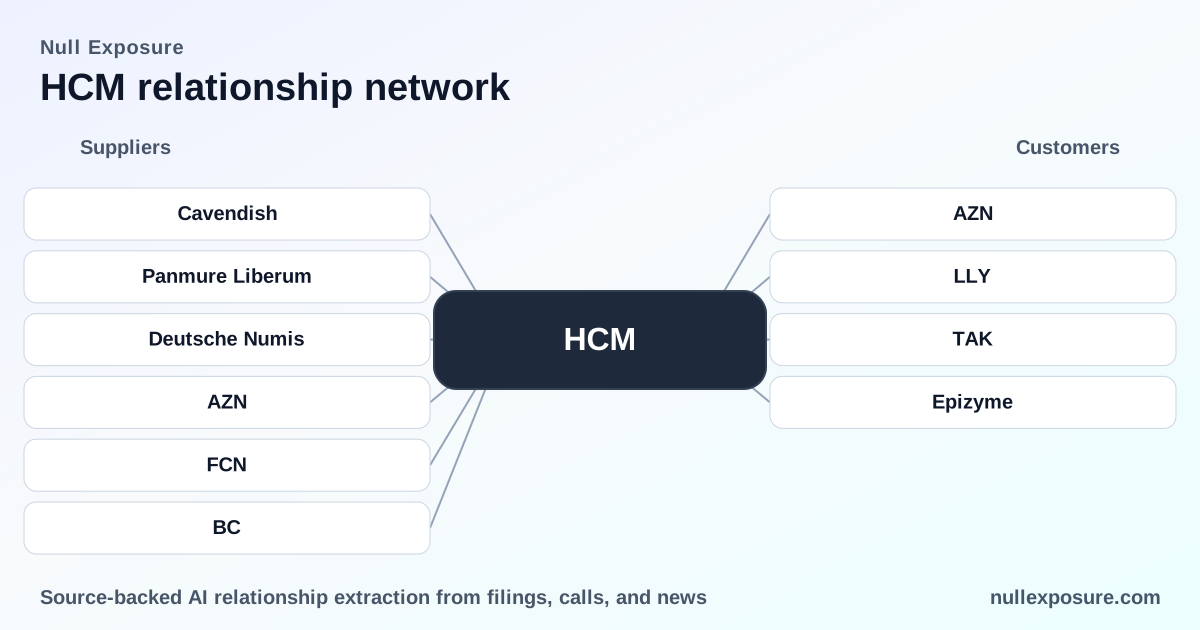
HUTCHMED (HCM) — Partnered commercialization is the operating lever investors should value
HUTCHMED discovers, develops and markets targeted therapies for oncology and immune diseases and monetizes primarily through partner licensing, manufacturing agreements, royalties and co-commercialization arrangements with large global pharmaceutical companies. The company converts internal R&D into recurring manufacturing and royalty cash flows by licensing ex‑China rights, co‑developing in China, and invoicing sales to third parties — a hybrid asset-light/asset-capital model that produces high operating leverage when partnered products scale. For a concise view of HUTCHMED’s coverage and signals, visit https://nullexposure.com/.
How the business actually makes money (and what that implies for contracts)
HUTCHMED’s public disclosures and press activity make a consistent story clear: the company keeps drug discovery and early development in‑house, then transfers late‑stage development, global regulatory execution and large‑market commercialization to major pharma partners while retaining manufacturing, royalty and milestone streams in certain territories. That operating posture produces a few important company‑level signals for investors:
- Contracting posture — partnership and licensing focused. Revenue drivers are license fees, milestones, royalties and manufacturing sales rather than broad direct‑to‑consumer commercial rollouts.
- Concentration risk — revenue tied to a handful of large counterparties. A small number of global pharma partners account for material manufacturing and royalty flows.
- Criticality — partner performance directly affects near‑term cash realization. Regulatory approvals, commercial execution, and milestone triggers hinge on partner actions and timing.
- Maturity mix — marketed products plus pipeline optionality. HUTCHMED has both commercialized assets generating manufacturing/royalty cash and development‑stage programs that drive long‑term valuation upside.
These are company‑level operating signals derived from HUTCHMED’s investor communications; they are not tied to any specific contract unless HUTCHMED explicitly names a counterparty.
Portfolio relationships: the practical map investors need to track
AstraZeneca (AZN)
AstraZeneca and HUTCHMED jointly developed savolitinib (commercial name ORPATHYS®), with AstraZeneca responsible for commercialization and HUTCHMED receiving manufacturing revenue and royalties for ORPATHYS®; HUTCHMED also cites joint development activity and regulatory milestones tied to savolitinib. According to HUTCHMED’s NDA acceptance and priority review announcement (press release, December 30, 2025) and the company’s FY2025/FY2026 business updates (GlobeNewswire, March 5, 2026), ORPATHYS® and savolitinib are concrete examples of a co‑development/co‑commercialization arrangement that produces both royalty streams and invoiced third‑party sales for HUTCHMED.
Eli Lilly (LLY)
Fruquintinib (ELUNATE®) is co‑developed and co‑commercialized in China by HUTCHMED and Eli Lilly, with HUTCHMED reporting manufacturing revenue, promotion/marketing services revenue and royalties tied to ELUNATE; that structure creates multiple revenue lines from a single product. Trading coverage and HUTCHMED’s FY updates (Reuters/TradingView summary, December 2025; GlobeNewswire, March 5, 2026) show the partnership blends commercial responsibilities within China while leaving broader ex‑China rights to other partners, producing predictable domestic cash flow while preserving global upside.
Takeda (TAK)
Takeda holds rights to fruquintinib outside mainland China, Hong Kong and Macau (marketing as FRUZAQLA®), and HUTCHMED records manufacturing revenue, royalties and potential commercial milestones from that arrangement. HUTCHMED’s FY2025/FY2026 disclosures and media summaries (Reuters/TradingView, December 2025; GlobeNewswire, March 5, 2026) underline that Takeda is a strategic licensee for global development and commercialization, which creates non‑linear upside via milestone accruals as Takeda executes global registrational and market activities.
Epizyme
HUTCHMED entered a strategic collaboration with Epizyme to research, develop, manufacture and commercialize tazemetostat in Chinese Mainland, Hong Kong, Macau and Taiwan, positioning HUTCHMED as the local partner responsible for development and commercialization in those territories. Reuters/TradingView coverage of HUTCHMED’s regulatory and business updates (December 2025) reports the deal as a territory‑specific strategic collaboration focused on bringing an established oncology agent to Chinese markets, which complements HUTCHMED’s China commercial footprint.
Why these relationships matter for valuation and risk
The partner roster — AstraZeneca, Eli Lilly, Takeda and Epizyme — provides both downside protection and concentration exposure. On the plus side, licensing to global majors de‑risks development spend and accelerates cash realization through manufacturing and royalty income. On the negative side, a small set of counterparties concentrates operational and revenue risk: missed milestones, slower commercial uptake by a partner, or strategic reprioritization at a large licensee would have an outsized impact on HUTCHMED’s near‑term cash flow.
- Revenue quality is diversified across instrument types (manufacturing, royalties, milestone, promotion services) rather than a single sales channel — that improves predictability but ties realization timing to partner milestones.
- Regulatory and commercial execution by partners is the gating factor for meaningful revenue inflection points; investors should monitor partner filings and launch cadence as closely as they track HUTCHMED’s own pipeline readouts.
If you want an assembled view of partner exposure and how it maps to HUTCHMED’s cash flow drivers, start with the company press releases and FY business update summaries as primary inputs; Null Exposure provides curated synthesis for institutional readers at https://nullexposure.com/.
Practical monitoring checklist for investors
Watch these indicators to gauge the partner portfolio’s health:
- Regulatory filings and approval timelines for ORPATHYS® and savolitinib (AstraZeneca).
- Commercial uptake metrics and reimbursement progress for ELUNATE® in China (Eli Lilly + HUTCHMED).
- Milestone payments or manufacturing order schedules from Takeda tied to FRUZAQLA®.
- Local launch planning and regulatory submissions for tazemetostat with Epizyme in Greater China.
Bottom line
HUTCHMED’s model converts internal discovery into cash by partnering with large global pharmaceutical firms: the company earns manufacturing revenue, royalties, promotion/marketing fees and milestone payments tied to a compact group of high‑cap partners. That structure produces attractive leverage when partnered products scale, but it also concentrates commercial and execution risk with those partners — a duality investors must price explicitly into any valuation. For deeper relationship mapping and scenario analysis, visit https://nullexposure.com/ for expanded briefings and data synthesis.