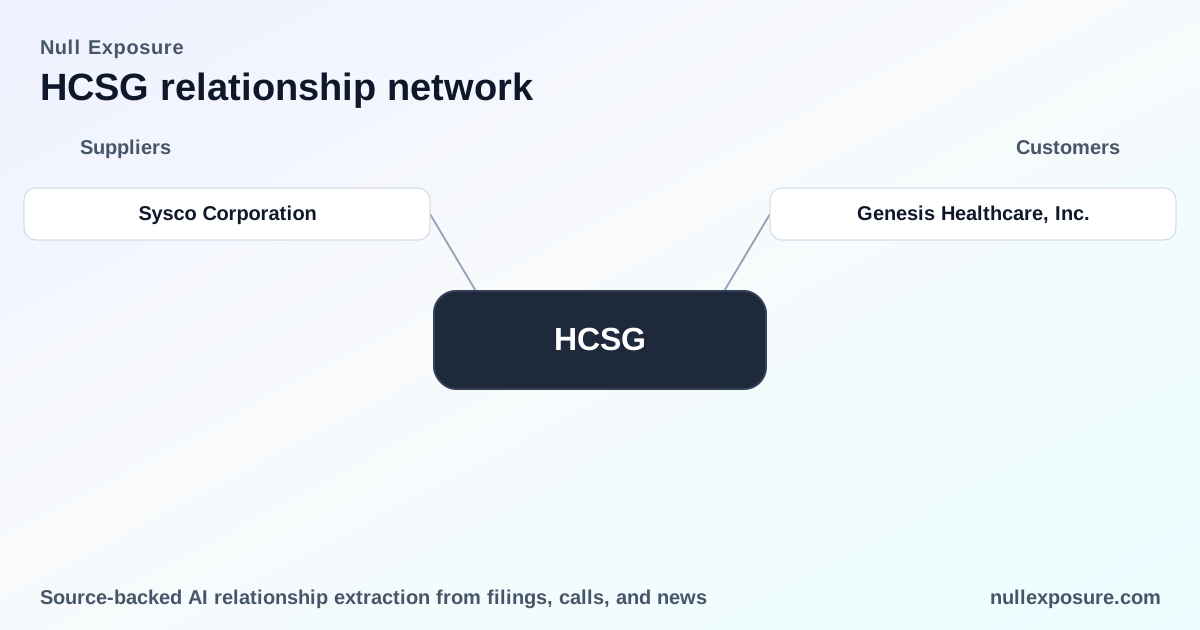
Healthcare Services Group (HCSG): Customer Relationship Intelligence — Genesis Healthcare
HCSG operates and monetizes as a facilities services outsourcer: the company runs housekeeping, laundry/linen and dietary departments for long‑term care and hospital customers, billing recurring service fees (generally monthly) and recovering supply costs when contracted. Revenue is generated through two reportable segments (Housekeeping and Dietary), delivered under renewable service agreements that are typically cancellable on 30–90 days’ notice after a short initial term, and the economics are driven by contract volume, pass‑through pricing and accounts receivable collectability. For primary research on counterparty concentration and contract dynamics visit https://nullexposure.com/.
Why customer relationships are the operating lever for HCSG
HCSG’s model is a people‑and‑operations business: it hires and supervises frontline staff inside customer facilities, sources supplies for dietary services, and bills for both labor and consumables. That structure creates two core commercial characteristics: (1) high recurring revenue exposure to a concentrated set of healthcare operators, and (2) short contractual notice periods, which limit long‑term revenue visibility but preserve commercial flexibility. The company recognizes revenue as services are performed and frequently passes through cost increases to customers, although the right and timing to pass through costs is not absolute—this places margin pressure when wage or supply inflation outpaces contracting cadence.
Constraints that shape customer economics (company‑level signals)
- Contracting posture: short‑term and renewable. HCSG’s customer agreements typically allow cancellation on 30–90 days’ notice after an initial 60–120 day period, and there were no remaining performance obligations as of December 31, 2024 with original durations over one year. This means revenue can be lost quickly but also renegotiated with relative speed.
- Subscription and usage elements. The company bundles monthly management/operational fees (subscription‑like) and occasionally faces variable transaction pricing tied to resident/patient counts and product consumption, introducing volume sensitivity into revenue.
- Credit and payment risk concentrated in the industry. Payment terms range up to 120 days and HCSG performs credit evaluations; the allowance for doubtful accounts has been material—bad debt provisions were $46.8M in 2024—so collections are a significant cash‑flow driver.
- Geographic concentration: United States only. All revenues and operations are domestic, exposing HCSG to U.S. Medicaid/Medicare funding cycles and state budget pressures that influence customer cash flows.
- Segment concentration and operational criticality. Housekeeping and Dietary services together drive operating cash flow; in 2024 Dietary represented ~55% of revenue and Housekeeping ~45%, so operational performance in either segment materially affects consolidated results.
- Maturity of relationships. HCSG reports historically favorable retention rates, indicating a mature base of repeat customers but one that is still contractually cancellable on short notice, tightening the balance between stability and exposure.
Customer relationship coverage — every documented item
Genesis Healthcare — FY2025 10‑K disclosure
HCSG disclosed that Genesis Healthcare filed for Chapter 11 on July 9, 2025 and was a material customer, contributing 7.3% of consolidated revenues in 2025, 8.7% in 2024 and 10.9% in 2023; the 10‑K warns that any extended discontinuance or significant reduction of revenue from Genesis would have a material impact on operations. According to HCSG’s FY2025 Form 10‑K filing, the company included Genesis revenue in both operating segments and recorded substantial receivables tied to that customer. (HCSG Form 10‑K, FY2025)
Genesis — Q1 2026 earnings call (Investing.com transcript)
Management stated on the Q1 2026 earnings call that HCSG is continuing to provide services to Genesis facilities without operational or payment disruption, signaling ongoing service delivery despite Genesis’s Chapter 11 status. The comment indicates active cash collection and operations at the time of the call. (Q1 2026 earnings call transcript, Investing.com)
Genesis — Q1 2026 earnings call (InsiderMonkey transcript)
A separate transcript posted to InsiderMonkey captured the same line: HCSG is continuing to provide services to Genesis facilities without operational or payment disruption, reinforcing the company’s posture of maintaining service continuity during Genesis’s restructuring. (Q1 2026 earnings call transcript, InsiderMonkey)
What these relationships mean for investors — risk and opportunity map
- Concentration risk is real and quantifiable. Genesis constituted mid‑single to low‑double digit percentages of revenue over recent years; that customer’s bankruptcy therefore represents a direct, material credit and operational risk to HCSG’s cash flow and reported revenue. The FY2025 10‑K explicitly identifies the potential for material impact if Genesis revenue were lost.
- Receivables and allowance volatility are leading indicators. HCSG has significant accounts and notes receivable tied to large operator customers and has increased bad‑debt provisioning in response to customer insolvencies (for example, LaVie in 2024). Watch receivables aging, allowance trends and any deferred revenue recognition tied to bankrupt customers.
- Short‑notice contracting limits forward visibility but supports pricing resets. The cancellable nature of contracts compresses revenue visibility but enables HCSG to implement price increases or contract restructurings faster than long‑term fixed contracts would allow. Monitor management’s ability to pass through wage and supply cost increases and the timing of realized pricing actions.
- Operational continuity through bankruptcy is both a strength and a potential liability. Continuing to provide services to a bankrupt customer preserves revenue and the possibility of collection, but it also concentrates working capital and increases exposure to legal outcomes in restructuring proceedings. Investors should track restructuring milestones and any court filings that affect executory contracts.
- Spend scale with key customers is material. Spend bands for major counterparties fall in the $10M–$100M range based on disclosed receivables for Genesis; this is large enough to move consolidated revenue and working capital.
For a consolidated view of HCSG’s counterparty exposures, receivable dynamics and contract structure, see the research hub at https://nullexposure.com/.
Practical watchlist (next 6–12 months)
- Court docket updates on Genesis’s Chapter 11 and any proposed assumption or rejection of HCSG contracts.
- Changes in HCSG’s allowance for doubtful accounts and net days sales outstanding.
- Management commentary on pass‑through pricing success and mix shift between Dietary and Housekeeping.
- Cash collections from previously bankrupt customers (e.g., LaVie) as a proxy for collections discipline.
Bottom line
HCSG is a recurring‑revenue operator whose profitability and cash flow hinge on a concentrated customer base, short‑term cancellable contracts and disciplined collections. Genesis’s bankruptcy is the headline risk because of its revenue contribution and sizable receivables; management’s decision to continue service demonstrates operational resolve but elevates credit exposure until restructuring concludes. Investors should prioritize receivables trends, bankruptcy court outcomes and successful contract price pass‑throughs when evaluating HCSG’s near‑term earnings and balance‑sheet resilience.