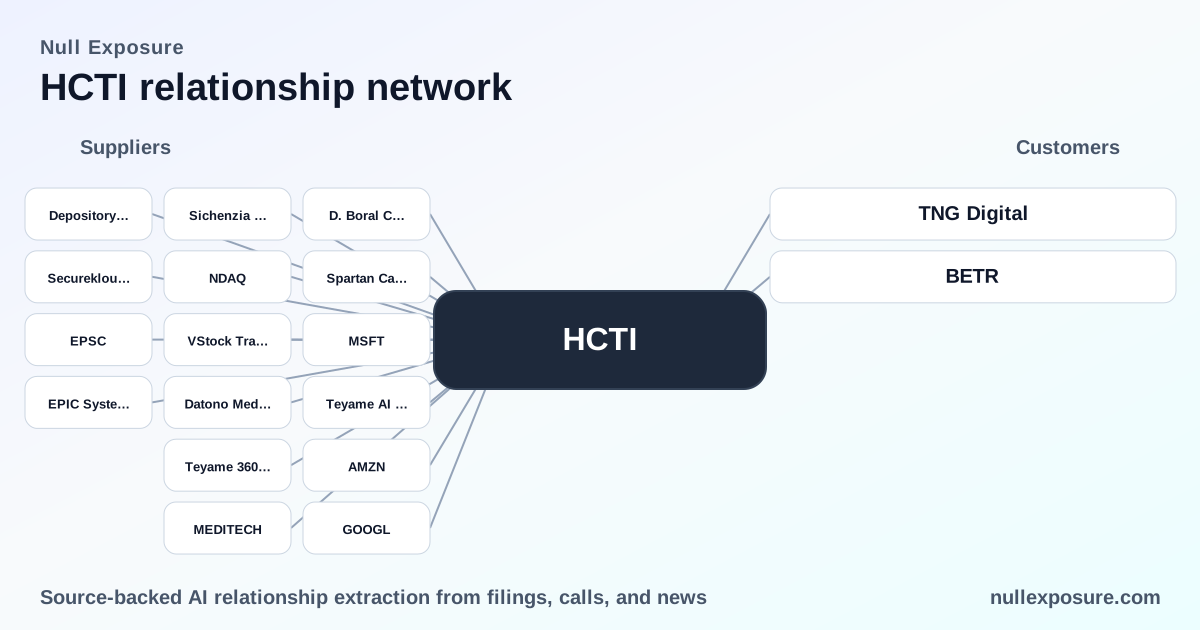
Healthcare Triangle (HCTI): Customer Relationships that Drive the Rebound
Healthcare Triangle is a healthcare IT services and software company that monetizes through a mix of professional services (time-and-materials and fixed-price engagements), managed services, and an emerging suite of SaaS platform offerings (CloudEz, DataEz, Readabl.AI). The firm's near-term revenue profile is still service-heavy, but management has explicitly shifted strategy toward recurring subscription and platform revenue, while continuing to serve large healthcare and life‑sciences enterprises with critical EHR, cloud and data modernization work. For deeper diligence on relationship-level signals and implications, see Null Exposure’s coverage: https://nullexposure.com/.
How Healthcare Triangle sells and why that matters to investors
Healthcare Triangle operates as both a seller of software/platforms and a service provider. The company’s contracts reflect three key operating features that shape revenue durability and risk:
- Contracting posture: Management is ramping subscription-based SaaS offerings and marketplaces presence, but a meaningful portion of revenue remains time-and-materials and fixed‑price professional services. The company discloses a deliberate shift to subscription models to generate recurring revenue while still billing many clients on usage or labor hours.
- Customer concentration and criticality: Revenue retains high concentration—the top five customers accounted for 58% of revenue in 2024 and accounts receivable concentration for those same customers was elevated—making client retention a value-defining variable. A historic loss of a major customer at a subsidiary was materially disruptive.
- Maturity and mix: The business is service-dominant today (Software Services + Managed Services = majority), with platform services still small but strategic; management describes the SaaS push as early-stage marketing and commercial rollout.
- Geography and enterprise footprint: Operations span North America with global ambitions (EMEA and APAC referenced in filings) and a growing APAC presence through QuantumNexis Malaysia, which underpins expansion risk—and opportunity—outside the U.S.
- Regulatory and security criticality: The company handles PHI and participates in interoperability programs, so HIPAA/GDPR/CCPA compliance and security posture are operationally critical and can drive both cost and client value.
These company-level constraints and characteristics frame how new customer wins or renewals translate into durable cash flows or cyclical revenue swings.
Customer relationships, one by one
TNG Digital — APAC distribution partner for mental-health SaaS (FY2026)
Healthcare Triangle’s subsidiary QuantumNexis Malaysia entered a partnership with TNG Digital to integrate clinically validated digital mental‑health solutions into TNG eWallet’s user base, targeting 25+ million Malaysian users for in‑app mental wellness and single‑sign on access. This is a distribution and integration relationship that positions HTI for large consumer reach in APAC. Source: Investing.com coverage of the Zoranex launch (May 3, 2026) and March 10, 2026 tech press reporting on the QuantumNexis–TNG Digital agreement.
TNG eWallet — in‑app deployment channel for Ziloy/Zoranex mental‑health tools (FY2026)
QuantumNexis will integrate the Ziloy (marketed as part of HTI’s mental-health platform) directly into TNG eWallet, enabling seamless payments and app-less access to mental wellness tools for eWallet users—an integration that prioritizes user experience and monetization via embedded payments. Source: SahmCapital and related March–May 2026 news items reporting on the platform integration and in‑app payment flow.
Teyame.AI — Agentic AI deployment into customer engagement platform (FY2026)
Healthcare Triangle announced the deployment of its Agentic AI capabilities into Teyame.AI’s customer engagement platform, a strategic win that showcases HTI’s AI integration services and enhances its exposure to advanced conversational/engagement AI use cases. The market reacted positively to the announcement in after‑hours trading. Source: SahmCapital company news noting the Agentic AI deployment and stock reaction (March 2026).
Better / BETR — preferred implementation and EHR services partner across EMEA and Asia (FY2026)
Healthcare Triangle was named a preferred service provider for Better’s EHR platform, positioning HTI to support implementation, integration and optimization across EMEA and Asia—an enterprise‑grade relationship that aligns with HTI’s large‑enterprise positioning and platform services strategy. Source: DigitalHealthNews reporting on the partnership (March 10, 2026).
Why these relationships matter for valuation and downside protection
- Distribution leverage in APAC: The TNG partnership is high‑leverage: it provides an immediate consumer channel rather than a single hospital sale, shifting some product risk from direct enterprise procurement cycles to platform distribution economics. That materially supports the company’s stated goal of scaling subscription revenue outside the U.S.
- Proof of platform integration: Deployments with Teyame.AI and Better validate HTI’s integration and managed‑services capability—critical in selling larger, multi‑year managed services agreements to enterprise customers.
- Concentration risk remains dominant: Despite new partnerships, the company’s historic revenue concentration (top five customers = 58% of revenue in 2024) and accounts receivable concentration (top five = ~72%) keep the business exposed to idiosyncratic customer churn or contract non‑renewals. This is a structural risk to EBITDA conversion and cash flow stability.
- Regulatory exposure: Expansion into consumer health via eWallet channels increases regulatory surface area (privacy, local healthcare regulation), which elevates compliance spend and execution risk across jurisdictions.
Investor checklist: downside and upside triggers
- Upside triggers to monitor: renewal and expansion rates among top customers; monetization metrics from the TNG eWallet integration (conversion, ARPU); new multi‑region platform engagements with Better/BETR.
- Downside triggers: further loss or non‑renewal of a large customer; higher-than-expected churn in early SaaS rollouts; security or regulatory incidents involving PHI.
- Financial signals: look for an improving mix toward recurring subscription revenue and expanding gross margins in Platform Services versus continued service revenue declines (Software Services fell materially year‑over‑year in recent filings).
For investors seeking a relationship‑level view that feeds into revenue durability and scenario modeling, Null Exposure maintains an ongoing tracker and analytical briefs—see our site to request the detailed relationship matrix: https://nullexposure.com/.
Final read
Healthcare Triangle is in transition: from a services-first, concentrated customer base toward a more diversified, subscription-driven model amplified by strategic APAC distribution and enterprise EHR partnerships. That transition creates asymmetric outcomes: successful platform monetization materially increases valuation multiple, while customer concentration and regulatory risk keep downside elevated. Investors should weight partnership execution and subscription adoption metrics more heavily than headline customer wins alone when assessing HCTI’s recovery trajectory.