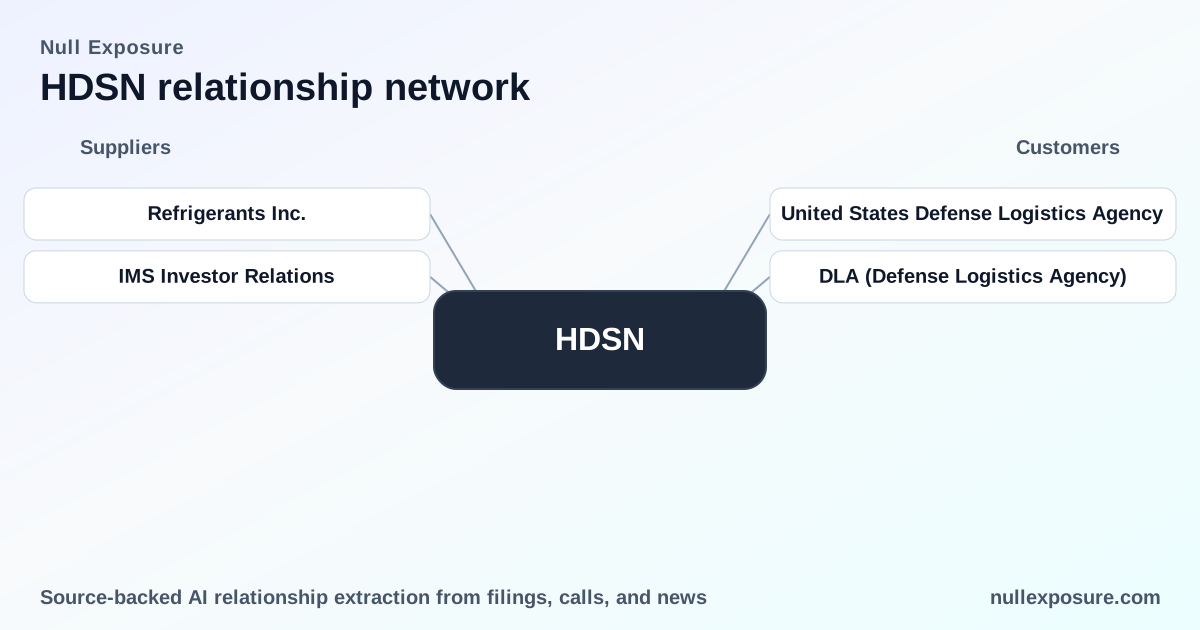
Hudson Technologies (HDSN): The DLA Relationship Is Revenue and Risk in One Contract
Hudson Technologies monetizes through the sale of refrigerants (virgin and reclaimed) and a suite of on-site and off-site refrigerant management services; the company captures margin both as a product reseller and as a services provider to industrial, commercial and governmental customers. A single, multi‑year relationship with the U.S. Defense Logistics Agency (DLA) is both a material revenue driver and a focal point of counterparty risk, while the rest of the business operates as a mix of short‑term purchase orders, framework agreements and spot sales. For more detailed relationship intelligence, see NullExposure’s coverage at https://nullexposure.com/.
Why one customer defines Hudson’s commercial profile
Hudson’s business model blends recurring product turnover (refrigerant inventory sold at point of shipment) and recurring services revenue (reclamation, RefrigerantSide® onsite work, testing and banking). That structure produces volatile top‑line swings tied to refrigerant pricing and weather, but it also produces durable revenue when the company secures institutional contracts. The DLA relationship exemplifies that dynamic: it has delivered double‑digit percentages of revenue in recent years and concentrated receivables, which improves near‑term visibility but elevates renewal and procurement risk.
- Concentration: The DLA accounted for 15% of revenues in 2024 (18% in 2023), putting Hudson in a single‑customer materiality bucket. (Hudson 2024 Form 10‑K)
- Contracting posture: Hudson runs a hybrid model — most commercial sales are single purchase orders under a spot or short‑term cadence, but certain customers operate under long‑term prime contracts or framework agreements that Hudson relies on for scale. (Company disclosures)
- Operational role: Hudson is primarily a seller and service provider — selling reclaimed and virgin refrigerants while delivering on‑site reclamation and maintenance services that command higher margins and create switching costs. (Company disclosures)
For broader company intelligence and relationship mapping, visit https://nullexposure.com/.
Every customer mention in the record — one by one
10‑K (hdsn‑2024‑12‑31): United States Defense Logistics Agency
Hudson reported that the DLA accounted for greater than 10% of revenues and more than 10% of outstanding accounts receivable for the year ended December 31, 2024, with the DLA representing 15% of revenues in 2024 (18% in 2023 and 8% in 2022). This is the formal, audited disclosure of the DLA’s materiality to Hudson’s P&L and balance sheet. (Hudson Technologies 2024 Form 10‑K, FY2024)
Sahm Capital press release (Mar 18, 2026): Management appointments and the DLA
A Sahm Capital news item describing Hudson’s management hires noted that a named executive previously led Hudson’s military and gases efforts and was instrumental in winning and servicing the DLA contract, with consistent satisfaction ratings reported by the agency. This confirms management’s operational involvement and the strategic importance of the DLA account to Hudson’s go‑to‑market execution. (Sahm Capital release, March 18, 2026)
Globenewswire press release (Jan 30, 2026): Update on DLA contract status
Hudson issued a press release confirming the company provided an update on a DLA contract awarded in October 2025 that was scheduled to commence in July 2026, describing Hudson as one of the nation’s largest refrigerant reclaimers and positioning the contract as a significant channel. This public communication signals management’s view of the award as strategically important. (GlobeNewswire, January 30, 2026)
TradingView summary (news feed): Bid protest affecting DLA award
A TradingView news note summarized Hudson’s disclosure that a bid protest was filed with respect to the 2025 DLA award (announcement dated January 30, 2026). The protest places near‑term contract realization under review and introduces execution risk for the FY2026 award. (TradingView news summary, covering Jan 30, 2026 disclosure)
TradingView (coverage of 2025 results / 10‑K commentary): DLA channel revenue and contract timeline
TradingView’s coverage of Hudson’s 2025 filings summarized that the DLA channel produced approximately $38.2 million in sales in 2025, that the 2025 DLA award was under protest, and that the existing DLA contract extends through July 2026. This restates the size of DLA‑sourced sales in 2025 and the timing implications for contract continuity into mid‑2026. (TradingView coverage of Hudson 2025 results / 10‑K commentary, 2026)
Constraints and how they shape the investment case
Hudson’s public disclosures and filings create a clear set of operating signals that matter for investors and operators evaluating customer risk and revenue durability:
- Contract mix (company level): Hudson primarily sells via single purchase orders (short‑term and spot), but it also holds framework and long‑term prime contracts; the DLA contract is explicitly a multi‑year prime award with a renewal option exercised through July 2026. This hybrid approach means revenue predictability is concentrated in a few framework or prime arrangements while the broader book remains transactional. (Company disclosures)
- Counterparty profile: The company serves commercial, industrial and governmental customers; the governmental channel (notably the DLA) is material and operates under procurement rules and renewal cycles that differ from commercial buyers. (Company disclosures)
- Geography and scale: Hudson conducts most business in the U.S. and identifies North America as its core market, though some contracts have international users (foreign militaries) — this limits geographic diversification and ties revenue to U.S. defense procurement and domestic HVACR markets. (Company disclosures)
- Materiality and criticality: Refrigerant sales remain the majority revenue driver and a critical product line; losing a principal customer such as the DLA would have a material adverse effect. Hudson’s filings explicitly identify customer concentration and refrigerant price volatility as material risks. (Company disclosures)
- Operational constraints: Regulatory exposure (EPA, DOT, OSHA), supply availability for virgin refrigerants, seasonality tied to weather, and on‑site service liabilities are structural constraints that affect margins and working capital. Hudson’s receivables moved from $25.2M at year‑end 2023 to $13.6M at year‑end 2024, illustrating working capital volatility tied to timing and large contracts. (Company disclosures)
Bottom line for investors and operators
Hudson’s exposure to the DLA is a strategic asset and a single‑counterparty risk at the same time. The relationship delivers scale and predictable revenue when awarded and in force, but the January 2026 bid protest and the July 2026 contract expiry create a clear catalyst and a monitoring priority: resolution of the protest and the subsequent award/renewal outcome will materially influence FY2026 revenue and cash‑flow visibility. Investors should track procurement timelines, bid protest status, refrigerant price trends, and regulatory developments that affect supply and reclamation economics.
For a focused view of Hudson’s customer relationships and to integrate this with broader counterparty intelligence, NullExposure maintains ongoing coverage at https://nullexposure.com/.