Hawaiian Electric Industries (HE): Customer Relationships, Contracts and Investment Implications
Thesis — Hawaiian Electric Industries monetizes a regulated monopoly and adjacent renewable infrastructure assets through tariffed electric service, rate-recovery mechanisms and long‑dated power purchase agreements. The holding company captures stable cash flows from regulated utilities that sell energy to residential, commercial, industrial and government customers across Hawaii’s island grids, while non‑regulated subsidiaries monetize renewable generation under fixed‑price contracts and asset sales. Investors should value HE as a rate‑regulated utility with high regulatory dependency, island concentration and a growing profile of contracted renewables and infrastructure spend.
For a consolidated view of counterparties and contract signals, see https://nullexposure.com/.
How HE actually collects revenue — the commercial plumbing behind the numbers
Hawaiian Electric and its subsidiaries operate as regulated electric utilities supplying approximately 95% of Hawaii’s population across five separate grids. Revenue is collected through a mix of usage‑based retail tariffs (billed per kWh), fuel‑and‑purchased‑power pass‑through mechanisms, multi‑year rate frameworks and long‑term PPAs. The company uses regulatory mechanisms — e.g., an annual revenue adjustment (ARA) under the PBR framework, energy cost recovery clauses (ECRCs) and purchased power adjustment clauses (PPACs) — to transfer large elements of commodity and project cost risk to customers, preserving rate base recovery and cash flow stability.
- Contracting posture: HE’s commercial book is biased toward long‑term, tariffed relationships and PPAs; licensing (pole access) and subscription‑style community renewable offerings supplement core revenue.
- Billing model: The Utilities recognize revenue as electricity is delivered (usage‑based) and use the right‑to‑invoice practical expedient for unbilled energy.
- Regulatory attachment: Rate regulation is critical — regulatory accounting under ASC 980 underpins the company’s ability to recover costs in rates.
Operating constraints that determine strategy and risk
Several company‑level signals shape performance and counterparty dynamics:
- Regulatory framework dominates commercial outcomes. The PUC’s five‑year multi‑year rate plan (PBR), ARAs and performance mechanisms materially determine allowable returns, timing of recovery and incentive/penalty exposure.
- Concentration by geography and customer type. HE operates exclusively in Hawaii; federal agencies account for roughly 11–12% of utility revenues in recent years, and residential rooftop solar penetration is high (about 24% of customers), which pressures kWh sales.
- Contract mix is weighted toward long‑term commitments and infrastructure spend. Evidence shows multiple long‑term PPAs and multi‑million dollar infrastructure programs; project spend bands range from pilot caps at $10m to EPRM/ERP projects in the tens or hundreds of millions.
- Materiality profile is mixed. Some individual transactions are immaterial to consolidated statements, while rate recovery and regulatory judgments are identified as critical audit matters that can materially affect the company’s financials.
What the contract lifecycle looks like on the island grids
HE runs relationships across the full lifecycle:
- Active, foundational contracts: Regulated tariffed sales and PPAs are in active, long‑running status and form the backbone of revenue recognition.
- Pilots and early commercial rollout: EV charging pilots and community‑based renewable programs operate in pilot mode with capped annual pilot budgets and staged recovery processes.
- Mature systems: Grid modernizations such as advanced metering reached mature deployments (about 95% customer coverage after GMS Phase 1).
- Winding down / terminated: Some incentive programs (e.g., the Maui battery bonus) have closed to new applications, and non‑core asset dispositions (the ASB sale) were completed and treated as discontinued operations.
Specific counterparties cited in coverage — what each relationship means
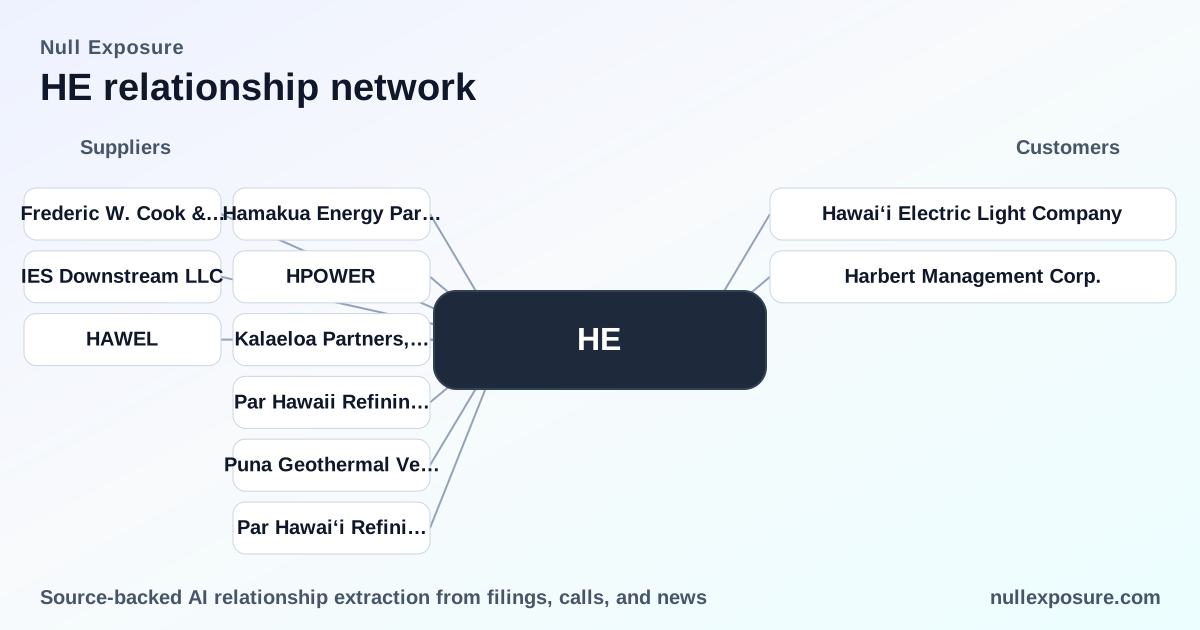
Hawaiʻi Electric Light Company — This is HE’s regulated utility subsidiary on the Island of Hawaii that purchases power under PPAs and distributes electricity locally; the Hāmākua combined‑cycle plant historically sold its full output to Hawaii Electric Light under a PPA. Source: Civil Beat reporting referencing the Hāmākua plant and HE corporate disclosures (Civil Beat, March 2026).
Harbert Management Corp. — Harbert purchased the Hāmākua plant earlier in the year from HEI’s Pacific Current subsidiary; that sale intersected with litigation over fuel quality and turbine damage as reported in the press. Source: Civil Beat coverage of the Hāmākua sale and subsequent dispute (Civil Beat, March 2026).
How each commercial signal translates to portfolio risk and upside
- Revenue stability: Strong because tariffs, PPAs and recovery mechanisms pass significant cost and commodity volatility to customers, including a 98%/2% fossil fuel risk sharing mechanism that caps HE’s direct fuel exposure.
- Regulatory risk: High and central. The PUC controls rates, approves large capital cost recovery and can reopen mechanisms under material events (e.g., wildfire settlements). Regulatory decisions directly affect ROACE and earnings sharing.
- Concentration and operational risk: Material — island geography creates single‑point exposures (weather, fuel logistics, wildfire risk) and a high penetration of distributed generation that suppresses volumetric sales over time.
- Project and capital intensity: Elevated. Infrastructure projects carry multi‑year recovery paths; EPRM/MPIR program approvals and ERP/EAM targets indicate large discretionary capital flows and meaningful counterparty spend bands (from low‑million pilots to $100m+ programs).
Investment implications and recommended monitoring points
- Prioritize monitoring PUC filings, ARA adjustments and earnings‑sharing calculations — regulatory outcomes are the dominant earnings lever.
- Watch the evolution of PPAs: expiration dates (some PPAs extend into 2030), third‑party generation ownership changes and disputes (e.g., the Hāmākua litigation) that can affect short‑term capacity and replacement costs.
- Track distributed energy adoption and CBRE/DER enrollment trends that compress kWh volumes and shift the revenue mix toward fixed charges and non‑commodity programs.
- Monitor large project approvals and recovery timing; capital deployment is an upside if recovered in rates, but a liability if deferred or disallowed.
If you evaluate counterparties or need an aggregated view of customer contracts and regulatory signals for HE, visit https://nullexposure.com/ for relationship intelligence and signal feeds.
Conclusion — Hawaiian Electric’s cash flows are anchored in regulatory mechanics and long‑term contractual receipts, but the company’s investment case depends on successful regulatory execution, wildfire and disaster cost allocation, and management of an evolving generation mix. For investors, HE is a regulated infrastructure play with concentrated geographic exposure and high regulatory leverage — stable on an allowed‑rate basis, but exposed to episodic capital and legal shocks.