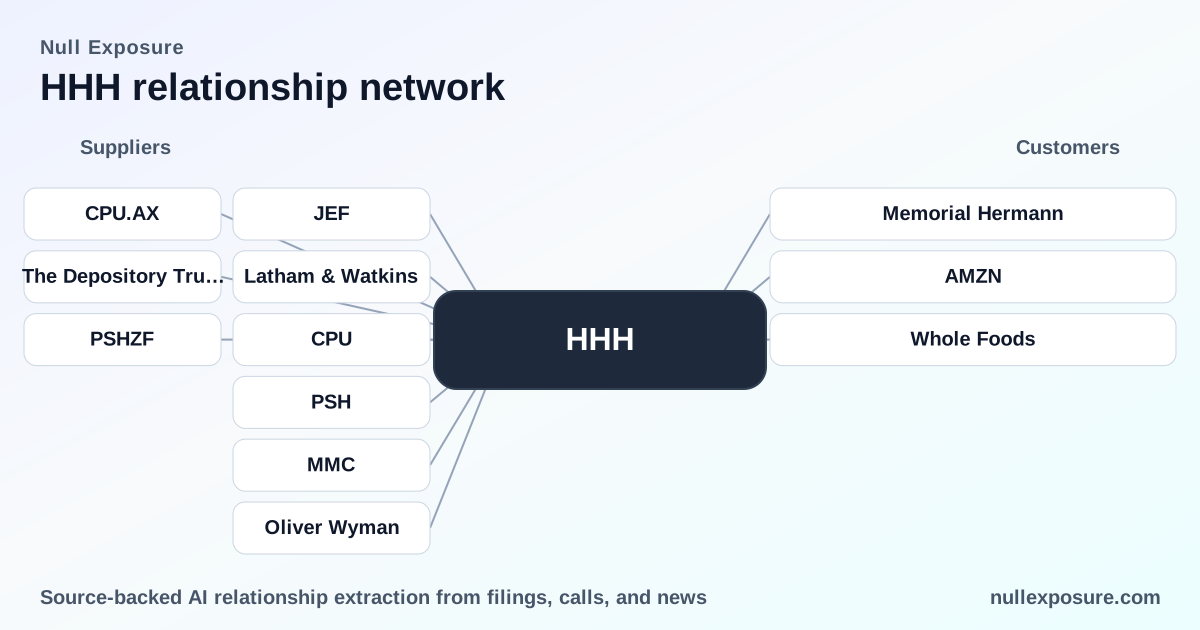
Howard Hughes (HHH): Customer Relationship Map and Investment Implications
Howard Hughes Holdings operates as a pure‑play U.S. real estate developer and operator that monetizes through three primary engines: Master Planned Communities (MPC) land sales and builder price participation, condominium development and closings, and recurring rental income from retail, office and multifamily Operating Assets. The company converts large development pipelines into cash via staged land sales and condominium closings while recycling capital through selective asset sales and financing transactions. For a concise vendor and customer intelligence view, visit https://nullexposure.com/ for the full platform offering.
What investors need to know in one paragraph
Howard Hughes’s customer profile blends long‑dated, high‑value contracts (MPC land deals and condominium presales) with recurring, lease‑based cash flow from operating properties. The business is structurally sensitive to regional housing cycles, homebuilder demand, and anchor‑tenant leasing dynamics, and it funds development with a mix of buyer deposits, construction financing and asset proceeds. Pre‑sales and receivable monetizations are material drivers of near‑term cash flow.
Customer relationships — who’s on the roster and why they matter
Jean‑Georges restaurants
Howard Hughes operates Seaport‑adjacent landlord and managed retail/restaurant businesses that include the Jean‑Georges restaurants in Pier 17 and related assets; the relationship reflects HHH’s role as landlord and operator for high‑profile restaurant tenants. According to a MarketBeat instant alert covering the company’s public disclosures in FY2026 (March 2026), Seaport operations capture restaurant rent and managed‑business revenues. Source: MarketBeat instant alert on HHH (2026‑03‑27) — https://www.marketbeat.com/instant-alerts/howard-hughes-holdings-inc-nysehhh-given-consensus-rating-of-hold-by-analysts-2026-03-27/
Memorial Hermann
HHH broke ground on a 51,000‑square‑foot, build‑to‑suit Memorial Hermann medical office in Bridgeland, representing the initial phase of roughly one million square feet of planned medical facilities within the community — a direct developer‑to‑institution relationship that secures long‑term occupancy and institutional credit. This initiative is documented in Howard Hughes’s FY2025 results release (reported Feb 19, 2026). Source: GlobeNewswire press release, Howard Hughes FY2025 results (2026‑02‑19) — https://www.globenewswire.com/news-release/2026/02/19/3241515/0/en/Howard-Hughes-Holdings-Inc-Reports-Fourth-Quarter-and-Full-Year-2025-Results.html
Whole Foods (Amazon‑anchored retail)
Whole Foods anchors a newly delivered retail center in Summerlin that materially contributed to Retail NOI growth and lease‑up dynamics; the tenancy demonstrates HHH’s strategy of securing strong food‑anchored retailers to drive center performance. This detail is noted in the company’s FY2025 results (Feb 19, 2026). Source: GlobeNewswire press release, Howard Hughes FY2025 results (2026‑02‑19) — https://www.globenewswire.com/news-release/2026/02/19/3241515/0/en/Howard-Hughes-Holdings-Inc-Reports-Fourth-Quarter-and-Full-Year-2025-Results.html
Amazon (AMZN)
Amazon is referenced in the context of anchored retail tenancy and rent performance tied to top retailers; the company lists AMZN where Whole Foods/related AMZN‑anchored assets contributed to same‑store retail NOI improvement in FY2025. The FY2025 earnings release includes this operational note. Source: GlobeNewswire press release, Howard Hughes FY2025 results (2026‑02‑19) — https://www.globenewswire.com/news-release/2026/02/19/3241515/0/en/howard-hughes-holdings-inc-reports-fourth-quarter-and-full-year-2025-results.html
Houston Texans
Howard Hughes Communities is partnering with the Houston Texans and Harris County on an 83‑acre Toro District HQ and practice facility at Bridgeland, embedding an NFL franchise as a strategic entertainment and economic anchor for the master plan and creating significant demand benefits for surrounding retail and residential components. The Real Deal reported the initiative in February 2026. Source: TheRealDeal Texas coverage (2026‑02‑13) — https://therealdeal.com/texas/2026/02/13/houston-texans-howard-hughes-team-up-on-83-acre-hq/
Pershing Square
Pershing Square enters the customer/partner landscape as a large financial investor in a controversial capital transaction with HHH — a planned equity purchase that faced legal challenge and directly affects HHH’s capital structure and share issuance. Bisnow reported a lawsuit challenging the Pershing Square arrangement in a piece covering the February 2026 filings and ensuing dispute. Source: Bisnow coverage of litigation over Pershing Square investment (reported May 2026) — https://www.bisnow.com/national/news/capital-markets/lawsuit-says-bill-ackman-bullied-howard-hughes-board-into-taking-900m-investment-133224
Constraints that define the operating model
HHH’s customer economics are shaped by a set of firm‑level constraints that govern contracting, counterparty mix, geography and spend:
- Contracting posture: HHH operates with a mix of short‑term consumer leases (multifamily), medium to long‑term commercial operating leases (average retail/office lease term ~5 years), and long‑dated MPC/construction contracts where recognition and cash flow can stretch multiple years. The company also executes point‑in‑time sales for land and condominiums at closings.
- Concentration: The business footprint is geographically concentrated in North America—notably Texas (The Woodlands, Bridgeland), Nevada (Summerlin), Hawaii (Ward Village), Maryland (Columbia), and Arizona (Teravalis). This clustering creates exposure to regional economic cycles, especially energy activity in Houston and tourism in Las Vegas and Hawaii.
- Counterparty mix and criticality: Customers include individual homeowners/buyers, large homebuilders, institutional tenants, and government entities (MUD/TIF reimbursement relationships). MPC land sales and condominium closings are material to cash flow, while certain lease anchors carry critical debt‑service implications.
- Maturity and cash cadence: Development pipelines are multi‑year with significant future performance obligations (reported unsatisfied obligations in the billions) and material buyer deposit balances; HHH uses presales, construction loans and receivable monetizations (e.g., MUD receivable sales) as part of its liquidity construct.
- Spend profile: HHH routinely supports project funding in the $100M+ tier for large development stages, with intermediate and smaller transactions across the portfolio.
These constraints create a capital‑intensive, cadence‑sensitive business where timing of closings, builder absorption, and anchor tenant leasing determine near‑term liquidity and longer‑term value realization.
For a deeper view of how these customer dynamics map to credit and operational risk, see the platform at https://nullexposure.com/.
Investment implications and operator takeaways
- Cashflow sensitivity: Because MPC land sales and condominium closings are material to operating cash, timing volatility in closings translates directly into working capital pressure. Investors should monitor presale rates, buyer deposit balances, and receivable monetizations.
- Regional risk concentration: Strong exposure to a handful of U.S. markets concentrates macroeconomic and sectoral risk—particularly energy cycles in Houston and tourism in Las Vegas/Hawaii—so diversify exposure assumptions accordingly.
- Anchor tenant and institutional relationships matter: Build‑to‑suit and anchor arrangements (e.g., Memorial Hermann, Whole Foods/AMZN, Houston Texans partnership) serve as demand multipliers for surrounding assets; their performance is a leading indicator of leasing and valuation outcome.
- Capital and governance events are substantive: Large financial transactions (e.g., Pershing Square investment) directly affect equity structure and strategic optionality; legal or governance disputes materially affect execution risk.
Bottom line
Howard Hughes runs a hybrid model—combining high‑ticket, long‑dated development revenue with recurring rental cash flows. Investor focus should be on presale execution, regional housing cycles, anchor tenant economics, and the company’s ability to monetize receivables and manage construction financing. For continued monitoring and relationship‑level alerts, visit https://nullexposure.com/ for subscription access and custom reporting.