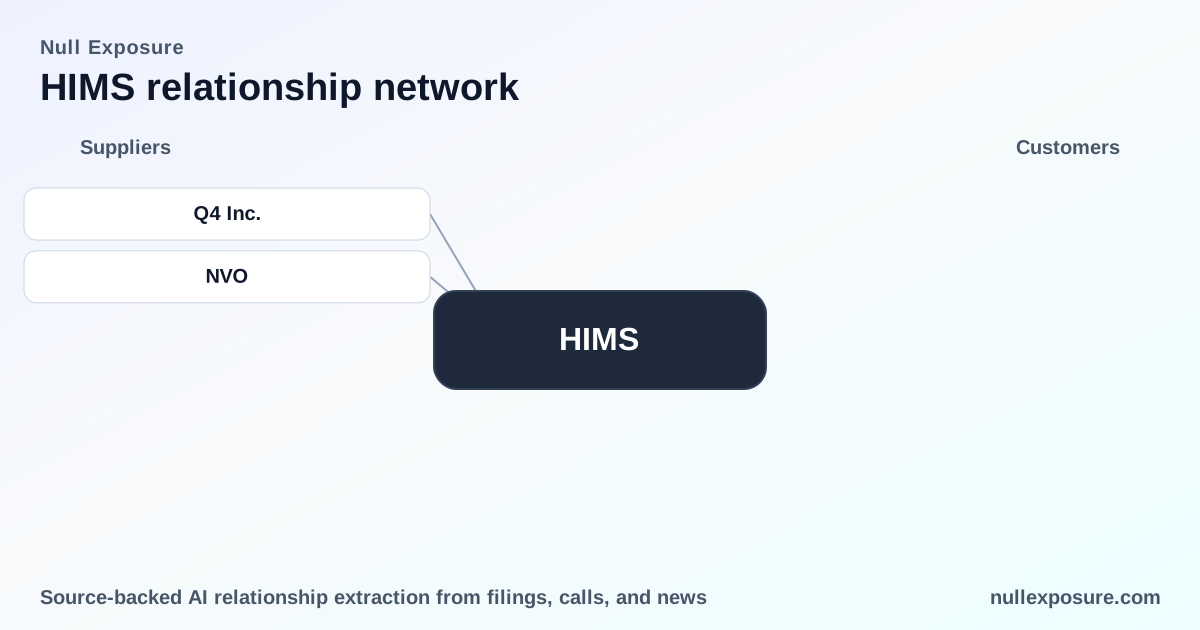
Hims & Hers: customer dynamics, regulatory pressure, and the single notable adversary
Hims & Hers Health, Inc. operates a consumer‑facing telehealth and health‑product platform that monetizes primarily through subscription sales of prescription and non‑prescription products and recurring telehealth services. The company drives growth via paid marketing, cross‑sell into adjacent specialties (notably weight‑loss GLP‑1 offerings), and owned fulfillment/clinical capabilities; latest public data shows trailing twelve‑month revenue of roughly $2.35 billion and a market capitalization near $6.3 billion, underscoring the scale of its subscription flywheel.
If you’re evaluating HIMS customer relationships from an investor or operator perspective, note two practical entry points: one, the business is subscription-native and highly reliant on direct consumer billing, which concentrates cash flow and retention dynamics; two, regulatory and product litigation risk (including third‑party suits) directly intersects customer trust and the product set. For a deeper look at customer counterparties and the one publicly reported dispute, see Null Exposure’s analysis — or visit the firm homepage for broader coverage: https://nullexposure.com/
How the company actually contracts with customers — subscription first
Hims’s dominant commercial posture is subscription-based contracting. Company filings and disclosures detail repeated statements that the majority of revenue is generated by subscription purchases, subscriptions automatically renew on selected cadences, and management uses subscriber metrics to run the business. This creates recurring revenue predictability, but also concentration on retention and acquisition economics — customer acquisition spend is large and a defining cost of the model. Company filings through FY2024–FY2025 document these behaviors and billing mechanics.
What that subscription posture implies for risk and maturity
- Contracting posture: Predominantly recurring, billed at shipment cadence (30–360 days options), with ability for customers to cancel or pause between billing cycles. This structure encourages lifetime value optimization but increases sensitivity to churn.
- Maturity: The company describes a maturing subscriber base with a majority on personalized solutions as of FY2024 and explicit expectations to retain a significant share of subscribers beyond two years — a signal of movement from early growth to scale operations.
- Short vs. long term: While subscriptions dominate, there are short‑term deferred revenue balances and prepaid offerings that are recognized within a year, and explicit management commentary that a meaningful portion of revenue is expected to be retained long‑term.
Who Hims’s customers and counterparties are
Hims transacts directly with individual consumers as its primary counterparty. Filings define online revenue customers explicitly as individuals purchasing on websites or mobile apps; consumer identity, privacy, and health data processing are recurring disclosure themes. The company also interacts with governments and large enterprises indirectly — for example, potential reimbursement or regulatory exposure if it accepts third‑party payors — but Hims currently accepts payments directly from customers, not insurance.
- Individuals: The principal revenue source and primary operational focus, including telehealth consults and recurring prescription fulfillment; privacy and licensing obligations are materially important.
- Government: Present as a regulatory counterparty rather than a payor today — laws and program rules (Medicare/Medicaid, FDA, state pharmacy/telehealth regimes) shape where and how services are offered.
- Large enterprises: Competitors and potential partners; referenced primarily in the context of market competition and scale.
These counterparty patterns are company‑level signals drawn from corporate filings and compliance disclosures.
Geography and regulatory reach: U.S. first, UK present, global considerations
Hims’s operations are U.S.‑centric with active expansion into the United Kingdom and limited EMEA exposure. Filings state operations are primarily in the United States (insignificant operations in the UK for FY2022–FY2024), while the company maintains websites for the UK market and flags GDPR/UK‑GDPR compliance obligations. The result is a business that is operationally focused on NA but exposed to cross‑border privacy, tax, and product regulation risks as it expands.
Business roles and segments that matter to customers and partners
Hims wears multiple roles across its customer lifecycle:
- Seller / Principal: The company acts as the principal for prescription and service revenue — it sets prices, controls fulfillment, and is responsible for customer satisfaction and refunds.
- Buyer: From a supply perspective Hims purchases inventory and services to support its platform; customer acquisition and fulfillment spend are major cost centers.
- Distributor / Reseller: The company operates wholesale channels (non‑prescription wholesale revenue) and invests in internal fulfillment capabilities to control customer experience.
- Manufacturer / Service provider: Hims operates pharmacy and manufacturing controls (e.g., CDPH‑registered drug manufacturing oversight) and provides telehealth services via affiliated medical groups and providers.
These roles increase operational complexity but also give Hims control over the end‑to‑end customer experience — a strategic asset that requires ongoing investment in compliance and fulfillment.
Materiality and criticality: why customers matter to Hims
Hims explicitly treats customer relationships as material and often critical: subscriber retention drives the majority of operating cash flow, four wholesale customers represented more than 10% of accounts receivable at year‑end filings, and cybersecurity/privacy stewardship is framed as critical to preserving trust. The business is therefore highly dependent on maintaining product safety, regulatory compliance, and brand reputation to sustain subscriber economics.
Relationship inventory — the one external dispute to note
Novo Nordisk (NVO): A March 10, 2026 news report documents that Novo Nordisk filed suit against Hims & Hers alleging unauthorized versions of Ozempic and Wegovy, centering on branded GLP‑1 products and related claims. This is an external legal exposure that directly touches Hims’s weight‑loss specialty and its product offering strategy. (Source: CBS News, March 10, 2026 — video report on Novo Nordisk’s suit.)
Strategic implications for investors and operators
- Revenue durability is real but conditional. Subscriptions provide recurring cash flow; however, retention and margin depend on continued regulatory compliance, safety of newly offered therapeutics (including GLP‑1s), and marketing efficiency. Marketing spend is material — advertising and customer acquisition topped ~$600M in the most recent year — so marketing ROI is a core driver of valuation.
- Regulatory and IP litigation are active risk vectors. The Novo Nordisk suit highlights IP and brand risk when Hims enters high‑profile therapeutic categories. Regulatory scrutiny on compounded and branded drug fulfillment amplifies the stakes.
- Operational control is both a strength and a cost. Owning fulfillment, pharmacy, and some manufacturing capabilities gives the company product control and margin leverage but increases compliance burden and capital intensity.
If you want a comparative read on Hims’s customer exposure and how it affects counterparty risk across the platform, we maintain deeper relationship maps and monitoring tools at Null Exposure — see the firm home page here: https://nullexposure.com/
Conclusion: Hims is a subscription‑driven consumer health platform where customer retention, regulatory compliance, and product control determine the economics. The Novo Nordisk litigation is the single publicly documented adversarial relationship in our review and crystallizes the legal and reputational tail risk that accompanies speciality expansion.