HIND: Customer Relationships and Commercial Footprint
ReShape Lifesciences (now transitioning into Vyome Holdings Inc. under ticker HIND) is a physician‑led medical device company that monetizes through direct sales of implantable hardware (the Lap‑Band family and related accessories), distributor agreements for international reach, and one‑time corporate transactions (asset sales and merger activity). Revenue is driven by hardware shipments (recognized at point of sale), distributor take‑title arrangements and service/support programs tied to physician training; liquidity is augmented through equity purchase commitments and targeted financings. For primary source detail and relationship monitoring, see https://nullexposure.com/.
How the commercial model actually works — commercial posture and operating constraints
HIND operates a hybrid commercialization model: direct sales in the U.S. plus exclusive distributor partnerships internationally. Contracting posture is mixed but biased toward multiyear commercial commitments and programmatic sales terms:
- Long‑term, exclusive distribution is evident for at least one partner (Canada agreement running through December 31, 2028 with automatic one‑year renewals), supporting predictable overseas coverage and localized sales effort.
- Shorter term and transactional flows show up in cash and receivable management: most product customers (direct or distributors) pay within 30–90 days, and product revenue is generally recognized at a point in time when title transfers.
- Financing and corporate transactions impose framework arrangements on capital availability: an Equity Purchase Agreement grants the company discretion to draw up to $5.0 million in gross proceeds over a 36‑month commitment period, which functions as a flexible funding backstop.
- Product mix concentration is heavy on the Lap‑Band hardware (core product); some pipeline assets (DBSN, Obalon) are currently immaterial to revenue. The vBloc line has been terminated — warranty obligations have lapsed.
These signals imply an operating model with moderate commercial maturity on core hardware (Lap‑Band 2.0 is in early commercial rollout), reliance on a small number of exclusive distributors for certain geographies, and active corporate restructuring that influences near‑term cash and counterparty exposure.
Revenue drivers, concentration and risk in plain terms
- Core revenue driver: Lap‑Band systems and surgical accessories — hardware sales recognized at shipment and frequently routed through distributors who take title.
- Geographic concentration: the U.S. is the dominant market (most revenue denominated in USD and ~80–86% of revenue historically), with targeted expansion in Australia, Europe, the Middle East and Canada.
- Counterparty mix: retail/physician end users and hospitals (individuals and healthcare institutions) and third‑party distributors; government and payer regulation is a key commercial constraint.
- Materiality and runway: several device programs (DBSN, Obalon) currently contribute no material revenue, while corporate transactions (asset sale and merger) are central to near‑term strategic monetization.
If you evaluate HIND as a supplier/customer portfolio, prioritize the Lap‑Band distribution network and the corporate transaction counterparty exposure when modeling revenue sustainability and downside scenarios. For additional tracked relationship intelligence, visit https://nullexposure.com/.
Relationship review: what every listed counterparty does for HIND
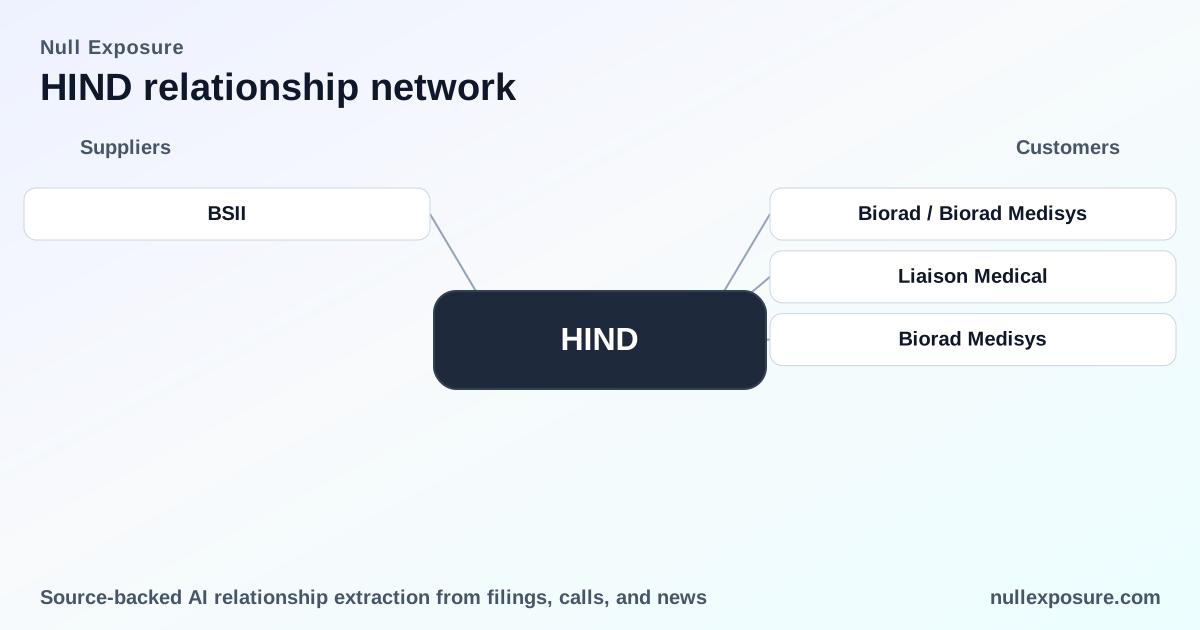
Biorad / Biorad Medisys — asset purchaser and strategic acquirer
- ReShape entered an asset purchase agreement with Biorad / Biorad Medisys that transfers substantially all devices (including Lap‑Band, Obalon and the DBSN assets) and places liabilities with Biorad as part of a broader restructuring and renaming plan. This transaction is central to the company’s strategy to monetize non‑core assets for roughly $5.16 million in cash consideration, subject to customary adjustments. (Sources: company press release on Globenewswire, January 13, 2025; reporting in The Economic Times and related press coverage, FY2024–FY2025.)
Biorad Medisys Pvt. Ltd. — operational buyer in India (same asset sale relationship)
- Multiple filings and news reports identify Biorad Medisys Pvt. Ltd. (Pune‑based) as the buyer that will assume substantial liabilities and purchase product lines; the deal is referenced across investor disclosures and trade press as the vehicle that will continue certain device operations post‑closing. (Sources: Globenewswire update Jan 13, 2025; Economic Times and MPO Magazine coverage, FY2024–FY2025.)
Liaison Medical — exclusive Canadian distributor for Lap‑Band 2.0 FLEX
- In February 2025 ReShape signed an exclusive distribution agreement with Liaison Medical Ltd. to sell and support the Lap‑Band® 2.0 FLEX and associated Tubing Kits in Canada; the initial term runs through December 31, 2028 with automatic one‑year renewals and standard termination notice provisions. This agreement establishes an exclusive commercial channel for Canadian surgeons and clinics and is a clear example of the company’s international distributor strategy. (Sources: company earnings & press disclosures reported on QuiverQuant and Yahoo Finance, FY2025.)
(Each of the items above reflects every relationship returned in the customer search results; press and filing citations are provided in the narrative as the primary evidence for deal terms and timing.)
What the constraints tell an investor — implications for modeling and due diligence
- Contracting posture: Company‑level signals show a mix of long‑term exclusive distribution contracts (explicit for Liaison) and flexible capital frameworks (a 36‑month equity purchase commitment). Treat near‑term cash availability as partially managed through these financing frameworks rather than purely operating cashflow.
- Concentration and geography: U.S. revenue concentration is high, so any U.S. payer or regulatory pressure will materially affect top line; international distribution partially mitigates this but is smaller in scale.
- Criticality and product maturity: Lap‑Band 2.0 is the commercial core and is in an early ramp phase; DBSN and Obalon remain development or immaterial revenue lines; vBloc has been discontinued — expect most commercial cashflows to originate from Lap‑Band hardware and distributor shipments.
- Counterparty and role mix: The company acts both as seller (hardware and programs) and as a party to corporate financings and asset sale transactions; distributors and individual physician/hospital customers are key receivable counterparties with typical 30–90 day payment terms.
- Spend and transaction scale: The company’s recent financing and asset sale figures fall in the $1M–$10M range, reflecting a small‑cap balance sheet profile where single transactions and distributor deals exert outsized financial influence.
Investor takeaways
- Primary value lever: successful commercialization and adoption of Lap‑Band 2.0 through the U.S. installed base and selective distributor expansion.
- Near‑term liquidity is tied to corporate transactions (asset sale to Biorad and the equity purchase commitment) as much as to product sales.
- Concentration risk is substantial — U.S. reimbursement and regulatory dynamics drive the economics; international distributors are strategic but not yet scale‑equivalent.
- Due diligence focus: confirm closing conditions and timing for the Biorad asset purchase, verify distributor roll‑out metrics in Canada (Liaison), and model receivables aging under a 30–90 day payment profile.
For a consolidated feed of partner, contract and transaction signals that support commercial diligence on HIND, explore our tracker at https://nullexposure.com/.