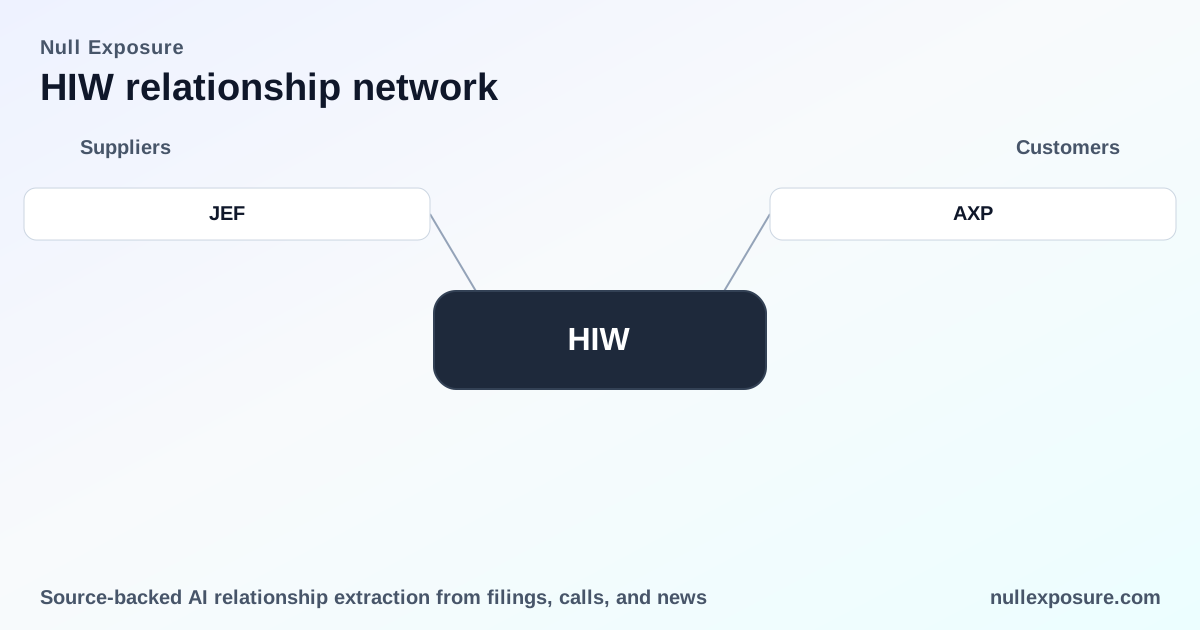
Highwoods Properties (HIW): Customer Relationships and What They Signal for Investors
Highwoods Properties operates and monetizes as a fully integrated office REIT: it acquires, develops, leases and manages office and mixed-use properties concentrated in select Southern and Sunbelt markets, collecting rental and cost-recovery income while monetizing through selective property dispositions and capital markets activity. Revenue is driven by long-duration leases, a geographically concentrated portfolio (Atlanta, Charlotte, Dallas, Nashville, Orlando, Raleigh, Richmond, Tampa), and an active asset sales program that supplements recurring rent. For a deeper look at the firm's customer and asset strategy, see more at https://nullexposure.com/.
Why customers matter for a modern office REIT
Highwoods is not a passively managed landlord—its in-house leasing, property management and development capability create operating leverage but also concentrate execution risk. Leases are generally multi-year and form the primary cash flow engine, while disposals and structured financings provide episodic liquidity. This combination produces predictable base cash flows but leaves the company sensitive to tenant renewals, large-customer credit, and localized market cycles.
- Contracting posture: The company reports weighted-average lease durations in the multi-year range (WALT roughly 7 years on some measures) and emphasizes firm-term operating leases. That structure supports stable cashflows and financing capacity.
- Concentration: While no single customer exceeded 5% of consolidated revenues in 2025, the top 20 customers represent a meaningful share and trigger board-level review if any exceeds internal thresholds (greater than 3%).
- Criticality: Rental and other revenues are Highwoods’ principal source of short-term liquidity; building systems and tenant-facing service functions are essential to operations and tenant retention.
- Maturity & spend posture: Highwoods executes both large and mid-sized asset sales (tens to hundreds of millions) and maintains equity distribution programs and shelf capacity, providing a flexible funding framework for acquisitions, capex and dispositions.
These operating model signals (long-term contracting, concentrated top customers, critical revenue dependence, and active balance-sheet management) should inform underwriting and valuation of HIW exposure.
Customer relationships on record: what investors need to know
Below I cover each customer relationship referenced in recent public material. Each relationship is summarized in plain English and tied to the primary public source cited in the record.
Crooked Hammock Brewery — localized retail tenant at Glen Lake 2
Highwoods reported that Glen Lake 2 retail was delivered 100% leased to Crooked Hammock Brewery, indicating targeted retail activation as part of a mixed-use delivery adjacent to office assets. This tenancy is referenced in the Q1 2026 earnings call transcript. (Source: Benzinga, Q1 2026 earnings call transcript published May 2026.)
American Express — corporate relocation / regional hub tenant
Highwoods cited American Express as a new customer joining the recently acquired 600 at Legacy Union, reflecting a corporate relocation or regional hub that boosts office demand at that asset and supports leasing momentum. The mention was made during discussion of major corporate relocations in the Q4 2025 earnings call transcript. (Source: InsiderMonkey, Q4 2025 earnings call transcript, March 2026.)
AXP (duplicate entry of American Express) — same corporate lease reference
A duplicate record for AXP repeats the same disclosure: American Express is listed among new or relocating corporate tenants that underpin leasing activity at acquired assets such as Legacy Union. Treat this as the same corporate tenant signal previously described. (Source: InsiderMonkey, Q4 2025 earnings call transcript, March 2026.)
OA Development, Inc. — buyer of Stony Point Portfolio
OA Development acquired the Stony Point Portfolio in Richmond from Highwoods for $42.3 million, illustrating the company’s ongoing disposition program to recycle capital and refine geographic/asset mix. This is reported as a completed sale transaction in public market coverage. (Source: MarketScreener news item, May 2026.)
What these relationships reveal about strategy and risk
These relationships illustrate a dual strategy: build and lease selective assets into corporate tenants and local retail operators, while selectively selling non-core assets to recycle capital. The Crooked Hammock lease underscores placemaking within mixed-use projects; the American Express relocation highlights Highwoods’ ability to attract large-enterprise tenants to newly acquired urban assets; and the OA Development sale demonstrates disciplined disposition execution.
- Leasing cadence and tenant mix: The company’s portfolio is spread across ~1,500 customers with in-place long-term leases that support predictability, but the top-20 concentration means tenant renewals and large relocations materially influence near-term cash flows.
- Capital recycling: Highwoods disclosed multi-million dollar asset sales throughout 2025 and announced expectations to sell up to $250 million of non-core properties in 2026, demonstrating an active capital recycling posture that reduces exposure to underperforming assets and funds development or tenant improvements.
- Government exposure and regulatory posture: Highwoods holds dozens of federal agency leases (31 leases with 24 agencies totaling ~749,000 sq ft), so government contracting and compliance are meaningful operational considerations that affect lease stability and compliance costs.
Operational and financial constraints to monitor
Investors should watch several company-level constraints that shape Highwoods’ operating risk profile:
- Dominant long-term lease book: Evidence points to materially long average lease terms and WALT in the multi-year range, which supports valuation stability but limits near-term rent repricing opportunity.
- Selective short-term exposures exist: Isolated short-term loan or extension provisions (for example, SOFR +150 bps for a one-year extension) introduce some floating-rate and short-duration financing exposure.
- Capital markets frameworks active: The company maintains equity distribution agreements and shelf registration capacity, enabling up to hundreds of millions in capital transactions—this provides flexibility but can dilute if deployed repeatedly.
- Geographic concentration in U.S. Sunbelt/BBDs: All operations are U.S.-based and concentrated in specific markets; those markets carry local cyclical risk but also deep tenant pools.
- Materiality spectrum: The firm recognizes both material risk from major customers and the fact that no single tenant exceeded 5% of revenue in 2025, an important offset to counterparty concentration risk.
- Spend profile: Highwoods executes both >$100m and $10–$100m transactions as part of normal course capital allocation.
Investment takeaways and next steps
- Key strength: Stable, long-dated cash flows from a diversified (by number but concentrated by geography) tenant base, combined with an active capital recycling program.
- Key risk: Dependence on tenant renewals within concentrated markets and the financial health of the top customers; operational execution on placemaking and building services is critical to maintain occupancy and rents.
- Action: For deeper portfolio-level customer mapping and to compare these tenant dynamics across peers, review Highwoods’ investor materials and transaction disclosures at the company site and follow curated intelligence at https://nullexposure.com/.
Bold signals in leasing and disposition activity will determine short- to medium-term performance; monitor large tenant renewals, announced asset sales, and capital market transactions for the next directional moves in HIW.