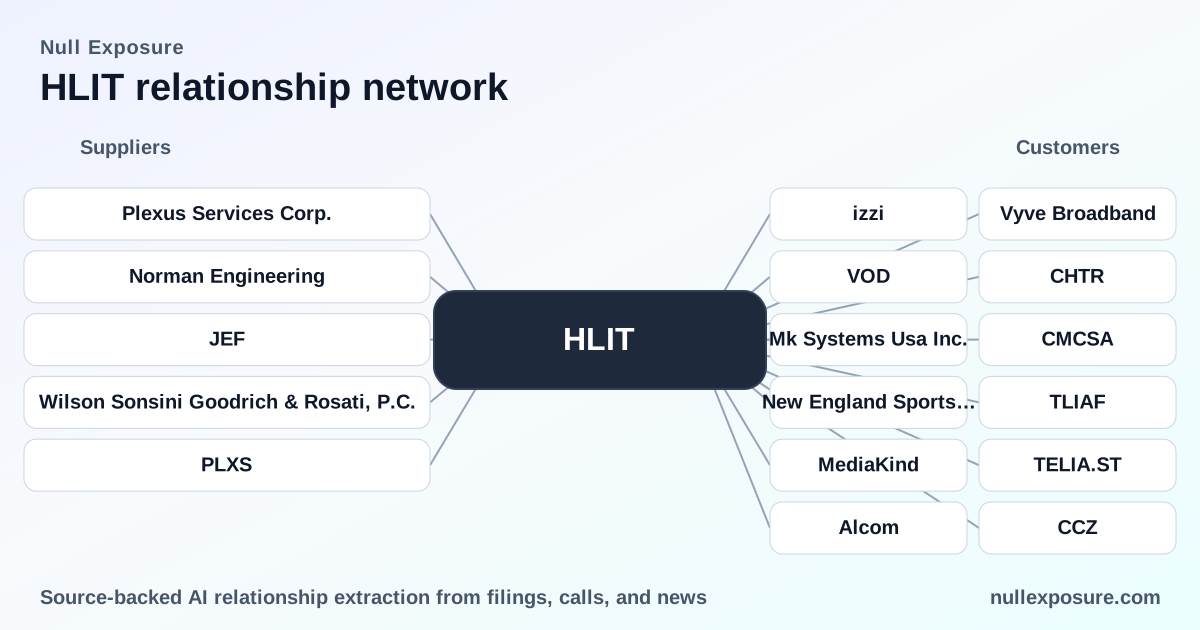
Harmonic Inc (HLIT) — customer relationships that determine growth and risk
Harmonic sells software-defined broadband and media infrastructure to operators and broadcasters, monetizing through hardware appliance sales, perpetual licenses, and an expanding mix of SaaS and subscription services (notably the cOS broadband platform and VOS media software). Revenue volatility is driven by large, concentrated operator contracts for appliance and integration work while longer-term SaaS should expand recurring margins over time. Learn more about how we model counterparty exposure at https://nullexposure.com/.
How to read Harmonic’s customer map
Harmonic’s commercial model mixes one-off appliance and integration projects with usage-priced SaaS and support—a hybrid that produces high short-term concentration and rising recurring revenue. The company operates with:
- High customer concentration (two customers represented >60% of 2024 revenue), which makes bookings and churn by a single Tier‑1 operator material to quarterly results.
- Contract mix that is both short-term and usage‑based for support and SaaS, and long sales cycles for large cOS broadband deals; this yields lumpy cashflow with predictable recurring tails.
- Global go‑to‑market with an Americas focus but active EMEA and APAC deployments, so FX, regulation and regional operator budgets are meaningful constraints.
For a focused briefing on strategic counterparty exposure and to track changes in customer wins and concentration, visit https://nullexposure.com/.
The relationships investors need to track right now
Below are one‑ to two‑sentence, source‑linked takes on every relationship in the public results set.
-
izzi: Harmonic disclosed on its Q4 2025 earnings call (Mar 8, 2026) that izzi, Mexico’s largest MSO, selected Harmonic’s cOS platform and remote OLT to support a strategic fiber broadband expansion. (Q4 2025 earnings call)
-
Vodafone Germany: Harmonic reported completion of a DOCSIS 4.0 field validation with Vodafone Germany, signaling technology maturity and a pathway toward commercial DOCSIS 4.0 deployments. (Q4 2025 earnings call, Mar 8, 2026)
-
KBRO: PR coverage (Mar 30, 2026) says Taiwan’s KBRO is upgrading to Harmonic’s fiber‑on‑demand solution powered by the cOS virtualized broadband platform. (PR Newswire / SahmCapital, Mar 30, 2026)
-
VOD (duplicate mention of Vodafone Germany): The Q4 2025 earnings call reiterates DOCSIS 4.0 field validation success with Vodafone Germany, reinforcing early commercialization signals. (Q4 2025 earnings call, Mar 8, 2026)
-
TDF (press release): Harmonic announced that French broadcast infrastructure operator TDF modernized its terrestrial network using Harmonic’s XOS Advanced Media Processor and ProStream X. (PR Newswire / SahmCapital, Apr 1, 2026)
-
Mk Systems USA Inc.: MarketScreener reported an agreement (Mar 10, 2026) that Mk Systems USA entered to acquire Harmonic’s Video business for roughly $150 million (reported Dec 8, 2025). (MarketScreener, Mar 10, 2026)
-
TDF (SimplyWall commentary): Independent equity commentary noted TDF’s national upgrade to Harmonic’s XOS and ProStream X platforms as a catalyst for visibility into Harmonic’s media processing strength. (SimplyWall.St coverage, FY2026)
-
TDF (additional media mention): Multiple outlets cited the TDF win as boosting market focus on Harmonic’s media processing product line. (FinViz / SimplyWall coverage, Mar–Apr 2026)
-
Charter Communications (CHTR): LightReading identified Comcast and Charter as Harmonic’s marquee broadband customers, underlining Charter’s strategic role in appliance and integration revenue. (LightReading coverage, Mar 10, 2026)
-
CMCSA (Comcast reference): The same LightReading report lists Comcast among Harmonic’s marquee broadband tech customers, emphasizing concentration risk tied to large U.S. MSOs. (LightReading, Mar 10, 2026)
-
Comcast: Harmonic’s 2024 10‑K documents show Comcast accounted for 44% of net revenue in 2024, making Comcast a critical counterparty for revenue stability. (HLIT 10‑K FY2024)
-
GCI (GLIBK): Quantisnow reported Harmonic partnered with GCI in Alaska to modernize DOCSIS networks and accelerate high‑speed broadband delivery statewide. (Quantisnow press report, FY2026)
-
CentralCast: FinViz and PR placements indicate CentralCast is deploying Harmonic’s XOS Advanced Media Processor to improve public broadcasting workflows and reduce footprint and costs. (PR Newswire / FinViz coverage, Apr 14, 2026)
-
KBRO (FinViz mention): FinViz repeated the KBRO fiber‑on‑demand deployment as a March 2026 PR highlight for Harmonic’s broadband momentum. (FinViz / PR Newswire, Mar 30, 2026)
-
TDF (FinViz headline): FinViz headlines mirrored PR filings that described TDF’s expanded channel lineup built on Harmonic systems. (FinViz, Apr 2026)
-
Vyve Broadband (PR): Harmonic announced Vyve Broadband selected its cOS virtualized broadband platform to modernize network infrastructure across multiple U.S. states. (PR Newswire / Harmonic press, Mar 3, 2026)
-
MediaKind (acquirer press): MediaKind publicly announced an agreement to acquire Harmonic’s Video business for approximately $145 million in cash, repositioning Harmonic toward pure‑play broadband. (MediaKind press release, Mar 2026)
-
Vyve Broadband (company filing / investor notice): Company‑level PR reiterated Vyve’s selection of Harmonic for network modernization and was used in investor materials. (PR Newswire / company announcements, FY2025–FY2026)
-
NESN (New England Sports Network): TVTechnology reported that NESN chose Harmonic with Astound Business Solutions to transform primary live sports distribution, demonstrating traction in enterprise media distribution. (TVTechnology, FY2025)
-
Vyve Broadband (QuantiSnow recap): QuantiSnow noted Vyve’s cOS adoption in coverage of Harmonic’s investor presentations and conferences. (QuantiSnow, FY2026)
-
Alcom: Harmonic press noted Alcom in Finland is using XOS Advanced Media Processor for white‑label headend services to improve mid‑size operator offerings. (QuantiSnow / Intellectia coverage, FY2026)
-
Izzi (press summary): Market commentary and PR restated a multi‑year agreement with izzi for large scale fiber expansion using Harmonic solutions. (MarketScreener / SimplyWall coverage, Feb–Mar 2026)
-
MediaKind (SimplyWall recap): Equity analysis outlets covered the MediaKind acquisition as the strategic vehicle to take Harmonic’s Video business forward. (SimplyWall.St, Mar 2026)
-
MediaKind (TradingView entry): Market snippets and trading news reiterated the Asset Purchase Agreement terms for the Video business sale to MediaKind. (TradingView / press aggregation, May 2026)
-
MediaKind (Content‑Technology): Content‑Technology published the MediaKind acquisition announcement and deal value, reinforcing the repositioning narrative. (Content‑Technology coverage, Mar 2026)
-
Alcom (MarketScreener paragraph): MarketScreener noted Alcom’s headend upgrade with Harmonic as part of series of regional wins. (MarketScreener, Feb–Mar 2026)
-
CentralCast (SahmCapital PR): SahmCapital redistributed Harmonic PR highlighting CentralCast using XOS to serve a large share of U.S. public media viewers. (SahmCapital / PR Newswire, Apr 15, 2026)
-
CentralCast (QuantiSnow): QuantiSnow covered the CentralCast deployment as a PR item in Harmonic’s 2025–2026 communications. (QuantiSnow press recap, FY2026)
-
Telia (earnings call): On the Q4 2025 earnings call Harmonic stated Telia is modernizing its Norwegian broadband network with cOS in a distributed access architecture, marking a notable European cOS deployment. (Q4 2025 earnings call, Mar 8, 2026)
-
VOD (Globe and Mail / analyst coverage): Analyst writeups cited DOCSIS 4.0 field validation with Vodafone Germany and initial node shipments as evidence of moving beyond trials. (The Globe and Mail / analyst commentary, Mar 2026)
-
KBRO (FTTH / conference coverage): FTTH conference materials and FTTH coverage listed KBRO’s use of cOS and fiber‑on‑demand to support converged DOCSIS–fiber networks. (FinViz / FTTH conference coverage, Mar–Apr 2026)
-
TDF (multiple equity writeups): Equity commentary and valuation notes referenced TDF’s nationwide upgrades as evidence of ongoing relevance for Harmonic’s media stack. (SimplyWall.St / FinViz, Apr 2026)
-
CentralCast (FinViz repetition): Market wire syndication repeated the CentralCast PR for broader investor reach. (FinViz / PR syndication, Apr 2026)
-
DIRECTV: Multiple press placements in April 2026 reported DIRECTV selected Harmonic’s VOS Media Software to overhaul its U.S. DTH playout and ad insertion workflows into a cloud‑native environment. (PR Newswire / FinViz / SimplyWall, Apr 15, 2026)
-
DIRECTV (QuantiSnow / SimplyWall repeats): Additional coverage reiterated the DIRECTV win as a strategic VOS deployment in a private data center/cloud hybrid. (QuantiSnow / SimplyWall, Apr–May 2026)
-
KBRO (SimplyWall product recap): SimplyWall summarized KBRO’s use of cOS and sports streaming upgrades as part of Harmonic’s product momentum in March 2026. (SimplyWall.St, Mar 2026)
-
(Multiple press syndications referencing the same customer wins): Several outlets re‑published PR items announcing wins with TDF, KBRO, CentralCast, Vyve and others, amplifying the commercial narrative across investor channels. (FinViz / PR aggregators, Mar–May 2026)
What the constraints tell investors (commercial implications)
- Contracting posture: Evidence strongly supports a mixed contracting posture—significant licensing and appliance sales alongside a clear, deliberate shift to SaaS/subscription and usage‑based billing for VOS and cOS Central services, producing recurring revenue that is recognized ratably or as usage occurs.
- Duration and predictability: Many service and maintenance agreements are short‑term / annual, while large cOS broadband deals have lengthy sales cycles and multi‑year remaining performance obligations (about $496m RPO at end‑2024, with ~57% converting within 12 months). This creates both near‑term lumpy revenue and a growing recurring tail.
- Concentration and criticality: Comcast (44% in 2024) and Charter (18% in 2024) are material and critical; loss or order reduction from these customers materially affects results. Sales to top 10 customers comprised ~72% of 2024 revenue—this is a structural concentration risk.
- Geography and maturity: The business is global but skewed to the Americas; EMEA and APAC are meaningful for product diversification and strategic wins (Telia, Vodafone Germany, TDF). The broadband product cycle is mid‑transition from hardware to software/SaaS, which improves long‑term margins but compresses near‑term appliance revenues.
- Operational channels: Significant reliance on resellers, VARs and system integrators for Video distribution remains a vulnerability in emerging markets and for integration‑heavy projects.
Bottom line for investors
- Harmonic is transitioning from an appliance‑heavy vendor to a software/SaaS‑anchored vendor, and that shift is visible in recent customer wins (cOS broadband rollouts and VOS media deployments) and the carve‑out of the Video appliance business to MediaKind.
- Near‑term earnings and cashflow remain dependent on a handful of large operator contracts, so model sensitivity to Comcast/Charter order timing is essential.
- Track DOCSIS 4.0 commercialization (Vodafone Germany, GCI) and cOS rollouts (izzi, Telia, KBRO, Vyve) as leading indicators of recurring revenue growth and de‑risking of appliance cyclicality.
For a structured feed of customer‑level changes and exposure scoring tailored for diligence or portfolio monitoring, visit https://nullexposure.com/ — our platform centralizes the signals summarized above.