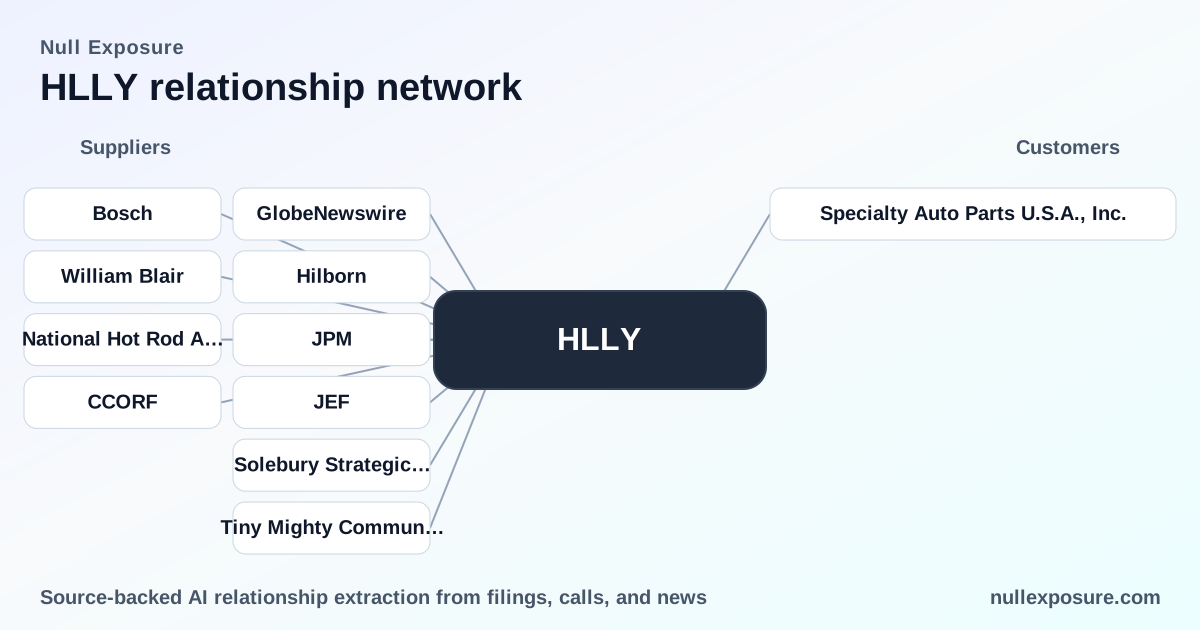
Holley Inc. (HLLY): Customer Relationships, Revenue Channels, and Operational Constraints
Holley designs, manufactures, and markets performance automotive aftermarket products and monetizes through multi-channel product sales (direct-to-consumer, distributors, retail partners), licensing of intellectual property, and brand-driven sponsorships. Revenue is predominantly transactional product sales—shipped goods recognized at control transfer—supplemented by licensing and marketing initiatives that reinforce brand demand across the U.S., Canada and Europe. For investors, the company combines a recognizable enthusiast brand with cyclical, discretionary demand dynamics: RevenueTTM $613.5M; Market Cap ~$389.5M; EBITDA $108.9M. Learn more at https://nullexposure.com/.
How Holley actually gets paid (and what that says about contractual risk)
Holley’s revenue model is straightforward: it sells hardware and related products and recognizes sales when products ship, which creates a largely spot-oriented cash flow profile. The company discloses that many customer contracts are short-term (one year or less) and typical payment terms vary from 30 to 365 days, which means working capital and receivables management are central to near-term liquidity. Licensing of patents and trademarks supplements product sales and strengthens margins, but licensing arrangements are complementary rather than the primary revenue driver.
- Operating posture: Short-term and spot sales dominance limits long-term revenue visibility and increases sensitivity to inventory forecasting and promotional cycles.
- Monetization levers: DTC growth, distribution partners, and sponsorships (brand marketing) drive both top-line and customer lifetime value.
Geography and customer concentration: where the cash flows come from
Holley is North America-first with meaningful European exposure and a global operational footprint. The U.S. generated the majority of revenue (reported U.S. sales in fiscal years indicate dominant contribution), while Europe (Italy noted in disclosures) and China support international scale. The company flags foreign-exchange exposure to Euros and Canadian dollars. Holley also discloses material concentration risk in its largest customers (see Note 16 in filings), so revenue swings at a small number of distribution partners can move free cash flow markedly.
- Key figures: DTC gross sales in 2024 were ~$149.5M, demonstrating an ongoing strategic shift to higher-margin direct engagement with enthusiasts.
- Marketing spend: Holley spent approximately $13.5M in 2024 on marketing and advertising, consistent with brand-first growth.
Materiality and relationship roles: seller, distributor, reseller
Holley principally acts as a seller and manufacturer of aftermarket hardware, while also operating through distributors and resellers that extend reach into retail and installer channels. The firm treats its brands as critical assets—brand strength is essential for demand, and deterioration in brand perception would materially affect sales. The balance of roles (seller/manufacturer/distributor/reseller) points to a mature, omnichannel model that nonetheless remains exposed to discretionary consumer spending and supply-chain volatility.
Named counterparties you should know
Every relationship flagged in the recent customer-scope results is summarized below.
Specialty Auto Parts U.S.A., Inc.
Holley was ordered to disgorge $2,028,264.19 in net profits tied to sales of Ultra Aluminum HP carburetors that violated a 2001 settlement agreement; a court development was reported in March 2026 documenting this disgorgement requirement. This is a discrete litigation-driven cash exposure and reputational issue tied to legacy product compliance. Source: Dykema news item reporting on the court decision (Mar 10, 2026) — https://www.dykema.com/news-insights/court-rejects-holleys-attempt-to-amend-order-forcing-it-to-disgorge-dollar2-million-in-ill-gotten-profits-to-specialty-auto-parts-usa.html
Chevrolet
Holley’s EFI business is embedded in NHRA Factory X racecars that include Chevrolet COPO Camaro platforms, and Holley EFI was named title sponsor for the Factory X class in a 2023 NHRA announcement; this reflects marketing and product-placement relationships with OEM platforms that amplify product credibility among enthusiasts. Source: NHRA announcement (2023) — https://www.nhra.com/news/2023/holley-efi-named-title-sponsor-nhra-factory-x-slated-eight-races-2024
Dodge
The NHRA Factory X class includes Dodge Challenger Drag Pak entries powered by Holley EFI; Holley’s title sponsorship links the brand directly to performance applications on Dodge platforms, reinforcing aftermarket relevance and product validation among muscle-car customers. Source: NHRA announcement (2023) — https://www.nhra.com/news/2023/holley-efi-named-title-sponsor-nhra-factory-x-slated-eight-races-2024
Ford
Holley EFI-equipped Ford Mustang Cobra Jet cars are also part of the NHRA Factory X field; Holley’s role as title sponsor and EFI supplier demonstrates cross-platform OEM relevance and the marketing reach of its electronic fuel injection systems. Source: NHRA announcement (2023) — https://www.nhra.com/news/2023/holley-efi-named-title-sponsor-nhra-factory-x-slated-eight-races-2024
(Each of the three OEM relationships above is documented in the same NHRA release, which highlights Holley EFI’s title sponsorship of the Factory X racing category.)
Operational constraints that investors must factor into valuation
Several company-level signals from disclosures constrain Holley’s operating model and should inform investment analysis:
- Contracting posture: The portfolio of customer contracts is short-term, with revenue recognition frequently tied to shipment timing—this limits near-term revenue visibility and raises working-capital risk.
- Revenue model mix: Predominantly hardware and distribution, with licensing and sponsorships as margin-enhancing complements rather than core drivers.
- Counterparty profile: A large portion of end customers are individual automotive enthusiasts, meaning demand is discretionary and correlated with consumer sentiment and leisure spending cycles.
- Geographic exposure: North America is dominant, with material European and APAC operations; foreign-exchange and regulatory changes across these regions are firm-level risk.
- Materiality: Brand strength is critical; several disclosures emphasize the importance of maintaining brand image and the potentially material impact of lost major customers or distribution partners.
- Lifecycle: Customer relationships are mature and active, with DTC still ramping and a history of acquisitions to expand channels—this yields stable core revenue but limited long-term contracted cash flow.
Investment implications and risks
- Upside: Strong brand equity and a growing DTC channel (approximately $149.5M 2024 DTC gross sales) support margin expansion and direct monetization of customer relationships. EV/EBITDA (~7.9) and Forward PE (~7.6) indicate valuation leverage if management stabilizes top-line.
- Downside: Litigation exposures (for example, the Specialty Auto Parts disgorgement), short-term contracts, concentration among distribution partners, and discretionary demand make topline volatile; supply chain or warranty issues can pressure margins rapidly.
- What to watch: DTC traction, receivables trends (working capital), margin recovery in core product categories (electronic systems, mechanical systems, exhaust), and the company’s management of gray-market resellers.
For a consolidated view of Holley’s customer relationships and to track litigation and sponsorship developments, see our platform at https://nullexposure.com/ — it consolidates public-sourced relationship signals and operational constraints that matter for valuation.
Conclusion: Holley combines resilient brand monetization with operational constraints typical of manufacturing-led, discretionary retail businesses. Investors should underwrite earnings variability driven by short-term contracts and concentrated distribution relationships while recognizing real upside from DTC expansion and product-brand synergies.