Hamilton Lane (HLNE): Customer Relationships and Operating Constraints Investors Should Know
Hamilton Lane is a global private markets investment manager that earns recurring management and advisory fees plus incentive (performance) fees by designing, building and managing specialized funds, customized separate accounts and advisory programs for institutional and high‑net‑worth clients. The firm monetizes through a mix of assets-under-management fees billed on commitments, net invested capital or NAV, subscription-style software and reporting fees, and performance carry on realized gains. For a concise investor dossier and ongoing monitoring, visit https://nullexposure.com/.
How Hamilton Lane’s customer model drives revenue and volatility
Hamilton Lane’s revenue base is structurally recurring but lumpy: management fees provide steady cashflow while incentive fees and carried interest create episodic upside tied to realizations. The company operates as a service provider and fiduciary to large institutional investors, with an expanding private‑wealth & reporting business that also sells annual subscriptions for its Cobalt LP analytics. This hybrid model yields margin durability from fee‑earning AUM and episodic earnings volatility from incentive fees.
Constraints that shape how Hamilton Lane wins and risks capital
Hamilton Lane’s customer relationships and contract mechanics impose several operating realities that investors should internalize:
- Contracting posture — blended long‑ and short‑duration: Hamilton Lane manages long‑dated fund vehicles (10–14 year fund terms, common 12‑year life) and longer separate‑account mandates while also running advisory and distribution contracts that are often terminable on 30–90 days’ notice; this produces a base of durable, recurring revenue alongside a portion of economically sensitive, short‑notice business. (Company filings, FY2025–FY2026.)
- Revenue structure — subscription + usage + performance: The firm collects subscription/annual fees for reporting and Cobalt LP, asset‑based usage fees (basis points on commitments, net invested capital or NAV) and performance‑linked carry (5–12.5%) that drives earnings volatility when realized. (FY2025 disclosures.)
- Concentration — broadly diversified: Management states that no single client accounts for more than 2% of management and advisory fee revenues, producing a low client concentration risk for base fee revenue. (FY2025 Form 10‑K.)
- Counterparty mix — large institutional core, retail growth: The client base is centered on public pensions, sovereign wealth funds and large institutional investors, with growing exposure to family offices and high‑net‑worth individuals via intermediaries; governments and non‑profits are material counterparty types. (FY2025.)
- Criticality of deal flow: The firm’s profitability is highly dependent on deal sourcing and the availability of suitable private markets opportunities, which positions investment origination and relationships with fund managers as mission‑critical capabilities. (Company disclosures.)
- Geographic footprint — truly global: Operations span North America, EMEA, APAC and Latin America; roughly 39% of management and advisory fee revenues in FY2025 came from clients outside the U.S., exposing HLNE to global regulatory regimes and cross‑border fundraising dynamics.
- Relationship maturity — mix of mature and active mandates: A significant portion of revenue is recurring from mature funds and long‑running accounts, but the firm also actively pursues new mandates and retail initiatives that require investment to scale.
These characteristics explain why Hamilton Lane’s earnings combine predictability from fee収 and episodic upside from incentive fees, while still being exposed to fundraising cycles, liquidity events and regulatory shifts.
What the public mentions tell investors about key customer ties
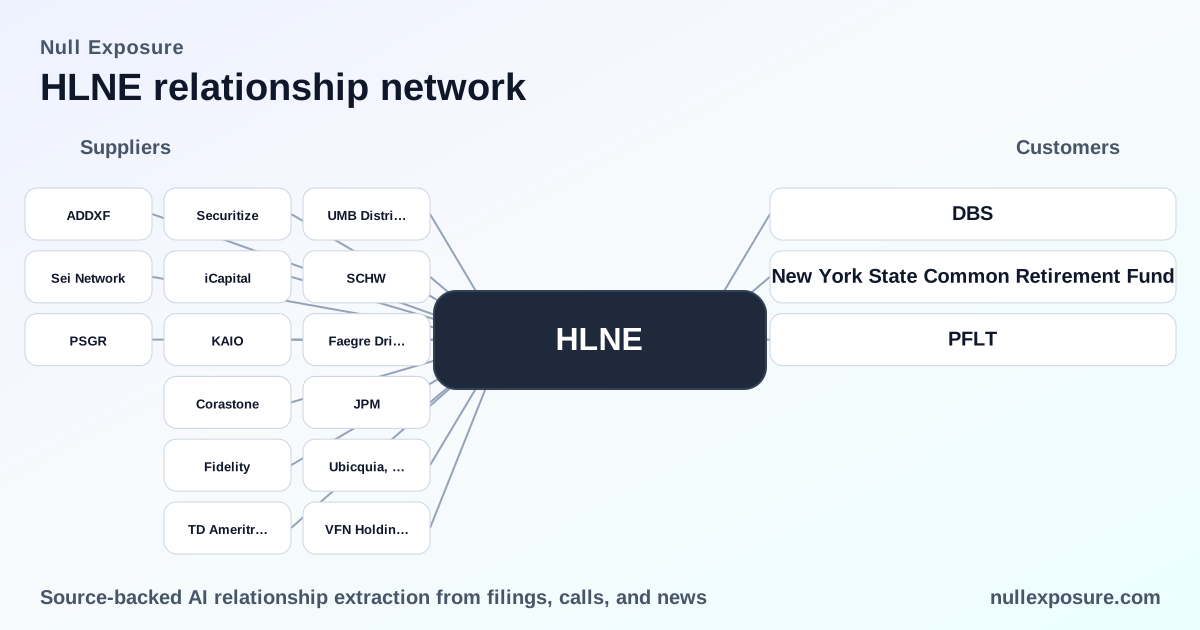
Below are the customer relationships captured in recent public reporting and what each connection implies for Hamilton Lane’s business.
DBS — referenced on Q1 FY2026 earnings call
Hamilton Lane discussed its relationship with DBS in the Q1 FY2026 earnings call when an analyst asked specifically about the DBS Private Banking relationship, indicating an active institutional/intermediary interaction tied to private banking distribution or advisory collaboration. (Q1 FY2026 earnings call transcript, March 10, 2026 — Alphastreet.)
DBS Private Banking — the private‑bank distribution angle
The call referenced DBS Private Banking by name, highlighting Hamilton Lane’s engagement with an Asian private banking channel that supports distribution to high‑net‑worth clients in APAC and reinforces the company’s strategy to expand retail/private wealth reach in that region. (Q1 FY2026 earnings call transcript, March 10, 2026 — Alphastreet.)
New York State Common Retirement Fund — strategic institutional partner
Hamilton Lane has been described as a longtime key investment partner in Israel to the New York State Common Retirement Fund, reflecting an institutional relationship with one of the largest U.S. public pensions that supports credibility and scale in certain regional mandates. (Event coverage, FY2025 — The Jerusalem Post.)
PennantPark Floating Rate Capital Ltd. — JV on senior secured lending
PennantPark Floating Rate Capital Ltd. announced formation of PennantPark Senior Secured Loan Fund II, LLC, a joint venture with Hamilton Lane Senior Credit Opportunities Fund (an affiliate of a fund managed by Hamilton Lane), signaling active co‑investment and fund‑level structuring in private credit and senior secured loan strategies. (Markets Media, FY2025.)
PFLT (PennantPark ticker) — listed partner/vehicle cited in Markets Media
The reference to PFLT mirrors the PennantPark disclosure and underscores Hamilton Lane’s role as an adviser/manager in transactions that create fund‑level joint ventures with listed specialty finance partners, expanding HLNE’s distribution and product reach in credit markets. (Markets Media, FY2025.)
Why these relationships matter for investors
- Distribution breadth: Engagements with private banks like DBS and public pensions like New York State demonstrate both a distributor channel and institutional validation that underpin fundraising. This mix supports fee growth and diversification across geographies.
- Product execution: The PennantPark JV illustrates Hamilton Lane’s ability to structure bespoke fund vehicles and co‑invest with listed counterparties, which expands product shelf and potential fee pools (management + performance).
- Revenue durability vs. upside: Institutional partnerships and long‑dated funds create stable fee income, while joint ventures and incentive arrangements create upside through performance fees, aligning economics with realized returns.
For a quick, investor‑grade snapshot of Hamilton Lane’s customer map and historical filings, see https://nullexposure.com/.
Investment implications and final takeaways
- Positive: Hamilton Lane combines recurring fee revenue from diversified global clients with meaningful performance fee optionality; its global footprint and intermediary distribution channels enhance fundraising capacity.
- Watchpoints: Investors should monitor realization schedules and incentive fee recognition, client redemptions in evergreen products, regulatory developments across jurisdictions (EU AIFMD updates, U.S. SEC focus) and the pace of expansion into retail/private wealth — each can affect margins and cashflow timing.
- Bottom line: Hamilton Lane’s business model favors steady core revenue with episodic earnings leverage, and recent public references to DBS, major public pensions and structured JV activity validate both distribution reach and product innovation as drivers of future growth.
If you want alerts when Hamilton Lane files new disclosures or makes material customer announcements, visit https://nullexposure.com/ to set up monitoring and access our investor‑grade relationship mapping.