Hooker Furniture (HOFT): Customer Relationships and the Magnussen Transaction — A focused investor brief
Hooker Furniture Corporation designs, manufactures, imports and markets residential, hospitality and contract furniture and monetizes primarily through wholesale and retail sales to North American merchandisers, dealers and hospitality clients. Revenue is generated at shipment with standard commercial payment terms (typically 30–60 days), supplemented by prepayments on large or custom hospitality orders; Hooker also operates domestic manufacturing and Asia container-direct distribution channels. For a concise investor view of customer exposures and a recent strategic divestiture, review the relationship summary and company-level constraints below. For additional company relationship intelligence see https://nullexposure.com/.
How Hooker contracts with customers and converts orders into cash
Hooker runs a short-term, trade-credit centric commercial model for its primary channels. The company invoices at shipment and recognizes revenue when title passes; for most customers it extends 30–60 day payment terms and requires substantial prepayments on custom hospitality or project business. Orders in-stock can ship within about seven days, supporting quick conversion of backlog into revenue, but cancellation policies and production timing mean backlogs are only a reliable short-term indicator for most segments. For the Home Meridian/project channel, order sizes are larger and backlogs can extend to a 90-day signal driven by project lifecycle dynamics.
Concentration, geography and credit profile — where risk sits
Hooker’s customer footprint is highly North America‑focused, with international sales under 2% of fiscal 2025 invoiced sales and manufacturing and distribution anchored in U.S. facilities. Counterparty concentration is a meaningful risk: the top five customers represented ~24% of fiscal 2025 sales and one customer about 6%, and the company recorded a $3.1 million bad‑debt charge tied to a major customer bankruptcy in fiscal 2025. Hooker’s channels are mixed — large retailers, independent dealers, mass merchants and hospitality/project buyers — so credit exposure is concentrated among a small number of large enterprise customers even as the receivable base remains broadly distributed.
Key operating signals:
- Short-term payment discipline: 30–60 day payment terms; significant prepayments on custom hospitality orders.
- Material customer concentration: Top five customers ~24% of sales; bankruptcy of a key customer produced a material bad‑debt hit.
- Domestic sales dominance with APAC sourcing: Nearly all sales to U.S./Canada but distribution includes Asia container‑direct programs.
- Mixed channel exposure: Retailers and dealers are the primary customers; hospitality/project clients generate larger, project‑style orders.
Relationship roster: the items the market reported in FY2025–FY2026
Below is a concise coverage of every customer‑scope relationship result in the provided records.
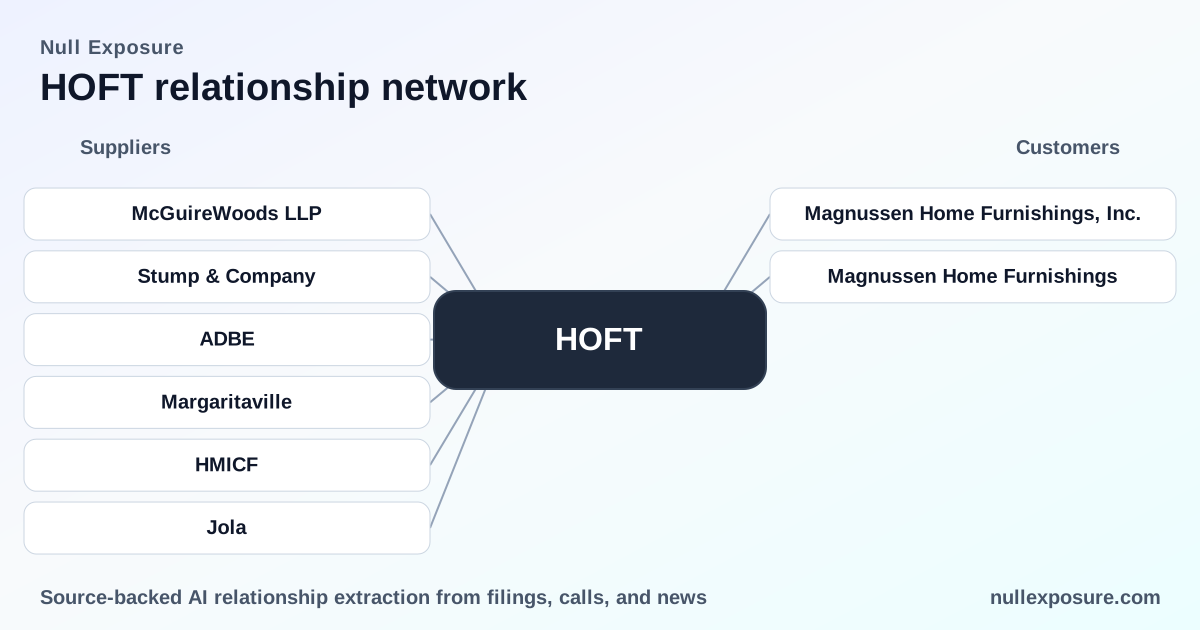
- Magnussen Home Furnishings, Inc. — Hooker announced and completed the sale of the Pulaski Furniture and Samuel Lawrence Furniture casegoods brands to Magnussen for approximately $6.1 million, closing after a definitive agreement. Source: GlobeNewswire press releases (agreement announced Dec 1, 2025; sale completed Dec 15, 2025) and corroborating industry coverage from CityBiz, FurnInfo, HomeNewsNow and HFBusiness in December 2025.
Why the Magnussen transaction matters for customer strategy
The Pulaski and Samuel Lawrence divestiture represents an explicit narrowing of Hooker’s Home Meridian brand footprint and shifts the buyer/seller dynamic for downstream distributors and dealers carrying those SKUs. The transaction is a cash realization of formerly owned casegoods brands and reduces brand‑level intangible exposure that required valuation work during fiscal 2025. Given the Home Meridian segment’s different customer mix and lower margins, the sale reduces brand complexity and concentrates Hooker on its core branded and domestic upholstery offerings. Source: GlobeNewswire Dec 2025; company disclosures in fiscal 2025 notes on Home Meridian asset valuations.
Operating constraints investors should model as company-level signals
Treat these constraints as structural inputs to revenue and receivables modeling rather than tie them to any one buyer unless explicitly stated in source text.
- Contracting posture: Predominantly short‑term commercial terms with spot sales at shipment and invoice timing; project‑style work in Home Meridian introduces occasional longer tail orders.
- Payment and collectability: Credit evaluated customers get 30–60 day terms; hospitality and custom orders require significant deposits, which reduces working capital volatility on projects but concentrates risk when retail partners fail.
- Customer concentration and criticality: Top customers materially affect revenue and accounts receivable; historical bankruptcy of a large customer produced a $3.1M bad‑debt expense and triggered intangible revaluations.
- Geographic and supply chain footprint: Primarily North American sales; Asia container direct programs introduce seasonal shipping cadence tied to Lunar New Year and inventory flow timing.
- Segment maturity: Core casegoods and domestic upholstery are mature cash generators with manufacturing and distribution capabilities; Home Meridian behaved more like a project/business‑to‑business segment with lower margins and longer order cycles prior to the Pulaski/Samuel Lawrence sale.
Financial context for customer risk assessment
Hooker is a small‑cap furniture operator: Revenue TTM ~$278.1M, gross profit ~$73.5M, diluted EPS -$1.20, market cap ~$133M (latest quarter ended Jan 31, 2026). The company reported an operating loss in fiscal 2025 driven by lower sales volumes, restructuring, bad‑debt and intangibles impairment. Use these public financials to size customer concentration exposure against the balance sheet — inventory, cash and accounts receivable are the dominant working‑capital drivers for the business. Source: HOFT company overview and fiscal 2025 filings (period end Jan 31, 2026).
Bottom line — how investors should treat customer signals
- Credit and concentration are central to downside risk. A small set of large retail customers materially influences cash collection and working capital.
- Operational simplicity increased with the Pulaski/Samuel Lawrence sale. The $6.1M divestiture reduces brand-level complexity and transfers downstream distribution relationships to Magnussen.
- Model conservatively on turnover and receivable days. Given 30–60 day terms combined with occasional larger project prepayments and episodic bankruptcies, stress scenarios should include concentrated customer defaults and supply‑chain lags tied to Asia shipments.
For a detailed view of Hooker’s customer relationships and structured monitoring, visit https://nullexposure.com/ for relationship dashboards and alerts.
Bold takeaways: Hooker’s revenue is short‑cycle and invoice‑driven, counterparty concentration is material, and the recent Magnussen purchase converts two casegoods brands into cash while simplifying Home Meridian exposure.