Harley‑Davidson (HOG) — dealer network stress, finance restructurings and partner fallout investors should price in
Harley‑Davidson sells premium motorcycles and branded lifestyle products through a global network of independent dealers and direct channels, and it monetizes via wholesale shipments, parts/apparel/licensing royalties, and a large captive finance business (HDFS) that originates and services retail and wholesale loans. The company’s economics depend on dealer throughput, HDFS liquidity and credit performance, and the success of LiveWire as an adjacent EV growth engine. For investors evaluating customer relationships, the near‑term picture is one of dealer contraction in key markets, material finance transactions with institutional partners, and strategic dependence on HDFS to support retail demand.
Learn more about our coverage at https://nullexposure.com/—this piece focuses on relationship risks and the operating model that underpins HOG’s revenue streams.
What the recent relationship signals mean for sales and credit exposure
Harley‑Davidson is structured around three pillars: HDMC (motorcycles, parts, accessories, licensing), HDFS (wholesale and retail finance), and LiveWire (electric motorcycles). Key operating characteristics:
- Contracting posture: HDMC sells motorcycles to independent dealers on short‑term open‑account terms (commonly 30–120 days), while HDFS manages a mix of short‑term wholesale receivables and multi‑year retail finance contracts and securitizations. Licensing contracts are longer and royalty‑driven, sometimes up to five years.
- Concentration and criticality: The dealer network is critical and material to revenue; HDFS’s scale (billions of retail receivables) makes finance operations a material driver of cash flow and risk. The allowance for credit losses on retail receivables is a critical audit matter.
- Maturity profile: Core motorcycle manufacturing and parts are mature cash generators; LiveWire is an early‑stage, loss‑making growth segment with separate balance‑sheet exposures (term loan adjustments, manufacturing arrangements).
- Geography: The business is global with the largest exposure to North America and meaningful EMEA/APAC footprints that affect sales, tariffs and FX risk.
These characteristics translate into two investor priorities: monitor dealer footprint changes and HDFS capital transactions that reprice credit risk or shift receivables off‑balance sheet.
Dealer closures and franchise shifts — immediate demand signal
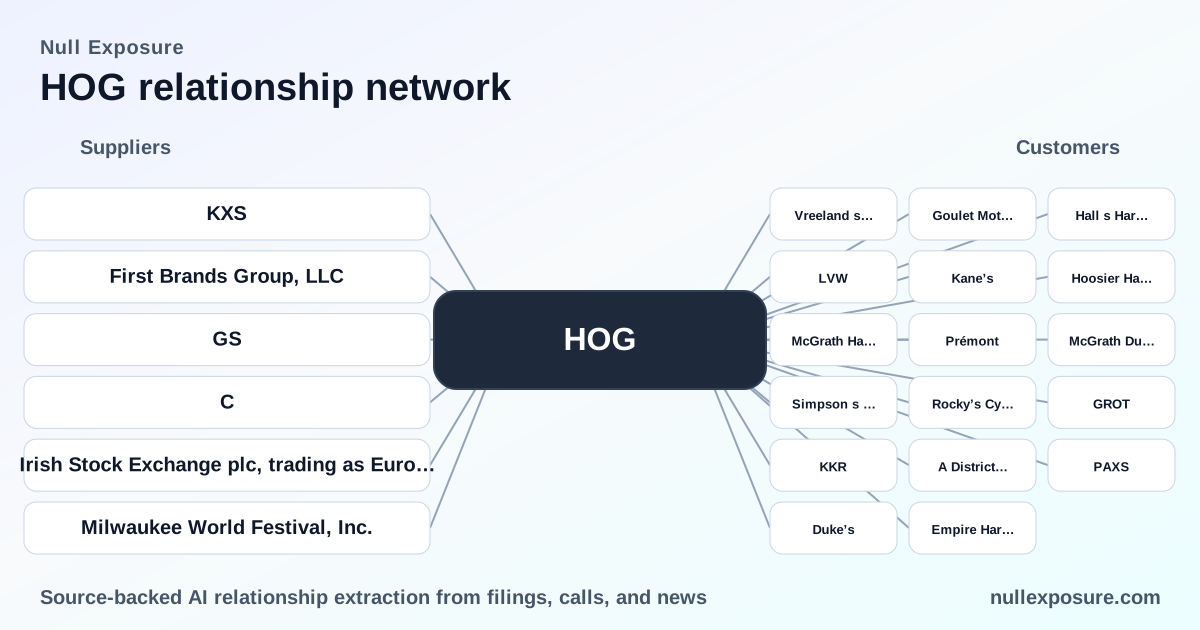
- Vreeland’s Harley‑Davidson dealership in Bloomsburg, Pennsylvania closed in September 2025, a data point that underscores localized dealer attrition in FY2026. Source: The Sun, March 2026.
- Prémont in Quebec City shuttered amid the same wave of dealer closures affecting Harley’s North American and Canadian footprint in FY2026. Source: The Globe and Mail, March 2026.
- Rocky’s Cycle Centre in London, Ontario closed as part of multiple major retailer exits in FY2026. Source: The Globe and Mail, March 2026.
- Duke’s (near Chatham) closed during FY2026 dealer consolidation in Canada and the U.S. Source: The Globe and Mail, March 2026.
- Blackridge in Cambridge is listed among major Ontario retailers that shut down in FY2026, reflecting dealer vulnerability in key provincial markets. Source: The Globe and Mail, March 2026.
- Goulet Motosports in Hawkesbury closed during the FY2026 retail downturn reported in Canada. Source: The Globe and Mail, March 2026.
- Kane’s in Calgary closed its Harley‑Davidson franchise and converted to a used‑bike sales/service location, signaling franchise model contraction in Alberta in FY2026. Source: The Globe and Mail, March 2026.
- A District Harley‑Davidson in Gaithersburg, Maryland was sold in October after 40 years in operation, a transactional outcome that reduces dealer count in FY2026. Source: The Sun, March 2026.
- Empire Harley‑Davidson closed in September after 13 years serving the New York City suburbs, another FY2026 closure. Source: The Sun, March 2026.
- Hall’s Harley‑Davidson dealership in Springfield, Illinois closed after 63 years and the business was rebranded as Simpson’s Harley‑Davidson; the event signals consolidation and brand continuity via successor operators in FY2026. Source: The Sun, March 2026.
- Simpson’s Harley‑Davidson — the renamed operator of Hall’s former location — now continues dealership operations under the Simpson name after the FY2026 transition. Source: The Sun, March 2026.
- Hoosier Harley‑Davidson in Elkhart, Indiana shut its doors in December after nearly two decades, a FY2026 closure that reduces regional retail coverage. Source: The Sun, March 2026.
- McGrath Dubuque Harley‑Davidson and McGrath Hawkeye Harley‑Davidson (Iowa) both closed in October, indicating multi‑site family‑operator exits in FY2026. Source: The Sun, March 2026.
- Duke’s entry is listed earlier; included here for clarity with the Globe and Mail FY2026 coverage. Source: The Globe and Mail, March 2026.
Investor takeaway: Dealer attrition in FY2026 is broad‑based across North America and Canada and directly compresses HDMC wholesale volumes and HDFS floorplan demand.
Institutional finance and LiveWire financing — refinancing and asset sales reshape HDFS
- KKR — Harleys’ finance arm (HDFS) sold a 9.8% common equity interest to KKR as part of a multi‑component HDFS transaction that included back‑book sales and receivables transfers in FY2026. Source: Motley Fool / earnings transcript, Q4 2025 (reported March 2026).
- PIMCO — along with KKR, purchased a 9.8% equity stake in HDFS as part of the same FY2026 HDFS transaction involving sales of existing and future loan receivables. Source: InsiderMonkey / Q4 2025 earnings transcript, March 2026.
- LiveWire / LVW / LVWR — Harley‑Davidson renegotiated and funded a term loan with LiveWire in Q4 2025, reducing principal to $75 million; LiveWire’s S2 Del Mar production is assembled at Harley‑Davidson’s York, PA plant (FY2022–FY2023 historical notes on manufacturing). Source: InsiderMonkey transcript (Q4 2025) and RideApart reports (FY2022–FY2023).
- RDNW — RideNow Group / RideNow/RideNow rebranding activity: The RideNow Group merged and rebranded two Tucson dealerships under the Harley‑Davidson of Tucson name as of FY2025, reflecting consolidation among multi‑site resellers. Source: Motorcycle Powersports News, May 2026.
- SAH (Sonic Automotive) — Sonic Powersports reported strong Sturgis Rally sales and cited partnership with Harley‑Davidson as a commercial enabler; Sonic is a dealer group that meaningfully participates in event‑driven retail uplift (FY2025). Source: Sonic Automotive press release, FY2025.
- LVWR entries document LiveWire’s assembly and strategic partnership leverage with Harley‑Davidson for manufacturing and supply chain dating to FY2021–FY2023. Source: RoadracingWorld and ElectricCarsReport (FY2021–FY2023).
Investor takeaway: HDFS restructuring with KKR and PIMCO and the LiveWire financing adjustments reduce immediate capital strain but redistribute finance risk to institutional partners; monitor securitizations and forward‑flow agreements for their effect on HDFS margins and credit exposure.
Other relationship notes
- Blackridge / GROT — Blackridge (ticker noted as GROT in one result) is listed among Ontario dealers that closed in FY2026; the listing underscores regional dealer concentration risk. Source: The Globe and Mail, March 2026.
- Duke’s, Goulet Motosports and others are grouped in the Globe and Mail FY2026 narrative on dealer closures cited above; these entries together signal national dealer network weakness in FY2026.
Constraints that define the business model — how HOG contracts and where risk concentrates
- Short‑term selling to dealers is core: HDMC sells motorcycles to independent dealers generally on open account terms (30–120 days), producing short‑term wholesale receivables that drive working capital. This creates high turnover exposure to dealer solvency.
- Hybrid finance book: HDFS holds both short‑term wholesale receivables and long‑term retail receivables; the retail portfolio is large and heterogeneous, with vintage‑based loss forecasting and a substantial allowance for credit losses that is a critical audit focus.
- Licensing and royalties provide usage‑based revenue: A material portion of non‑motorcycle revenue is licensing income and sales‑based royalties recognized quarterly or annually.
- Framework and securitization levers: The company uses conduits and SPE transfers (Canadian conduit, U.S. conduit facilities) to sell receivables and access funding lines, creating variability in reported finance receivable balances and liquidity availability.
- Geographic breadth with North America focus: The business is global, but North America is the largest revenue driver and accounts for the majority of retail volumes; EMEA and APAC exposures add regulatory, tariff and FX complexity.
- Materiality and criticality: The captive finance operation is material to consolidated results and strategic distribution; dealer network health is a critical commercial dependency.
If you want a deeper, line‑by‑line risk map of HOG’s finance transactions and dealer exposure, visit https://nullexposure.com/ for our full suite of relationship analytics.
Bottom line for investors
Harley‑Davidson’s revenue engine is under pressure from dealer closures and slower retail demand, and HDFS capital actions with KKR/PIMCO and LiveWire loan renegotiations reshape where credit risk sits. The company retains durable brand and product advantages, but investors should price in dealer consolidation, rising HDFS funding costs, and execution risk from LiveWire expansion when modeling forward cash flows.