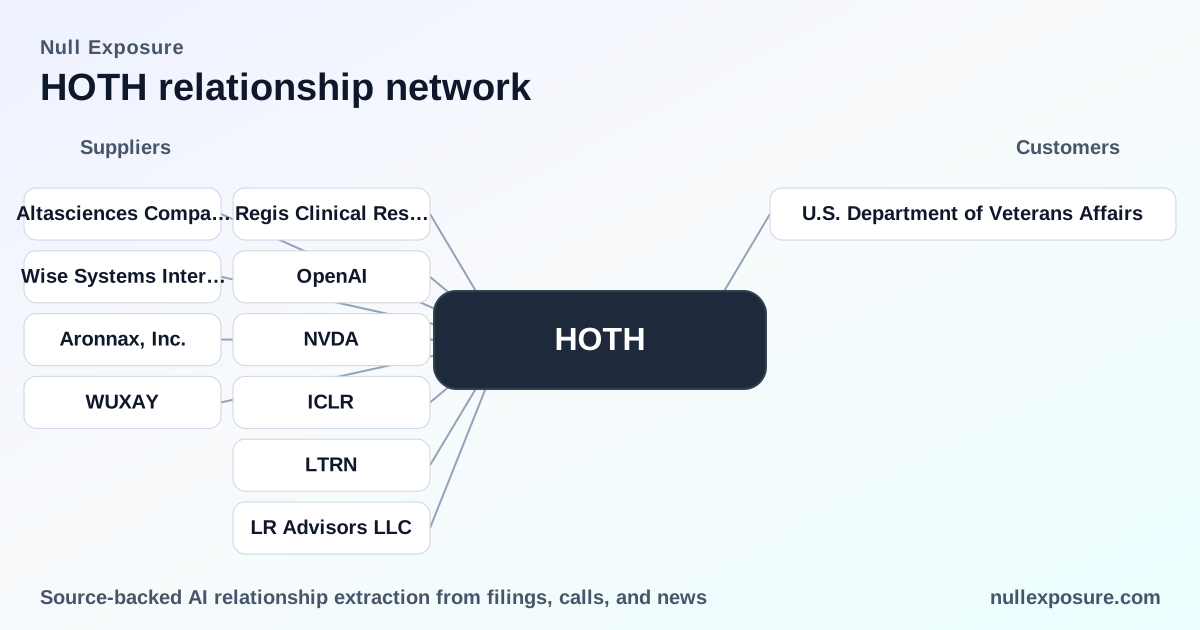
Hoth Therapeutics: Customer Relationships and Commercial Constraints That Matter to Investors
Hoth Therapeutics operates as a clinical-stage biopharmaceutical company focused on therapies for dermatological and metabolic indications, and it monetizes through research collaborations, licensing deals that produce milestone and royalty streams, and ongoing equity financings to fund development. The company currently reports zero commercial revenue and negative earnings, so investor returns depend on successful clinical de‑risking, downstream licensing or commercialization, and disciplined capital markets activity. For a concise portal to the underlying relationship intelligence, see https://nullexposure.com/.
Strategic thesis in one line
Hoth is a development-stage biotech that converts science into value principally through sponsored research and intellectual property licensing, supplemented by equity-based financing; clinical collaborations with government and commercial partners are the near-term value drivers while commercial receipts remain contingent on approvals and partner commercialization.
U.S. Department of Veterans Affairs — a funded research collaboration
Hoth signed a research agreement under which the company will fund a VA study and supply GDNF, while the VA will retain data rights and share de‑identified results under a HIPAA‑compliant Cooperative Research and Development Agreement (CRADA); the study includes a head‑to‑head side‑by‑side comparison versus semaglutide. This was announced in a company press release distributed via PR Newswire in March 2026. (PR Newswire, March 10, 2026)
- Why this matters: the VA collaboration is a non‑commercial, research‑stage relationship that provides clinical comparators and data access without immediate product revenue, but it strengthens Hoth’s evidentiary base and could materially increase the value of GDNF if clinical signals are positive.
What the relationship set tells investors about Hoth’s operating model
The publicly visible signals and excerpts from Hoth’s filings and press flow reveal a consistent operating posture: the company runs a hybrid funding and licensing model that balances short‑term capital actions with longer‑dated contractual rights.
- Contracting posture — a mix of short and long time horizons. Filings show spot financing behavior (inducement warrant exercises and private placements executed to raise near‑term cash) alongside long‑term warranty/option instruments and multi‑year license terms used to preserve upside and defer cash flow—a deliberate structure that preserves optionality while addressing immediate funding needs (SEC filings and investor notices, 2023–2024).
- Commercialization versus development focus. Hoth’s segment disclosures describe a single operating segment as a clinical‑stage biopharma, where value is tied to successful trials and regulatory approvals rather than product sales today (Company filings, FY2023–FY2024).
- Counterparty mix and concentration. Filings and public excerpts indicate a meaningful engagement with government entities in both regulatory and contracting contexts and material exposure to individual prescribers and patients in the economics of future uptake; government relationships can be strategically valuable for clinical validation and reimbursement pathways (company disclosures, policy sections).
- Licensing posture as recurring monetization channel. The company has explicit licensing activity (for example, licensing HT‑005 back to a commercial partner and structured royalty arrangements), demonstrating an active strategy of monetizing IP through sublicenses and royalties rather than immediate commercialization in all cases (license amendments described in filings).
- Capital markets dependence. Recurrent references to at‑the‑market agreements, warrant exercises, and private placements indicate ongoing reliance on equity capital to fund operations, consistent with a spend band profile in the low‑to‑mid single‑digit millions per transaction (ATM agreement and private placements, 2023–2024).
Operational constraints and risk implications for investors
Several company‑level constraints from filings and disclosures shape the risk/reward profile for Hoth and influence how customer relationships convert into value:
- Regulatory and reimbursement exposure is prominent. The company highlights that coverage decisions by Medicare, Medicaid and other payors materially affect future sales prospects, so even successful trials require parallel reimbursement strategies to unlock commercial value (regulatory and payor risk language).
- Materiality and criticality diverge. Financials show no net revenues to date, labeling commercial receipts immaterial at present; at the same time, the company treats IT and network security, and partner perception of security, as critical to operations—an operational dependency that could cause meaningful disruption if breached (financial and operational risk disclosures).
- Licensing dynamics are explicit and structured. The Zylö amendment and similar license language detail tiered royalty and sublicense revenue mechanics (low single‑digit to low double‑digit percentages) that would generate recurring revenue on commercialization but only after first commercial sale in defined territories (license amendment language in company filings).
- Relationship maturity and stage. The firm’s mix includes active collaborations, terminated licenses (for example a terminated university license with an associated accrual reversal), and ongoing prospects—indicating a portfolio stance where partnerships are actively managed, some are wound down, and others are being nurtured toward commercialization.
- Spend magnitude and financing cadence. Public disclosures cite private placements and ATM activity generating proceeds in the $1m–$10m range, implying a capital intensity profile consistent with late preclinical/early clinical-stage programs rather than large‑scale commercial manufacturing.
Relationship roles observed across disclosures
Company documents and press activity show that Hoth operates in multiple commercial roles: seller of future products and licensor of IP, buyer of contract research and capital services, service provider in research collaborations (e.g., supplying clinical material), and occasional distributor relationships tied to manufacturing or recalls. This multi‑role footprint requires investors to evaluate counterparties across regulatory, clinical, and commercialization domains rather than purely commercial customer lists.
What investors should watch next
- Clinical readouts from the VA study and any comparative performance versus semaglutide will be the most direct near‑term value inflection; positive comparative data would accelerate licensing interest and potential partner commercialization conversations (VA press release, March 2026).
- Capital strategy and dilution pacing: monitor ATM activity and warrant exercises for their impact on share count and runway (ATM and warrant disclosures, 2023–2024).
- Licensing monetization timing: royalty mechanics exist on licensed assets but will only materialize on first commercial sale, so calendar and regulatory milestones tied to licensees are critical to revenue visibility.
For a centralized view of Hoth’s partner landscape and to track relationship developments in a structured way, visit https://nullexposure.com/.
Bottom line
Hoth is a development‑stage biotech that creates value through funded research collaborations and licensing structures while relying on capital markets to sustain operations; the VA collaboration is strategically important for evidence generation but does not change the company’s zero‑revenue profile until downstream commercialization or royalty triggers occur. Investors should weigh clinical progress, partner monetization timelines, and ongoing financing cadence as the three levers that will determine valuation realization.