Helmerich & Payne (HP): Customer footprint, contract posture, and near-term revenue signals
Helmerich & Payne (HP) operates as a performance-driven drilling services and solutions provider that monetizes primarily through dayrate and fixed-term drilling contracts, mobilization/demobilization fees, reimbursable ancillary services, and higher-margin performance-based incentives; the company also generates manufacturing and engineering revenue through its BENTEC™ unit and occasional real-estate disposals. Revenue is concentrated in contracted rig days and backlog, with cash flow driven by rig utilization, contract mix (fixed-term versus daywork/spot), customer concentration, and regional exposure. For a concise, data-backed view of H&P’s customer relationships, visit https://nullexposure.com/.
Executive summary: what investors should watch in the customer base
Helmerich & Payne’s commercial model is dominated by two levers: contract coverage (backlog) and active rigs under contract. The company reported a large contract backlog (multi‑billion dollars) and a meaningful share of revenues from its top customers — a structural source of visibility but also concentration risk. Its contracts range from multi‑year fixed‑term agreements to daywork and well‑to‑well arrangements, and a significant portion of international revenue flows from national oil companies (NOCs), which increases political and sovereign‑credit exposure. Operationally, the company balances asset‑heavy land drilling with asset‑light offshore management and BENTEC™ manufacturing — creating mixed margin profiles across segments.
Key investor takeaways: backlog and renewal activity, rig utilization, exposure to NOCs and Middle East/Latin America regions, and credit collection on reimbursable items are the primary drivers of near‑term cash flow and valuation. Learn more at https://nullexposure.com/.
How H&P’s contracting posture and customer characteristics determine risk and return
H&P’s customer relationships show a deliberate mix of contract structures and counterparty profiles that shape revenue predictability and margin:
- Contracting posture: The firm operates a hybrid model: a material base of fixed‑term contracts that provide backlog visibility and mobilization recoveries, alongside daywork/usage‑based arrangements and spot work that introduce price and utilization sensitivity. The company also uses FlexPool framework agreements to secure minimum drilling days while giving customers operational flexibility.
- Concentration: A handful of large customers account for a substantial portion of revenue (over half of consolidated operating revenues came from the top ten customers in FY2025), creating material dependency on renewal dynamics and counterparty credit.
- Counterparty mix & criticality: National oil companies and large international customers are prominent, which supports scale but increases exposure to sovereign risk, contract suspensions, and local content rules. This profile elevates both the strategic importance and the political risk of H&P’s customer book.
- Geographic maturity & reach: H&P operates globally with concentrated exposure in North America and the Middle East / EMEA, meaningful Latin America activity, and a smaller footprint in APAC; the KCA Deutag acquisition accelerated international scale but introduced integration and suspension risk in some jurisdictions.
- Revenue mechanics: Dayrates, mobilization/demobilization accounting, reimbursables and performance bonuses mean revenue recognition and cash collection are operationally intensive; accounts receivable and reimbursement volatility are an important credit metric for investors.
- Service & manufacturing split: The business is primarily services (drilling revenue) with a secondary manufacturing/engineering arm (BENTEC™) that can provide diversification and incremental margin.
Relationship-by-relationship review (concise, sourced)
Below are every unique relationship referenced in the available results, presented with a plain‑English summary and the originating source.
EHGO
A Simply Wall St. news excerpt (March 9, 2026) lists EHGO as distributing products under several brand names, including "HP," indicating a commercial reference to the HP brand in a distribution context; the excerpt does not detail a drilling‑services commercial tie to Helmerich & Payne. Source: Simply Wall St. news item, March 2026 (https://simplywall.st/stocks/us/commercial-services/nasdaq-ehgo/eshallgo).
Northwood Investors, LLC
Helmerich & Payne completed the sale of Tulsa’s Utica Square Shopping Center to Northwood Investors, LLC, a New York‑based private real estate firm; the transaction was covered in local and market press in May 2026 and represents a non‑operating real‑estate disposition rather than core drilling revenue. Sources: OKEnergyToday and MarketScreener reports, May 2026 (https://www.okenergytoday.com/2026/04/drilling-company-sells-tulsas-utica-square-shopping-center/; https://www.marketscreener.com/news/helmerich-payne-inc-nyse-hp-acquired-utica-square-shopping-center-inc-ce7e51d2d08cf52c).
BP (bp plc)
H&P’s joint venture (Turan Drilling and Engineering Company LLC) secured a contract renewal with bp for operations in the Caspian Sea, reinforcing H&P’s international offshore/international solutions revenue stream and backlog in FY2026. Sources: The Globe and Mail press release and related market coverage, March–May 2026 (https://www.theglobeandmail.com/investing/markets/stocks/BP/pressreleases/441687/bp-plc-bp-gets-a-hold-from-dbs/; also referenced in Investing.com and MarketScreener reports, 2026).
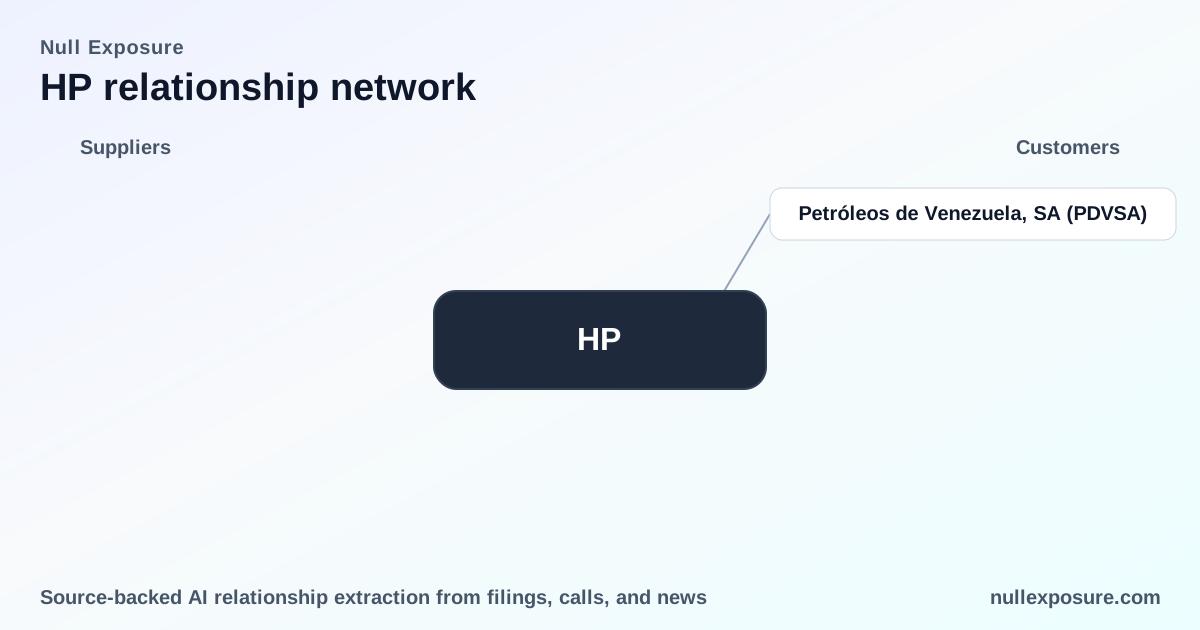
Petróleos de Venezuela, S.A. (PDVSA)
U.S. appeals court action upheld H&P’s legal win against PDVSA relating to approximately $90 million in unpaid debt owed to H&P’s Venezuelan subsidiary for drilling services, a receivable‑collection and sovereign‑counterparty enforcement event recorded in FY2025. Source: MarketScreener legal coverage, March 10, 2026 (https://www.marketscreener.com/news/us-appeals-court-upholds-helmerich-payne-win-against-venezuela-ce7d5adedd89f622).
What the constraints tell investors about operational levers and risks
The documented constraints extracted from company disclosures translate into actionable company‑level signals:
- Contract tenors are mixed but tilt toward multi‑period visibility. Fixed‑term contracts (six months to multiple years) produce sizeable backlog and deferred mobilization revenue, while daywork and well‑to‑well contracts inject utilization sensitivity.
- Revenue recognition and cashflow cadence are usage and billing dependent. Monthly billing for services, reimbursables tied to activity, and mobilization deferrals imply cash collections are correlated to operational uptime and customer credit.
- Customer concentration is material and valuation‑relevant. Top ten customers supplied roughly 54% of operating revenues in FY2025, and three customers supplied ~25.6%, creating meaningful single‑counterparty risk if a major contract is suspended or terminated.
- NOC exposure increases sovereign/operational risk. A significant share of international revenue comes from national oil companies; these contracts are lucrative but susceptible to local politics, suspensions, and local content rules.
- Geographic exposure is weighted to North America and EMEA/Middle East. North America remains the largest revenue pool, but international and Middle East exposure increased post‑KCA Deutag acquisition, expanding both opportunity and geopolitical complexity.
- Materiality and criticality are explicit. The company’s own disclosures frame these relationships as material to cash flow and operations; disruptions—commodity price shocks, regulation changes, or contract suspensions—directly affect utilization and revenue.
Bottom line for investors
Helmerich & Payne is a cash‑flow levered services business where backlog and rig utilization determine near‑term earnings, and where customer concentration and NOC exposure create asymmetric downside. Legal wins on receivables (PDVSA decision) and contract renewals in strategic geographies (bp in the Caspian) are positive cadence events, while asset dispositions (Utica Square sale) and ongoing integration of KCA Deutag reshape capital allocation and international risk. For deeper comparative analysis of counterparties and contract tenure across H&P’s portfolio, visit https://nullexposure.com/.
If you’d like a tailored exposure summary—counterparty concentration, expected backlog recognition by FY period, or regional credit maps—I can prepare a focused briefing.