HighPeak Energy (HPK): Customer Concentration, Contracts and What Investors Should Price In
HighPeak Energy operates as an independent E&P concentrated in the Midland Basin; it monetizes by producing crude oil, NGLs and natural gas and selling those volumes under a mix of long‑term marketing contracts and spot sales, while using derivatives to hedge price exposure. The business model is heavily counterparty‑driven: two purchasers accounted for roughly 94% of revenue in FY2024, creating both revenue visibility through contracts and acute counterparty concentration risk. For a rapid view of the underlying source documents, see the company’s FY2024 Form 10‑K and related exhibits. — Visit https://nullexposure.com/ for more.
The headline: two customers drive cash flows
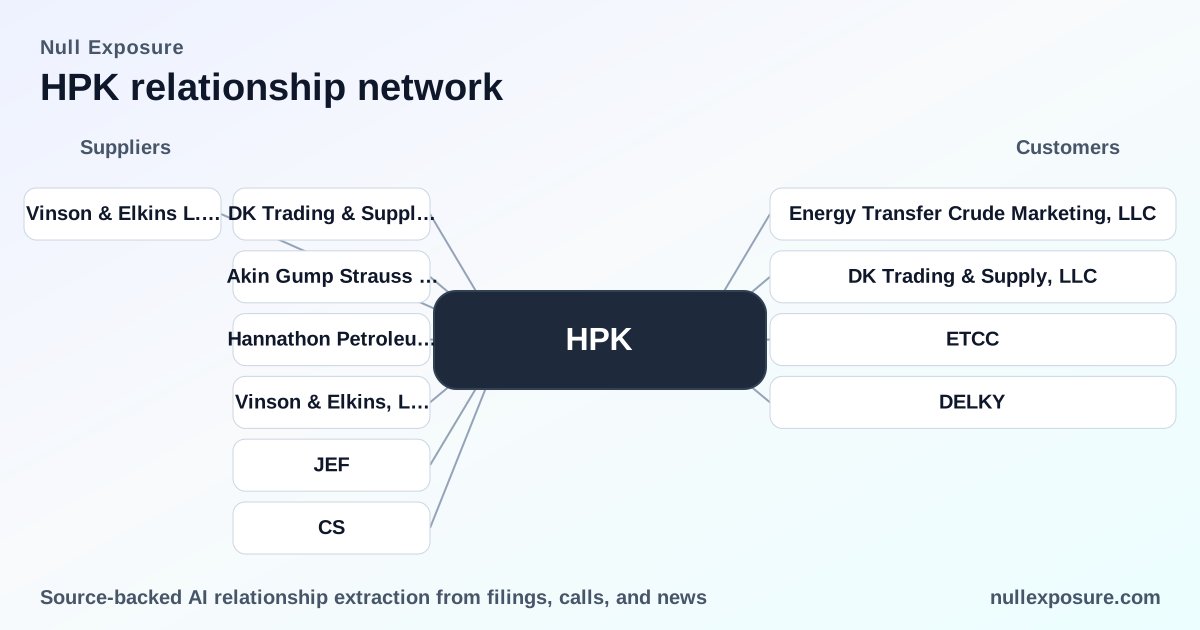
HighPeak’s revenue base is concentrated. Delek (DK Trading & Supply, LLC) accounted for ~76% of revenues in 2024, while Energy Transfer Crude Marketing, LLC (ETC) accounted for ~18%, leaving limited diversification in purchaser exposure. According to HighPeak Energy’s Form 10‑K for the year ended December 31, 2024, these two counterparties collectively represented approximately 94% of revenue for the year, underscoring both contractual stability and single‑counterparty vulnerability.
Customer relationships — the full list and what each means for investors
Below are the relationships extracted from the company’s FY2024 disclosures. Each entry is summarized in plain language with a direct source reference.
-
Energy Transfer Crude Marketing, LLC — HighPeak reported that Energy Transfer Crude Marketing, LLC accounted for approximately 18% of the company’s revenues in 2024 and 14% in 2023, representing the company’s second‑largest purchaser by revenue. (Source: HighPeak Energy Form 10‑K, FY2024, Note 12 — Major Customers.)
-
DK Trading & Supply, LLC — Reported as the primary purchaser under the Delek name, DK Trading & Supply (Delek) accounted for approximately 76% of revenue in 2024 and 82% in 2023, making it the dominant counterparty for HighPeak’s marketed production. (Source: HighPeak Energy Form 10‑K, FY2024, Note 12 — Major Customers.)
-
ETC (inferred symbol ETCC) — The 10‑K references “ETC” in contract language and marketing arrangements; the filing states the majority of the remaining crude oil sales are sold to ETC under a contract without a minimum volume commitment, indicating a meaningful but non‑committed purchasing relationship. (Source: HighPeak Energy Form 10‑K, FY2024 — crude oil marketing agreements.)
-
ETCC (duplicate / inferred) — The document also lists ETCC as an inferred symbol for ETC in the disclosures; the narrative treatment is identical: ETC purchases most of the remaining crude oil under arrangements that lack minimum volume commitments. (Source: HighPeak Energy Form 10‑K, FY2024 — crude oil marketing language and major customer table.)
-
Delek (inferred symbol DELKY) — The filing names Delek explicitly as the largest purchaser and describes an amended and restated crude oil marketing contract that materially governs the sale and delivery of the company’s production. The 10‑K closes the loop by quantifying Delek’s revenue share and contract structure. (Source: HighPeak Energy Form 10‑K, FY2024, Note 12 and contract descriptions.)
-
DELKY (duplicate / inferred) — The filing’s mapping to the ticker DELKY appears in the disclosure extraction; the economic facts are the same: Delek/DELKY accounted for ~76% of revenue in 2024 and is party to marketing and gathering arrangements described in the 10‑K. (Source: HighPeak Energy Form 10‑K, FY2024.)
Contracting posture and operational constraints that matter to valuation
HighPeak’s public filings reveal the following company‑level operational characteristics and contract constraints that shape revenue durability and downside risk:
-
Long‑term, minimum‑volume commitment with Delek. The company disclosed a twelve‑year crude oil contract with Delek that includes a minimum volume commitment beginning May 2024 of 23,500 Bopd for the first ten years and a contractual monetary commitment quantified in the 10‑K (contract total described at $138.7 million, with approximately $130.3 million remaining as of December 31, 2024). This provides near‑term revenue certainty while creating a locked‑in delivery obligation. (Source: HighPeak Energy Form 10‑K, FY2024 — marketing agreement descriptions and commitment figures.)
-
Mixed contract types across the book. HighPeak transacts under long‑term marketing agreements, subscription agreements referenced in corporate filings, and spot/market sales for liquids and natural gas that are sold to intrastate/interstate markets on competitive pricing. Settlement timing is typically one to two months after sale, and natural gas is often sold at lease location. (Source: HighPeak Energy Form 10‑K, FY2024 — revenue recognition and marketing contracts.)
-
Geographic concentration in the Permian Basin (U.S.). All revenue is U.S.‑originated and the asset base is concentrated in the Midland Basin (Howard and Borden counties and adjacent areas), which supports logistics and pricing alignment to Midland pricing indices but increases exposure to regional pipeline and takeaway constraints. (Source: HighPeak Energy Form 10‑K, FY2024 — company description and geography statements.)
-
Counterparty concentration is critical to credit risk. The company flags receivable concentration as a principal credit exposure; historically the firm does not require collateral and relies on prequalification of purchasers, but the concentration itself is labeled a material/critical exposure in the 10‑K. (Source: HighPeak Energy Form 10‑K, FY2024 — credit risk and major customers discussion.)
-
Material monetary commitments are non‑trivial. The minimum volume commitment with Delek was quantified in the filing and carries a multi‑million dollar remaining commitment figure that investors should treat as a contingent contractual obligation affecting cash flows and production allocation. (Source: HighPeak Energy Form 10‑K, FY2024.)
For a structured view of these signals and how they map to portfolio risk, visit https://nullexposure.com/.
Investment implications — what to underwrite and what to hedge
-
Revenue visibility vs. concentration risk. The Delek contract supplies predictable volumes and supports financing covenants, but investors must underwrite scenarios where a single counterparty’s commercial or credit actions materially change realized prices or collections. The contract’s minimum volumes give production off‑take certainty but also lock in delivery exposure.
-
Price risk remains primary. HighPeak’s earnings are still driven by commodity prices; hedging programs reduce but do not eliminate this exposure. The company’s realized price per Boe and realized revenues are therefore a function of both physical contracts and market cycles.
-
Operational leverage and regional dynamics. Midland basis, pipeline availability and gathering arrangements reported in the 10‑K influence realized differentials; the company’s agreements with gatherers (e.g., DKL Permian Gathering under the Delek framework) are operationally important.
-
Regulatory and ESG pathways change long‑term demand. The 10‑K explicitly references federal actions (e.g., methane fee descriptions) and geopolitical dynamics as potential demand drivers that can materially alter long‑term commodity demand and margins.
Bottom line
HighPeak’s monetization model is straightforward: produce in the Permian and sell physical volumes, but the economic picture is dominated by two counterparties — Delek (primary) and Energy Transfer/ETC (secondary) — and by a Delek contract that both secures volumes and creates embedded delivery commitments. Investors should value the certainty embedded in long‑term contracts against the real cost of counterparty concentration and contractual commitments when modeling downside scenarios.