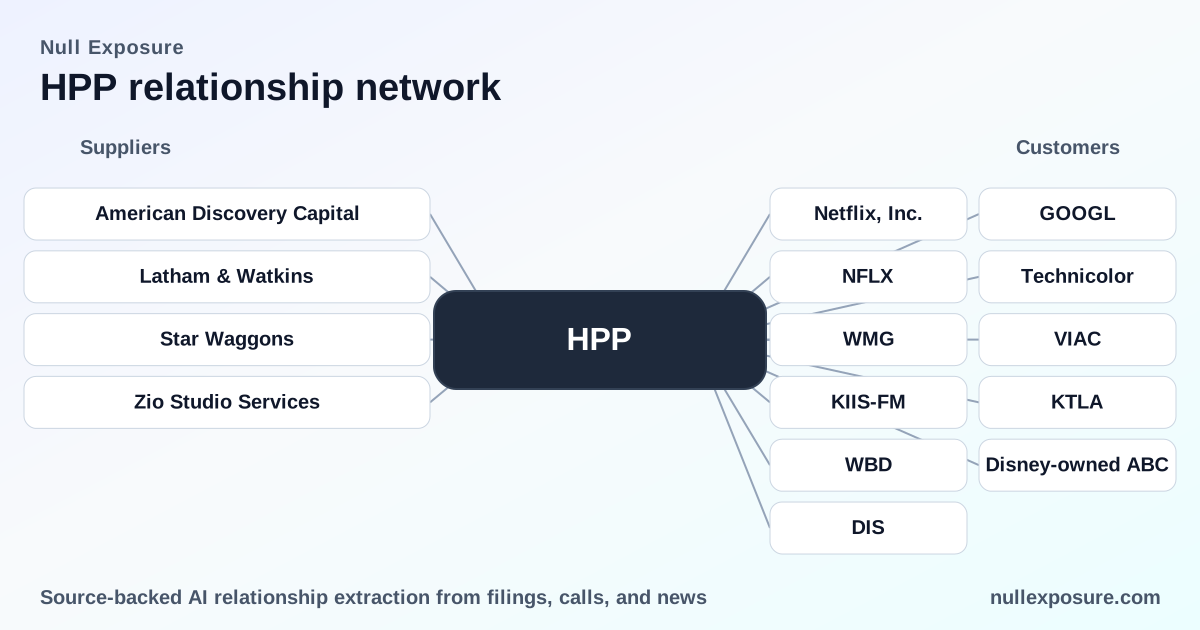
Hudson Pacific Properties (HPP) — Customer Map and Risk Profile
Hudson Pacific Properties is a vertically integrated REIT that owns and operates a portfolio of Class‑A office and purpose‑built studio properties, monetizing through long‑term leases, ancillary studio services and selective property sales. Revenue is driven primarily by office and studio rental income, tenant reimbursements and service fees from production businesses, with a concentrated customer base made up of large technology and media companies that establish multi‑year footprints in key West Coast and global media markets. For a detailed look at tenant relationships and implications for valuation, visit https://nullexposure.com/.
How HPP’s economics work — a crisp thesis for allocators
HPP earns predictable cash flow from leases (core product) while extracting incremental margin from studio services and management fees (services segment). The business mixes long‑dated office leases with studio contracts that are both usage‑driven (equipment, stage time) and fixed‑rent, producing a hybrid revenue stream that is more sensitive to tenant concentration and industry cycles than broad‑based office landlords. Portfolio concentration in California and media hubs creates both upside from ecosystem effects and downside from sector‑specific demand shocks.
Operating constraints that drive risk and optionality
- Contracting posture: The portfolio skews toward long‑term, fixed operating leases — the weighted average remaining lease term for in‑service office assets was 4.6 years as of December 31, 2024 — but HPP also carries short‑term and month‑to‑month arrangements for some studio and ancillary items. This produces stable base rent with episodic, usage‑based revenue from parking, power, equipment and stage rentals. (Source: HPP 2024 Form 10‑K)
- Concentration and materiality: HPP identifies a material dependence on technology and media tenants; the top 15 office tenants generated roughly 44.9% of office ABR and studio customers like Netflix have represented a large share of studio revenue (Netflix accounted for 19.3% of studio revenue in FY2024). Tenant concentration is a primary value‑creation and risk vector. (Source: HPP 2024 Form 10‑K; The Real Deal, 2020)
- Geographic exposure: The portfolio is heavily weighted to North America — especially California and the Bay Area — with targeted holdings in New York, Vancouver and Greater London. Regional concentration amplifies local real estate cycle risk. (Source: HPP 2024 Form 10‑K)
- Revenue mix and timing: In addition to rental contracts, HPP generates ancillary and service revenues tied to tenant usage (lighting, vehicle fleets, production equipment) and recognized under ASC 606 as point‑in‑time income. This creates variability tied to production demand and lease commencements. (Source: HPP 2024 Form 10‑K)
- Capital dynamics: HPP both sells non‑strategic assets and buys studios or portfolio additions; recent disposals and acquisitions drive lumpy cash flows and require active capital management. Major disposals drove an $821.6m swing in sale proceeds year‑over‑year. (Source: HPP 2024 Form 10‑K)
Explore HPP’s tenant network and revenue disclosures in more detail at https://nullexposure.com/.
Customer relationships: who occupies HPP’s space and why it matters
Below are the relationships identified in public filings and reporting. Each summary is one to two sentences with the reporting source.
Netflix (NFLX)
Netflix is the largest studio tenant across HPP’s Hollywood portfolio, accounting for a material share of studio revenue (19.3% of studio revenue in FY2024) and occupying multiple office and stage properties; HPP management has said the company is “fully engaged with Netflix” on portfolio outcomes related to the Collared Media position. (Source: HPP FY2024 10‑K; TS2.tech coverage of 2026 analyst remarks; Bloomberg reporting, 2025)
Company 3
Company 3 leased 70,285 square feet at HPP’s Harlow development within Sunset Las Palmas Studios, evidencing demand from post‑production vendors for dedicated studio office space in Hollywood. (Source: Los Angeles Business Journal, 2021)
Elektra Entertainment (Warner Music Group / WMG)
Elektra Entertainment was reported as a tenant at a Burbank office complex acquired by HPP, showing HPP’s historical tenant mix includes music and entertainment firms. (Source: Los Angeles Times, 2012)
KIIS‑FM
KIIS‑FM was listed among tenants at a Burbank complex HPP acquired, reflecting broadcast and local station tenancy within HPP’s media‑centric portfolio. (Source: Los Angeles Times, 2012)
Warner Bros. Entertainment Inc. (WBD)
Warner Bros. has been a tenant in HPP’s Burbank holdings, demonstrating the studio and legacy media relationships that underpin the company’s Hollywood campus strategy. (Source: Los Angeles Times, 2012)
Disney / Disney‑owned ABC
Reporting on Hollywood studio rents placed Disney (and Disney‑owned ABC) among the top studio tenants, making them part of the core media ecosystem that supports HPP’s stage and office demand. (Source: The Real Deal, 2020)
CBS / Viacom (VIAC)
CBS/Viacom was listed among HPP’s top studio tenants in market reporting that analyzed rents and tenant footprints at the Hollywood studios. (Source: The Real Deal, 2020)
KTLA
KTLA, a broadcast station, was noted as a tenant among the top studio/building occupants, illustrating local media tenancy in the portfolio. (Source: The Real Deal, 2020)
Technicolor
Technicolor occupied one of HPP’s office buildings (full building occupancy), representing specialist film‑services tenancy within the studio ecosystem. (Source: The Real Deal, 2020)
Google / Google, Inc. (GOOGL)
Google signed a long‑term (14‑year) lease for a planned creative office campus at the Westside Pavilion/One Westside project, showing HPP’s ability to attract major tech occupiers for sizeable campus deals. (Source: Deadline, 2019)
Element LA
Analysts attributed part of HPP’s FY2026 revenue beat to a lease termination fee from Element LA, indicating non‑recurring termination proceeds can be material to near‑term results. (Source: Investing.com coverage of Cantor Fitzgerald note, 2026)
Vornado Realty Trust (VNO)
In the Pier 94 development, Vornado is responsible for development while HPP provides design oversight and will manage leasing and operations, marking a JV/partner role rather than pure tenancy. (Source: Variety, 2023)
Investment implications — crisp takeaways for allocators
- Concentration is the defining factor. Large tenants (Netflix, Google, major legacy media) create both cash stability and single‑counterparty risk; investors should underwrite scenarios where a top tenant reduces footprint or renegotiates economics. (Source: HPP FY2024 10‑K; Bloomberg reporting)
- Lease maturity profile is uneven but long‑dated. The company’s lease expirations run through 2031 and beyond, providing runway for cash flows but setting up waves of renewal risk in 2025–2028 for several major tenants. (Source: HPP FY2024 10‑K)
- Studio services diversify revenue but add cyclicality. Usage‑based income from stage time and equipment supports margins in good production cycles and falls when production demand softens. (Source: HPP FY2024 10‑K)
For systematic monitoring of tenant concentration and revenue sensitivity, see the full analytics at https://nullexposure.com/.
This profile synthesizes HPP’s customer relationships and the operating constraints that determine cash‑flow resilience and risk exposure. Investors should prioritize scenarios around tenant renewal behavior, studio demand cycles and regional real‑estate dynamics when modeling HPP’s forward cash flows.