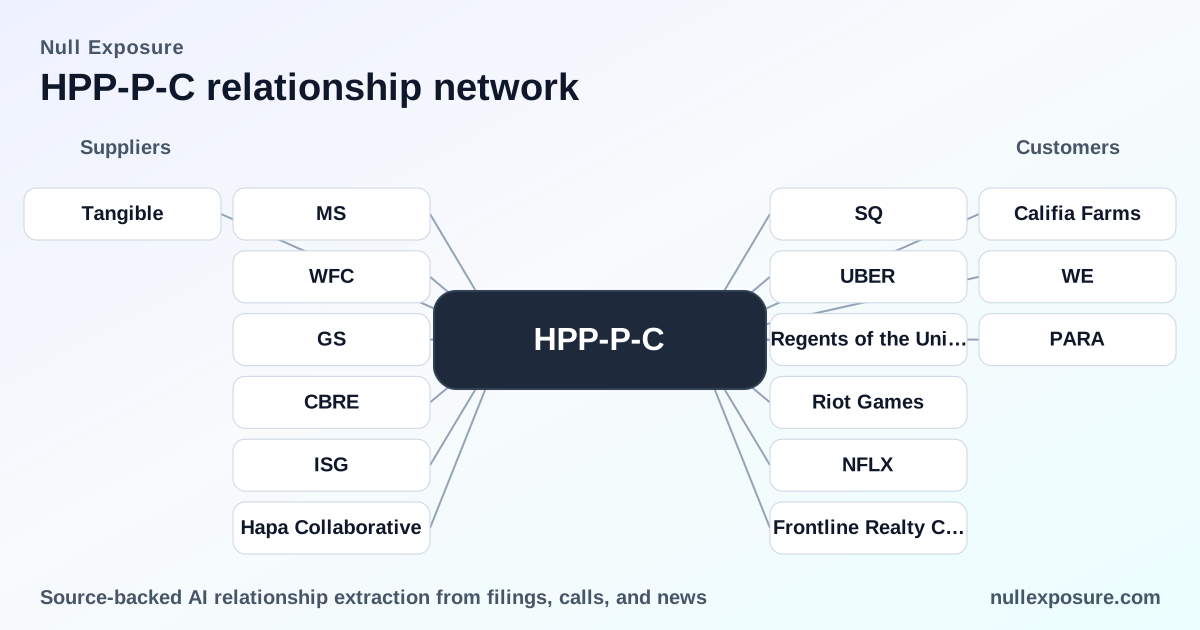
Hudson Pacific Properties (HPP‑P‑C): tenant outcomes, monetization, and what the customer map reveals
Hudson Pacific Properties operates as a West Coast-focused REIT that monetizes premium office and studio assets through long-term leases, targeted asset sales, and studio platform partnerships. The company extracts cash flow from diversified revenue lines—traditional office rents, media‑adjacent soundstage leases, and selective dispositions—while using opportunistic sales to de‑leverage the balance sheet and realize value from stabilized properties. For investors and operators evaluating HPP‑P‑C customer relationships, the critical lens is tenant mix and lease durability: tech and media tenants drive both upside and acute asset sensitivity.
Learn more about our coverage and signals at https://nullexposure.com/
Why tenants shape HPP’s valuation trajectory
Hudson Pacific’s portfolio is highly exposed to large, concentrated tenants in tech and entertainment: this profile creates high cashflow predictability when leases remain in place, but meaningful valuation sensitivity when anchor tenants relocate or terminate. The company’s strategy to monetize includes selling stabilized assets to occupiers (crystallizing equity) and leveraging its studio operating platform via joint ventures. These dynamics explain recent volatility—large single‑tenant moves materially change market values, while studio demand anchors a distinct and growing revenue stream.
Line‑by‑line customer relationships (investor primer)
Below are the original, itemized relationship mentions from public reporting; each entry is summarized in plain English with a concise source reference.
UBER — The Real Deal (FY2025)
Hudson Pacific’s 1455 Market asset lost substantial valuation after Uber and Block vacated, with reporting noting an 80% drop in tower value following those departures. According to The Real Deal (May 1, 2025), tenant pullbacks in San Francisco materially impaired asset pricing.
Uber — The Real Deal (FY2025)
A repeat mention confirms that the former headquarters tenancy tie to Uber contributed to the building’s vacancy and valuation decline. The Real Deal (May 1, 2025) provides the market context for the Mid‑Market asset’s devaluation.
Riot Games — ConnectCRE (FY2025)
CoStar and ConnectCRE identify Riot Games as the buyer of Element LA, indicating a transaction where a longtime tenant acquired the five‑building campus. ConnectCRE reporting (2025) frames this as HPP monetizing a stabilized, media‑adjacent property through an in‑market sale.
Block — The Real Deal (FY2025)
Block’s exit alongside Uber is singled out as a contributor to the value decline at 1455 Market, reinforcing the concentration risk when major tech occupants vacate. The Real Deal (May 1, 2025) documents the tenant departures' impact.
Regents of the University of California — LA Business Journal (FY2024)
Hudson Pacific sold One Westside and Westside Two in Los Angeles to the Regents of the University of California for approximately $700 million, reflecting HPP’s use of institutional buyers to recycle capital. The LA Business Journal (reporting appeared in 2024) covered the transaction.
Riot Games — Los Angeles Times (FY2025)
The Los Angeles Times reports that HPP sold the 284,000‑square‑foot Element LA campus to Riot Games, the long‑term tenant, underlining the strategy of selling to occupiers and crystallizing value. Los Angeles Times (Dec 18, 2025) captures the transaction details.
Riot Games — TS2.tech (FY2025)
TS2.tech reiterates local reporting that Riot Games was the buyer of Element LA, emphasizing the lease‑to‑sale pathway HPP employed to monetize a media campus in a difficult office market. Market commentary on Dec 18, 2025 highlights the revenue implications.
Netflix — Commercial Observer (FY2025)
Commercial Observer identifies Netflix as a major studio tenant that fully leases HPP’s 13‑story Epic office tower in Hollywood, underscoring the studio tenancy anchor in the company’s media portfolio. The Commercial Observer (March 2025) notes Netflix’s footprint in HPP properties.
NFLX — Commercial Observer (FY2025)
A duplicate Commercial Observer mention confirms Netflix’s role as a preferred tenant across HPP’s Hollywood Media Portfolio and underscores the criticality of studio leasing to the business model. Commercial Observer (March 2025) details the lease relationship.
Honey Science Corp — The Real Deal (FY2018)
The Real Deal reports that Honey (online coupon company) previously leased the entire Fourth & Traction redevelopment project, illustrating HPP’s history of converting industrial or creative spaces into leased office assets. The Real Deal coverage (2018) describes that leasing activity.
Frontline Realty Capital — San Francisco Business Times / The Real Deal (FY2025)
Local reporting shows Frontline Realty Capital as a pending buyer for a Bayside Village office building that Hudson Pacific was selling, signaling HPP’s active disposition program for non‑core or underperforming assets. San Francisco Business Times coverage (2025) frames the sale process.
Riot Games — Commercial Observer (FY2025)
Commercial Observer details Riot Games’ long‑term lease history at Sawtelle and the company’s evolution into owner of Element LA, reflecting a tenant‑to‑owner outcome that reduced HPP’s exposure at that campus. Commercial Observer (March 2025) recounts the lease history and sale.
Califia Farms — Los Angeles Times (FY2025)
The Los Angeles Times notes Califia Farms occupies roughly 30,000 square feet as headquarters in a Maxwell Arts District building, demonstrating HPP’s success in securing food‑tech and lifestyle brand tenants for adaptive‑use office conversions. Los Angeles Times (Jan 31, 2025) reports the lease.
WE / WeWork — Los Angeles Times (FY2025)
HPP renovated a 102,000‑square‑foot campus and leased it to WeWork before the coworking operator vacated during the pandemic, a reminder of operator‑tenant lifecycle risk in flexible workspace deals. The Los Angeles Times (Jan 31, 2025) documents the prior WeWork tenancy.
GitHub — San Francisco Chronicle (FY2024)
GitHub renewed a 57,000‑square‑foot lease at 275 Brannan in SoMa for five years, confirming HPP’s ability to retain high‑quality software tenants in tight urban tech submarkets. The San Francisco Chronicle (2024) captures the renewal.
Netflix — Hollywood Reporter (FY2025)
The Hollywood Reporter links Netflix’s leases to HPP’s Hollywood Media Portfolio and notes broader credit rating implications for Hudson Pacific as studio leasing dynamics evolve. The Hollywood Reporter (2025) discusses the tenant relationship in the context of HPP’s credit profile.
NFLX — Hollywood Reporter (FY2025)
A second Hollywood Reporter mention reiterates Netflix’s role in the portfolio and Blackstone’s historical stake in the studio platform, evidencing the strategic importance of large studio tenants. Hollywood Reporter (2025) provides the background.
Paramount — Law360 (FY2026)
Law360 reports that Paramount signed the first lease at the new Manhattan studio developed in joint venture with Vornado, HPP, and Blackstone, indicating HPP’s national studio expansion and pre‑opening lease momentum. Law360 (2026) highlights the studio JV’s early leasing.
Paramount Television Studios — NickALive.net (FY2026)
Trade reporting notes Paramount Television Studios as the inaugural tenant at the Sunset Pier 94 Manhattan studios ahead of opening, reinforcing HPP’s JV execution in the studio sector. Industry press coverage (Feb 2026) confirms the lease.
PARA — NickALive.net (FY2026)
A duplicate NickALive.net item emphasizes the same lease signing for the Manhattan studio project, underlining tenant commitment prior to facility opening. Trade reporting (Feb 2026) documents the milestone.
Riot Games — Commercial Observer (FY2025)
Another Commercial Observer reference reiterates Riot’s 15‑year lease history and the company’s strategic relocation to Sawtelle, contextualizing how long‑duration contracts historically underpinned HPP’s LA campus valuations. Commercial Observer (March 2025) addresses the long lease term.
UBER — The Real Deal (FY2024)
A 2024 The Real Deal report recounts that the Mid‑Market building once served as HQ for Uber and Block and subsequently became mostly vacant, illustrating the building’s transition from anchor‑occupied to distressed vacancy. The Real Deal (Mar 30, 2024) covers the occupancy history.
Block — The Real Deal (FY2024)
The 2024 Real Deal piece also names Block as a former occupant of the Mid‑Market asset, reinforcing tenant flight from the property prior to valuation stress. The Real Deal (Mar 30, 2024) reports the exit.
Element LA — Intellectia.ai (FY2026)
Intellectia.ai cites HPP’s reported 2025 revenues and highlights an Element LA lease termination fee as a driver of revenue growth, reflecting how lease settlements and disposition activity feed top‑line volatility. Industry analysis (2026) summarizes reported revenue impacts.
Contracting posture and company‑level constraints (what the record shows)
There are no explicit contractual constraints captured in the available relationship data for HPP‑P‑C; this absence is a company‑level signal. From an investor perspective, that implies HPP’s public record in this sample focuses on lease outcomes, asset sales, and tenant composition rather than disclosed covenant or contractual limits. For underwriting and operational planning that translates to:
- Contracting posture: Evident emphasis on long leases with large tenants but an active disposition strategy to monetize stabilized assets.
- Concentration: Tenant concentration in tech and media is high, producing both predictable cashflow and acute valuation sensitivity.
- Criticality: Studio tenants (Netflix, Paramount, Riot) are strategic anchors that materially affect portfolio value.
- Maturity: The portfolio shows mixed maturity — long‑dated leases exist, but asset‑level maturity is dynamic owing to opportunistic sales to tenants and institutional buyers.
Bottom line: focus areas for investors and operators
- Tenant concentration is the dominant risk and opportunity: retaining studio and tech anchors preserves valuation; departures materially depress asset prices.
- Disposition strategy is a core monetization lever: sales to tenants or institutions are being used to realize value and pay down debt.
- Studio platform growth provides diversification: national JV projects and pre‑opening leases with major studios reduce pure office reliance.
For a detailed signal map and ongoing customer‑relationship tracking on HPP and comparable issuers, visit https://nullexposure.com/ — our research hub for investor‑grade commercial real estate intelligence.