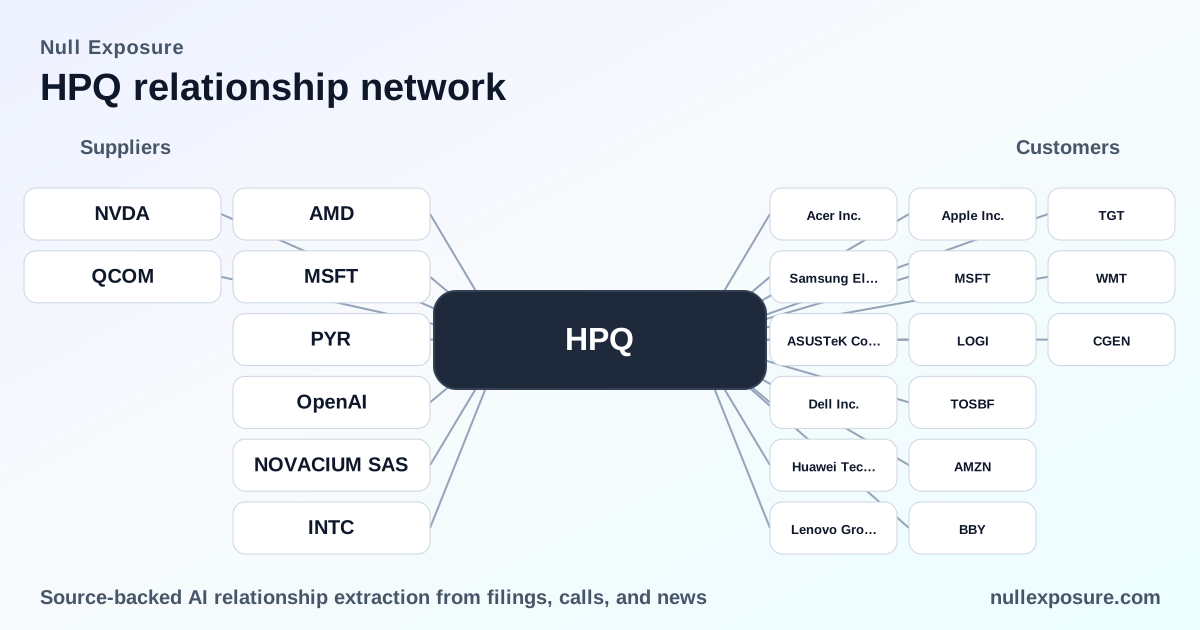
HP Inc. customer map: who buys, competes with, and channels HP — and why it matters to investors
HP Inc. runs a global hardware-and-services business that sells PCs, printers, supplies and growing subscription/managed services, monetizing through point-of-sale product revenue (hardware and supplies), services and increasingly recurring subscription offerings (Instant Ink, Device-as-a-Service, managed print). Revenue is concentrated through a combination of direct enterprise accounts, large distributors and broad retail channels; this hybrid go‑to‑market drives the firm’s margin profile and working capital dynamics. For a concise view of HP’s customer footprint and partner relationships, see Null Exposure’s company page: https://nullexposure.com/.
The investor thesis in one paragraph
HP is a scale hardware merchant pivoting into services and subscriptions; products still account for the vast majority of revenue (~94% of net revenue as disclosed in FY2025) while services and subscription initiatives are prioritized to lift recurring margin. The business model is channel‑dependent and geographically dispersed, which produces both distribution leverage (large-volume partner contracts and retail reach) and concentration risks in receivables and promotional liabilities that matter for cash flow and credit sensitivity. For more on HP’s profile and data, visit https://nullexposure.com/.
How HP’s contracting and customer posture shapes revenue
HP’s public disclosures characterize customer relationships as a mix of short-duration transactions and growing subscription contracts. The FY2025 10‑K states HP routinely recognizes revenue on short contracts (practical expedient for one‑year or less) while capitalizing costs for contracts with benefit periods greater than one year; it also identifies subscription-based offerings (Instant Ink, All-In Plan, Device-as-a-Service) as strategic growth levers. HP sells through large distributors and retailers, and the company flags distributor receivable concentration as a working capital vector; the 10‑K notes one customer (TD Synnex Corp.) accounted for 12% of net revenue in FY2025, underscoring material counterparty concentration in indirect channels. These assertions come from HP’s FY2025 Form 10‑K.
Competitive set HP calls out in its 10‑K
HP lists the following as its primary competitors; the language is explicit in the FY2025 filing and should be read as the contemporary competitive frame for Personal Systems and Printing.
- ASUSTeK Computer Inc.: named in HP’s FY2025 10‑K as a primary competitor across PCs and related hardware markets. (FY2025 10‑K)
- Dell Inc.: listed as a primary competitor in enterprise and commercial PC hardware. (FY2025 10‑K)
- Samsung Electronics Co., Ltd.: cited as a competitor, principally in hardware and components. (FY2025 10‑K)
- Acer Inc.: included in HP’s competitive roster for the PC and consumer hardware space. (FY2025 10‑K)
- Huawei Technologies Co., Ltd.: identified as a competitor in multiple geographies and product lines. (FY2025 10‑K)
- Lenovo Group Limited: listed among HP’s principal global hardware rivals. (FY2025 10‑K)
- Apple Inc.: included for its competitive footprint in premium consumer and professional devices. (FY2025 10‑K)
- Toshiba Corporation: named in the same primary-competitor list in the FY2025 filing. (FY2025 10‑K)
- Logitech International S.A. (LOGI): flagged as a competitor for peripherals and accessory markets. (FY2025 10‑K)
- Microsoft Corporation: cited for its software+hardware ecosystem implications that affect HP’s Personal Systems strategy. (FY2025 10‑K)
Retail and online channels — where consumers buy HP
Public reporting and market commentary confirm HP’s broad retail distribution in the U.S. and online marketplaces.
- Amazon (AMZN): widely used retail channel for HP hardware and promotional merchandising, cited in media coverage of HP’s retail distribution. (ad‑hoc news, March 2026)
- Best Buy (BBY): national retailer carrying broad HP SKUs and running US-only promotions, per market write-ups. (ad‑hoc news, March 2026)
- Target (TGT): listed among mass retail channels used for consumer hardware distribution. (ad‑hoc news, March 2026)
- Walmart (WMT): national retail partner for consumer-focused HP hardware. (ad‑hoc news, March 2026)
Partner, solution provider and ecosystem mentions in press coverage
HP’s channel and partner programs show up regularly in partner award and product-launch coverage; these relationships help push services and enterprise adoption.
- NSIT / Insight Enterprises (NSIT): industry press and press releases list Insight among companies receiving multiple partner awards from HP, Google, Cisco and others, illustrating HP’s ecosystem push into services and solutions. (Globe and Mail press release / InsiderMonkey coverage, March 2026)
- Compugen (CGEN): Canadian solution provider Compugen praised HP’s Amplify partner investments and AI MasterClass training, indicating stronger partner enablement in key regional markets. (CRN, 2024)
- Zoom (ZM): HP was named among vendors planning hardware integrations with Zoom’s collaboration products in a 2020 announcement, reflecting earlier generational ties in conferencing hardware. (GlobeNewswire, October 2020)
How each named relationship functions for HP (plain‑English summaries)
The following are one‑to‑two sentence takeaways drawn from HP’s 10‑K and contemporary press hits; each entry cites the public source.
- ASUSTeK Computer Inc.: Identified in HP’s FY2025 10‑K as a direct competitor in PC and hardware markets, influencing pricing and product mix decisions. (FY2025 10‑K)
- Dell Inc.: Named as a primary competitor in enterprise and commercial PCs, pressuring HP’s enterprise ASPs and go‑to‑market offers. (FY2025 10‑K)
- Samsung Electronics Co., Ltd.: Listed by HP as a competitor, notable for component and consumer electronics overlap that affects supply and pricing. (FY2025 10‑K)
- Acer Inc.: Cited in HP’s FY2025 filing as a competitive peer in the consumer and education PC segments. (FY2025 10‑K)
- Huawei Technologies Co., Ltd.: Included among competitors in global hardware markets, raising market share and regulatory complexity in some regions. (FY2025 10‑K)
- Lenovo Group Limited: Named as a principal competitor across Personal Systems and commercial endpoints in the FY2025 10‑K. (FY2025 10‑K)
- Apple Inc.: Called out as a competitor for premium consumer devices and ecosystem-driven buyer preferences. (FY2025 10‑K)
- Toshiba Corporation: Listed in HP’s primary competitor set in the FY2025 report. (FY2025 10‑K)
- Logitech International S.A. (LOGI): Identified in HP’s FY2025 filing for competitive overlap in peripherals and accessories. (FY2025 10‑K)
- Microsoft Corporation: Flagged for its role in the OS and ecosystem layer that shapes PC demand and enterprise adjacencies. (FY2025 10‑K)
- NSIT / Insight Enterprises: Media coverage notes multiple partner awards from HP to Insight, signaling active partner engagement and third‑party solution sales cooperation. (Globe and Mail press release / InsiderMonkey, March 2026)
- Amazon (AMZN): Market reports list Amazon as a major online distribution and promotional channel for HP consumer hardware. (ad‑hoc news, March 2026)
- Best Buy (BBY): Press coverage highlights Best Buy as a primary U.S. retail channel for HP SKUs and promotions. (ad‑hoc news, March 2026)
- Target (TGT): Named in media summaries as a mass‑retail outlet carrying HP product assortments. (ad‑hoc news, March 2026)
- Walmart (WMT): Included in retail channel listings for consumer and home‑office hardware sales. (ad‑hoc news, March 2026)
- Zoom (ZM): A 2020 release referenced HP hardware plans tied to Zoom conferencing; this underscores historical partnerships in collaboration hardware. (GlobeNewswire, October 2020)
- Compugen (CGEN): Coverage in CRN cites Compugen praising HP’s Amplify program and AI training, illustrating HP’s partner enablement in Canada. (CRN, 2024)
Key operational constraints and what they mean for investors
- Contracting posture: HP operates both short‑term transactional contracts and subscription/recurring models. Short‑term contracts dominate timing for revenue recognition, while subscription models are strategic for margin expansion (FY2025 10‑K).
- Concentration and counterparty risk: HP distributes heavily via third‑party distributors and resellers; one distributor (TD Synnex Corp.) represented 12% of net revenue in FY2025, a material concentration the company discloses in its 10‑K.
- Criticality and channel complexity: HP’s business depends on large distributors and retail channels for reach; the FY2025 filing cites large receivable balances and variable consideration (estimated rebates and programs) totaling several billion dollars, which compresses cash conversion dynamics.
- Maturity and global scale: HP operates in 170+ countries with ~65% of revenue outside the U.S., creating both diversified end markets and FX/execution risk that directly influences margins and promotional behavior (FY2025 10‑K).
- Spend profile: Public filings show significant variable consideration (sales and marketing programs of roughly $3.1 billion at Oct 31, 2025) and sizeable trade receivables sold (~$11.83 billion in recent years), indicating high absolute magnitude of channel financing and incentives.
Investment implications and risk summary
- Upside: Scale in Personal Systems plus an accelerating services/subscription push can raise recurring revenue and stabilize margins over time. Partner awards and Amplify investments suggest HP is prioritizing channel enablement to capture enterprise and managed services spend.
- Downside: Channel concentration, promotional liabilities and material receivable exposure create operational cash‑flow and credit sensitivities; shifts in retail promotions and distributor health directly affect near‑term revenue and margin. Regulatory and regional demand volatility (notably APAC and EMEA exposures) compound execution risk.
- What to watch next: quarterly mix between product and services revenue, deferred revenue and program liabilities, distributor receivables trends and TD Synnex exposure, and adoption rates for subscription products like Instant Ink and Device‑as‑a‑Service.
If you want an investor‑grade customer risk dossier or a list of HP’s top counterparty exposures in one spreadsheet, Null Exposure’s company profile compiles these signals at scale: https://nullexposure.com/.