HRMY: Three Customers, One Product — What Investors Need to Know About Harmony’s Commercial Concentration
Harmony Biosciences (HRMY) is a commercial-stage biopharma that monetizes exclusively through sales of its approved product, WAKIX (pitolisant), with revenue recognized at the point of delivery to a small set of specialty customers and payors. The commercial model is concentrated: WAKIX drives nearly all revenue, sold through a limited number of specialty distributors and channels that interact with government and commercial payors. For a concise view of the customer footprint and implications for revenue risk, see NullExposure for structured relationship intelligence: https://nullexposure.com/
Thesis — compact commercialization, outsized customer risk
Harmony generates product revenue by selling WAKIX into specialty distribution and payer channels; those customers—large pharmacy benefit platforms and specialty pharmacies—then channel the product to patients under third‑party reimbursement regimes. The company’s monetization is straightforward and high‑margin today, but structurally dependent on a tiny number of counterparties and on third‑party payor behavior.
The three customers that determine top-line performance
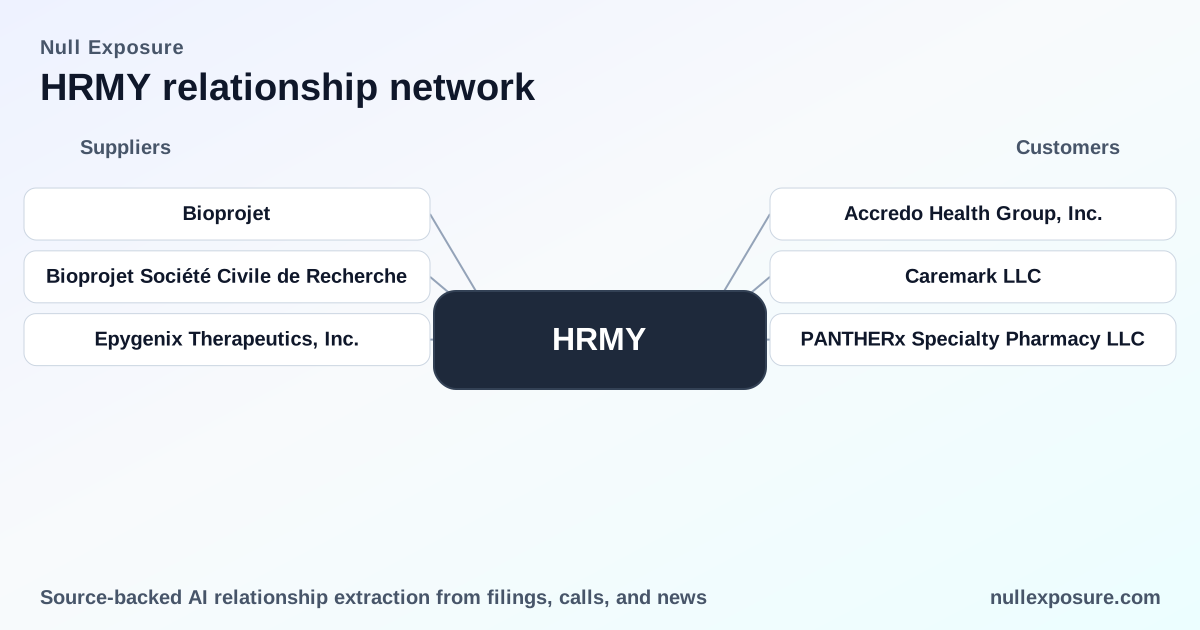
Harmony discloses a very concentrated customer base for FY2024: three customers accounted for 100% of gross product revenue. This concentration is a defining commercial characteristic and a material operational risk.
Accredo Health Group, Inc.
Accredo accounted for 34% of Harmony’s gross product revenue for the year ended December 31, 2024. According to Harmony’s 2024 Form 10‑K, Accredo is one of the three customers that together represented all gross product revenue in FY2024. (Source: Harmony 2024 Form 10‑K)
Caremark LLC
Caremark LLC accounted for 39% of gross product revenue in FY2024, making it the single largest customer by share. Harmony’s Form 10‑K identifies Caremark as the largest customer by percentage of gross product revenue for the year ended December 31, 2024. (Source: Harmony 2024 Form 10‑K)
PANTHERx Specialty Pharmacy LLC
PANTHERx Specialty Pharmacy LLC accounted for 27% of gross product revenue in FY2024, completing the trio that together comprised 100% of gross product revenue. This concentration is explicitly disclosed in Harmony’s FY2024 Form 10‑K. (Source: Harmony 2024 Form 10‑K)
How the disclosure translates into operational constraints
Harmony’s 10‑K provides multiple constraint signals that shape the commercial posture, counterparty mix and regulatory exposure. These constraints are company‑level characteristics that define execution risk and capital allocation choices.
- Contracting posture — short‑term payment terms. Harmony states that payment terms with customers do not exceed one year and there is no financing component to consideration. This implies tight cash conversion but limited long‑dated contractual revenue visibility.
- Framework obligations — government pricing programs. The company participates in federal pricing programs and Federal Supply Schedule (FSS) obligations, requiring compliance with statutory ceiling prices for certain federal agencies; this creates price constraints and reporting complexity.
- Counterparty mix — individual patients, government payors and large enterprises. Harmony’s revenue chain includes individual patients (end users), government programs (Medicaid, Medicare, VA/FSS) and large payors/distributors; the company explicitly reports exposure to federal pricing rules, rebates and reporting regimes.
- Geography — North America focus with EMEA and global considerations. Operations and revenue are U.S.‑centric today (the company holds its tangible assets and generates revenue in the U.S.), but EMEA and other international pricing/regulatory regimes are material to future expansion.
- Materiality — critical concentration. Harmony identifies the three customers as comprising 100% of gross product revenue and the same three customers account for 100% of gross accounts receivable as of December 31, 2024. This is a critical single‑point dependency for collections and revenue continuity.
- Commercial role mix — manufacturer, seller and distributor relationships. Harmony is the manufacturer and seller of WAKIX and routes product through a small number of specialty distributors; it extends credit to specialty distributors within the U.S., creating receivable concentration.
- Lifecycle and stage — active commercialization around a single core product. WAKIX is the company’s only commercially approved product and is expected to generate substantially all revenue in the foreseeable future; the company reports active growth in prescribing and patient counts but limited product diversification.
These constraints together create a commercial profile of high operational leverage to a single product and high counterparty concentration, with direct sensitivity to payor policy, rebate dynamics and distributor behavior.
What this means for investors — risk and reward mapped
Harmony’s financials show a profitable commercial engine today: FY2024 net product revenue and positive margins contribute to attractive reported profitability metrics (Revenue TTM and profit margin are healthy relative to peers). However, the commercial structure implies concentrated counterparty and reimbursement risk:
- Upside drivers: WAKIX is a differentiated, non‑controlled therapy for narcolepsy with meaningful formulary breadth (Harmony reports formulary access for over 80% of insured lives in the U.S.), unit growth and pricing actions that lifted product revenue in 2024. These are concrete drivers for revenue growth and margin expansion.
- Key risks: Customer concentration (three counterparties = 100% gross product revenue) creates acute exposure to changes in contract terms, payer policy, 340B/Medicaid rebate adjustments, or changes in distribution routing. Government pricing programs and Federal Ceiling Price obligations limit pricing flexibility in critical channels. Receivable concentration amplifies credit risk if a major customer changes behavior.
- Operational implications: Short payment terms reduce long‑dated revenue visibility but limit financing exposure; framework participation (FSS and Medicaid) requires robust pricing/reporting infrastructure and increases compliance burden.
If you are evaluating HRMY for a portfolio position, the investment thesis hinges on sustaining WAKIX demand and managing concentrated distribution counterparty risk — both operational execution items rather than clinical uncertainty.
For a structured readout of customer relationships and material constraints across public filings, visit NullExposure: https://nullexposure.com/
Bottom line
Harmony’s commercial profile is straightforward and high‑margin: one approved product, three customers accounting for all gross product revenue, and concentrated exposure to payer and distributor dynamics. That structure delivers strong operating leverage when market access and pricing hold, and acute vulnerability if any of the named customers or large payor programs alter coverage, reimbursement or purchasing behavior. Investors should price in the concentration premium and monitor receivable trends, federal pricing changes, and formulary dynamics as the primary levers that will determine downside risk and sustained upside.