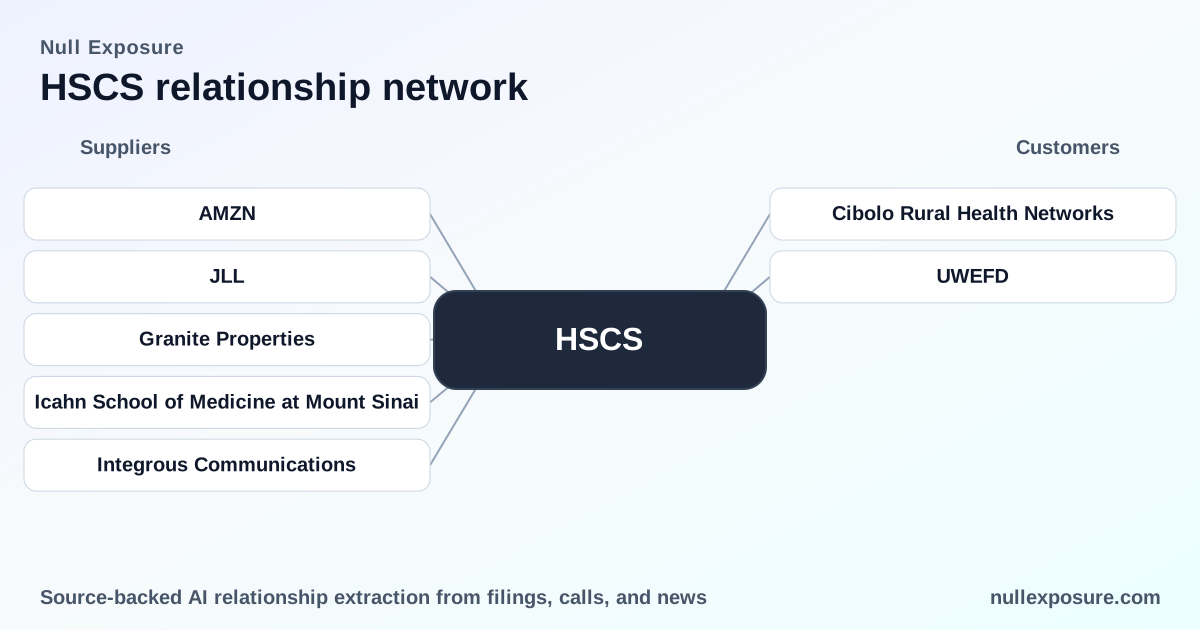
Heart Test Laboratories (HSCS): Customer relationships that define early commercialization
Heart Test Laboratories (HSCS) commercializes cardiovascular diagnostic technology under the HeartSciences/MyoVista brand. The company sells a proprietary 12‑lead MyoVista wavECG device as a capital product, captures recurring revenue through proprietary electrodes and consumables, and intends to monetize cloud-delivered AI algorithms via usage-based fees and subscription licenses through the MyoVista Insights Cloud Platform. Early commercial traction is limited but tangible: HSCS combines hardware sales, consumables (“razor‑razorblade”), algorithm licensing and expected cloud subscriptions with funding supplied through equity distribution and purchase agreements to support its go‑to‑market ramp. For a concise company profile, visit https://nullexposure.com/.
How HSCS actually makes money — a short, investor‑oriented primer
HSCS operates a hybrid commercial model. Revenue today comes from limited device sales in international markets; the long‑term plan layers in recurring revenue from proprietary consumables, cloud algorithm usage, and third‑party algorithm hosting/licensing on its MyoVista Insights platform. The company recognizes device revenue at shipment (FOB manufacturer) and plans to introduce software/algorithm monetization through subscription and per‑use billing once regulatory clearances are in place. Capital markets support (an equity line/ATM and purchase agreement) underpins working capital while HSCS pursues FDA and EU regulatory milestones.
Key takeaway: HSCS is a hardware-first business with a planned, material transition to recurring software and licensing revenue.
The contracting posture, concentration and maturity of the business
HSCS shows a mixed contracting posture consistent with a pre‑scale medical device company:
- Framework and equity facilities: the company uses an Equity Distribution Agreement (ATM) and a discretionary purchase agreement (Lincoln Park) to fund operations, indicating dependence on capital markets and available issuance capacity as a funding mechanism (company SEC filings, 2023–2025).
- Revenue mix and monetization cadence: initial revenues come from capital device sales and consumables (spot and usage), with a deliberate shift toward usage‑based and subscription pricing for cloud‑delivered algorithms as the platform matures (company disclosures).
- Payment and term dynamics: customer payment terms are short (30–60 days), which favors working capital turnover but also exposes HSCS to typical collection and reimbursement cycles in healthcare.
- Regulatory maturity: the business is regulatory‑dependent — FDA clearance and CE mark conformity are prerequisites for full U.S. and EEA commercialization and reimbursement pathways.
- Counterparty profile: HSCS’s end markets mix individual physicians, hospitals/health systems, and government payors, so adoption hinges on physician acceptance and reimbursement strategies rather than purely transactional selling.
These elements position HSCS as an early‑stage vendor with material commercial upside tied directly to regulatory and reimbursement milestones and constrained by capital availability until scale is achieved.
(If you want a concise investor brief or customer rollout mapping, see https://nullexposure.com/.)
Where HSCS is selling: geography and go‑to‑market signals
HSCS targets frontline U.S. and European markets first, with a global ambition to support AI‑ECG capabilities in any care setting. The company's disclosures emphasize the U.S. and EEA as primary markets and describe the need for FDA clearance and an updated EU MDR CE certificate before large‑scale launches (company annual filings, FY2025–FY2026). Reimbursement and regulatory control are core go‑to‑market constraints that shape customer selection and commercialization cadence.
Who the customers are right now — every relationship found in the record
Below are the customer relationships surfaced in public media and sentiment signals. Each relationship is summarized in plain English and linked to the originating report.
-
Cibolo Rural Health Networks — HeartSciences’ MyoVista Insights was selected by Cibolo Rural Health Networks, a procurement win announced on January 29, 2026; this is framed as an early adopter deployment of the cloud application. (TipRanks coverage, reported via CNBC quotes page, January 29, 2026; first seen March 10, 2026.)
-
Cibolo Rural Health Networks (duplicate mention / FY2025) — the same selection was recorded again in a FY2025 context, reinforcing that Cibolo is part of HSCS’s initial customer roster for MyoVista Insights and potentially represents ongoing pilot or active use. (TipRanks coverage, republished via CNBC quotes page, listing dated January 29, 2026.)
-
UWE — HeartSciences announced that UWE adopted MyoVista Insights and the MyoVista wavECG in an adoption notice dated February 5, 2026, signaling a combined hardware + cloud adoption by this customer. (TipRanks coverage, reported via CNBC quotes page, February 5, 2026; first seen March 10, 2026.)
-
UWEFD — a duplicate/alternate symbol entry for the same UWE adoption: HeartSciences reported UWEFD as the tagging symbol when announcing the adoption of MyoVista Insights and MyoVista wavECG on February 5, 2026; this entry corroborates the UWE hardware+software relationship. (TipRanks coverage, republished via CNBC quotes page, February 5, 2026.)
Each of the above items is reported via market news aggregators and quote pages that summarize TipRanks reporting; the two customers disclosed are consistent with HSCS’s stated strategy to sign early adopters to its cloud application and to pilot hardware deployments prior to a larger sales launch.
Materiality, risk drivers and where investor attention should focus
- Regulatory gating: FDA clearance and an updated EU MDR CE mark are binary commercial enablers; without them the U.S. and EEA markets remain limited and inventory obsolescence risk increases (company filings).
- Revenue transition risk: HSCS must convert device pilots into recurring algorithm/subscription revenue to achieve scalable margins; the business currently depends on spot device sales and consumables, which caps near‑term topline expansion.
- Reimbursement and payor dependence: adoption in hospitals and primary care is tightly linked to third‑party payor reimbursement, particularly Medicare/Medicare Advantage in the U.S., which affects pricing power and uptake timelines.
- Capital availability: the company relies on an equity line and ATM framework to fund operations; these financing mechanisms reduce dilution risk if used judiciously but make growth contingent on access to capital markets (equity distribution and purchase agreements, FY2023–FY2025).
- Customer concentration and stage: the customer roster is currently small — two named early adopters in public reports — and HSCS remains in the active pilot / early commercialization stage, so customer concentration and scaling execution are core near‑term risks.
Bottom line and next steps for investors and operators
HSCS is a hardware‑led med‑tech company pivoting to recurring, software‑based revenue through an AI‑enabled cloud platform. Investors should value HSCS as a regulatory‑gated commercialization story where the leap from pilot customers to scalable, recurring revenue is the central value inflection. Operators evaluating HSCS should prioritize regulatory timelines, reimbursement strategy, and the productized transition from hardware sale to cloud monetization.
For a practical briefing and ongoing monitoring of HSCS customer relationships and go‑to‑market signals, visit https://nullexposure.com/.