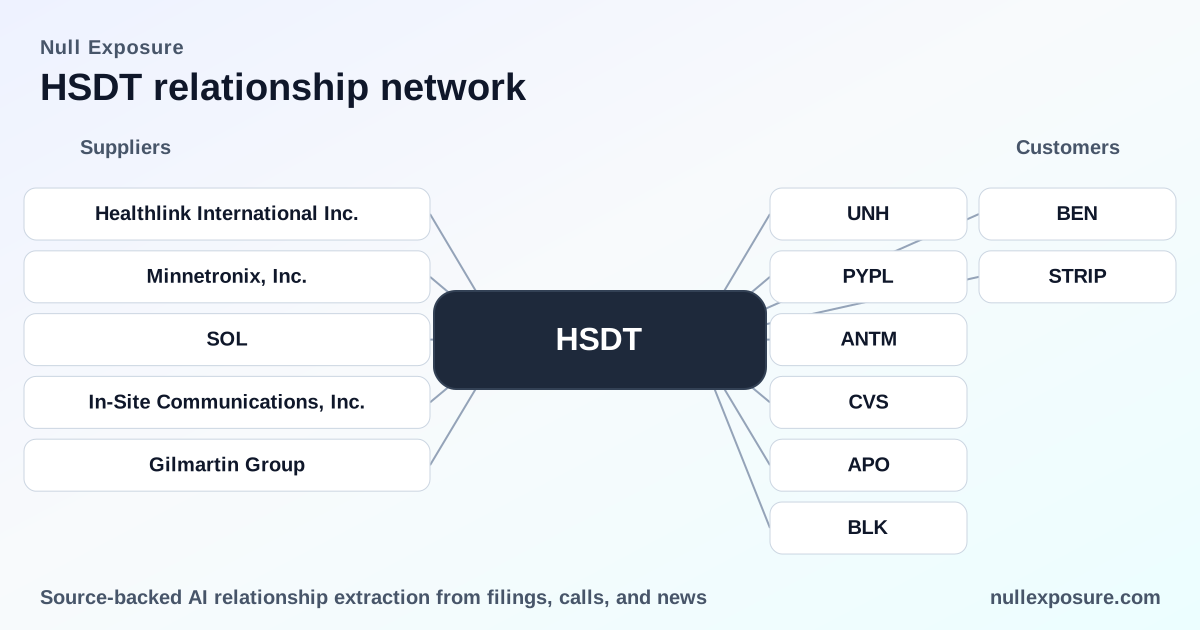
HSDT customer map: who pays Helius and why it matters for investors
Helius Medical Technologies sells the Portable Neuromodulation Stimulator (PoNS) device and related therapy services, monetizing primarily through direct product sales to patients, e‑commerce orders, and clinic sales, while pursuing reimbursement from federal and commercial payers to scale revenue. The company’s commercial model mixes short‑term therapy sales (14‑week courses), point‑of‑sale hardware pricing, and an expanding reimbursement playbook (HCPCS codes, VA and GSA contracting) — a set of levers that determine near‑term cash flow and long‑term margin expansion. For a consolidated view of these commercial relationships, see NullExposure: https://nullexposure.com/.
The relationship roll call — every mention from the public feed
Below are the relationships captured in the HSDT customer scope, presented in the original feed order. Each item is a plain‑English summary with the public source cited.
-
United Healthcare (UNH) — A United Healthcare payer decision is listed as one of the prior major payers providing PoNS reimbursement, noted alongside Anthem in company announcements. Source: Investing.com summary of company press materials (May 3, 2026).
-
Anthem (ANTM) — Anthem is cited as one of the earlier commercial payers that reimbursed for PoNS, establishing a commercial precedent for follow‑on payer actions. Source: Investing.com / company press release coverage (May 3, 2026).
-
Aetna Healthcare (CVS) — Aetna authorized an out‑of‑network claim for the PoNS device at a negotiated price of $18,350, representing the third major commercial payer to provide reimbursement. Source: Investing.com article summarizing company disclosure (May 3, 2026).
-
Anthem (re‑mention) — The company restated that Aetna’s authorization makes Aetna the third payer to join Anthem and United in providing PoNS reimbursement in related press coverage. Source: Yahoo Finance press release summary (Mar 10, 2026).
-
ANTM (ticker form) — Market outlets repeated the Anthem reimbursement reference using ticker styling in press wires that echoed the company announcement. Source: Yahoo Finance press release (Mar 10, 2026).
-
PYPL (PayPal, earnings call reference) — On the company’s 2025 Q3 earnings call, management referenced PayPal in a broader technology/commerce context, noting integration trends relevant to digital payments and platform flows. Source: HSDT 2025 Q3 earnings call transcript (Mar 8, 2026).
-
United (re‑mention) — Press coverage reiterated that United (UnitedHealthcare) is among the payers who have provided PoNS reimbursement, reinforcing payer momentum. Source: Yahoo Finance company announcement (Mar 10, 2026).
-
PayPal (earnings call duplicate) — The 2025 Q3 call again referenced PayPal when discussing payments and platform integrations that shape distribution and billing channels. Source: HSDT 2025 Q3 earnings call (Mar 8, 2026).
-
APO (Apollo, earnings call) — Management cited Apollo as an example of institutional activity in tokenization and new financing/asset ecosystems during the earnings discussion. Source: HSDT 2025 Q3 earnings call (Mar 8, 2026).
-
Apollo (re‑mention) — Apollo was noted twice in the call as a named participant in evolving real‑world asset markets referenced by management. Source: HSDT 2025 Q3 earnings call (Mar 8, 2026).
-
BEN (Franklin Templeton reference) — Franklin Templeton (ticker BEN) was mentioned by management when discussing institutional participation in asset tokenization themes on the call. Source: HSDT 2025 Q3 earnings call (Mar 8, 2026).
-
BlackRock (BLK) — BlackRock was cited as an institutional participant in the real‑world asset/tokenization ecosystem in management remarks. Source: HSDT 2025 Q3 earnings call (Mar 8, 2026).
-
BLK (duplicate) — The same BlackRock reference appears again in the call transcript as management emphasized large‑manager involvement in new asset structures. Source: HSDT 2025 Q3 earnings call (Mar 8, 2026).
-
Franklin Templeton (explicit) — Management explicitly named Franklin Templeton in the call as active in emerging market structures highlighted by the company. Source: HSDT 2025 Q3 earnings call (Mar 8, 2026).
-
Aetna Healthcare (Yahoo re‑report) — Yahoo Finance carried the company press release that announced Aetna’s authorized claim, reiterating the payer milestone. Source: Yahoo Finance press release (Mar 10, 2026).
-
CVS (Aetna corporate owner) — Media cited CVS/Aetna corporate branding while reporting on Aetna’s PoNS reimbursement authorization. Source: Yahoo Finance press release (Mar 10, 2026).
-
Stripe (STRIP, earnings call) — The 2025 Q3 call referenced Stripe alongside PayPal when discussing payment rails and stablecoin/payment integrations as context for distribution and collections. Source: HSDT 2025 Q3 earnings call (Mar 8, 2026).
-
STRIP (duplicate) — The Stripe mention appears again in the transcript’s set of examples around payment ecosystem partners. Source: HSDT 2025 Q3 earnings call (Mar 8, 2026).
How contract types, counterparties and geography constrain the business
Helius’s commercial architecture is defined by a mix of contracting patterns and counterparty types that directly affect revenue predictability and scaling:
-
Contracting posture: The company sells short‑term therapy courses (PoNS Therapy is a 14‑week treatment) and recognizes product revenue at a point in time; it also holds longer‑term exclusivity agreements in select Canadian regions and participates in federal contracting channels (VA/GSA). These features create a hybrid of spot hardware sales, short‑term recurring service cycles, and some renewable exclusivity commercial deals.
-
Counterparty concentration and criticality: Government payers and a very small number of large customers drive financial exposure—management discloses single‑customer accounts receivable concentration (83% at one point) and two customers accounting for a majority of sales. Reimbursement availability is critical for market acceptance and growth.
-
Customer mix and maturity: Revenue is currently skewed to individuals (self‑pay/e‑commerce) and clinics, with an active push into federal and commercial payer coverage (HCPCS codes assigned in 2024, VA/GSA pricing in 2024). The commercialization program is early stage: limited revenue (≈$0.5M in 2024) and active payer engagement mean sales ramp depends on reimbursement wins.
-
Geographic footprint: North America is the commercial core (U.S. and Canada), with regulatory authorizations in Australia (TGA) and pending/uncertain access in EMEA; international expansion will require additional regulatory steps and reimbursement work.
-
Business roles: Helius functions primarily as seller and manufacturer of a single core hardware product (controller + mouthpiece) and as a services enabler (clinic‑based supervised therapy), creating multiple vendor relationships (distributors, clinic service providers, federal contractors).
Investment implications for operators and buyers
-
Positive: Assignment of HCPCS codes and VA/GSA pricing establishes a clear commercial pathway to predictable reimbursement and federal revenues; Aetna, Anthem and United participation demonstrates payer adoption momentum. Federal contracts and a U.S. list price (updated to $28,270 in 2025) create anchoring economics for scaling.
-
Risk: High counterparty concentration and dependence on payer coverage present principal downside; failure to expand commercial payer contracts or clinician adoption will keep revenue at modest levels. Regulatory and product liability exposures are material operating risks as the company scales manufacturing and distribution.
-
Operational focus: Sales execution requires simultaneous clinic training, payer economics, and supply chain discipline — the company’s commercial viability depends on converting therapy interest into reimbursed, repeatable revenue streams.
For a consolidated view of HSDT’s customer signals and time‑stamped relationship feed, visit NullExposure: https://nullexposure.com/.
Conclusion: Helius has converted regulatory milestones into early payer coverage wins and federal contracting footholds, but financial scaling is contingent on widening reimbursed access and reducing customer concentration. Investors and operators should prioritize reimbursement momentum and diversification of large purchasers when modeling HSDT’s revenue trajectory.