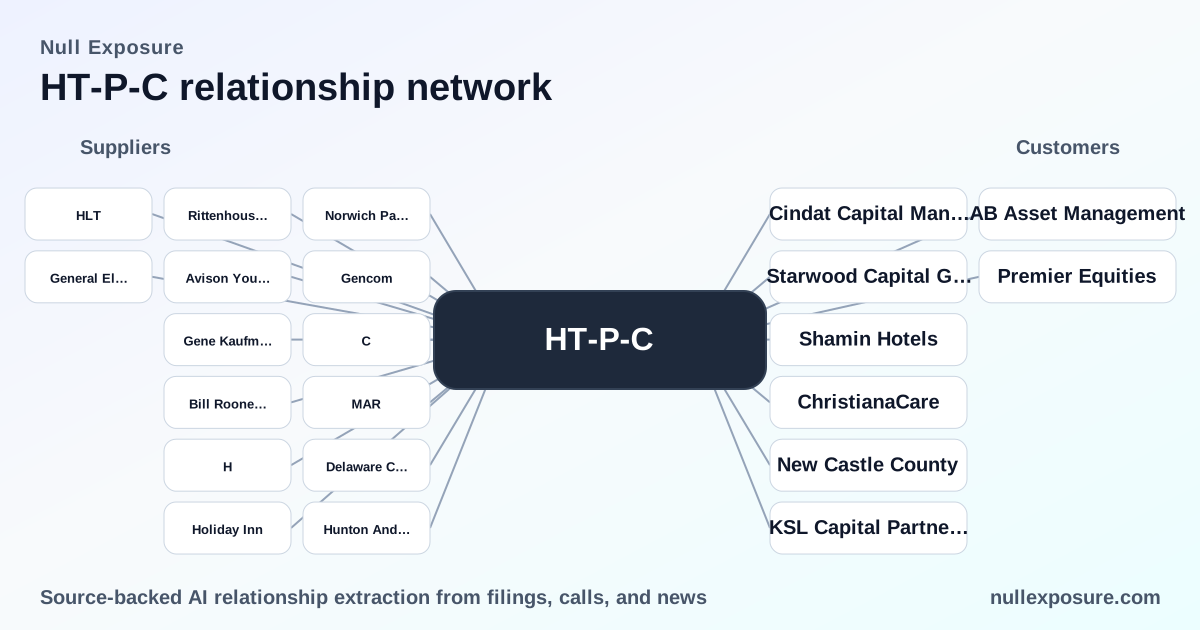
HT-P-C (Hersha Hospitality Trust — customer relationships): an investable map of buyers, lessees and strategic exits
Thesis: Hersha Hospitality Trust historically monetized a concentrated portfolio of urban and leisure hotels through selective asset sales, long-term leases and strategic carve-outs to private equity and institutional buyers; revenue was realized principally through property dispositions and operating contracts rather than recurring customer subscriptions. Investors evaluating HT-P-C should treat the company as a portfolio manager whose cash flow profile was driven by disposition timing, counterparty quality, and market pricing for gateway assets. For an operational due diligence baseline, review the corporate homepage for comprehensive filings: https://nullexposure.com/.
How the company translated real estate into liquidity
Hersha operated as an owner-operator REIT focused on high-barrier urban markets, converting owned hotels into cash through sales to institutional buyers and opportunistic buyers, and securing operating counterparty contracts for transitional assets. Monetization channels were dominated by outright sales to capital buyers and selective lease/management relationships, not by high-margin proprietary services. That structure produces episodic inflows tied to market cycles and concentration risk around large disposition events.
If you want the full corporate context for these transactions and the firm's publicly stated strategy, see the company home page: https://nullexposure.com/.
What to watch in operating posture and business-model constraints
There are no explicit constraint excerpts in the supplied relationship data; as a company-level signal, this absence suggests public sourcing emphasizes transaction reporting rather than enforced contractual disclosures. Operationally, this implies:
- Contracting posture: Transaction-oriented — sales and asset-level contracts dominate the relationship map rather than long-term, lock-in operating agreements.
- Concentration: High — a small number of large buyers (private equity and real estate giants) account for the bulk of disposition value, increasing counterparty concentration risk.
- Criticality: Asset-level criticality is high for buyers acquiring gateway hotels, but counterparty criticality to Hersha’s revenue was episodic and event-driven.
- Maturity: Mixed — transactions span a multi-year window (2011–2023), showing an established disposition track record and institutional interest from repeat buyers.
Relationship map: who the customers, buyers and counterparties were
Below are concise, sourced summaries of every relationship in the public results.
Cindat Capital Management
Hersha sold a 70% majority interest in seven Manhattan hotels to Chinese investor Cindat Capital Management in a deal valued at approximately $571.4 million in FY2017, representing a sizable portfolio disposition into international capital. According to The Real Deal (FY2017), the transaction marked a meaningful monetization of urban assets.
Starwood Capital Group
An affiliate of Starwood Capital Group bought six Connecticut hotels from Hersha, including the Holiday Inn Norwich, for $155 million in FY2011; this was an early example of institutional portfolio recycling. The Norwich Bulletin covered the FY2011 sale.
Shamin Hotels
Shamin Hotels acquired an 81-room Hampton Inn in Manhattan’s Financial District from Hersha for $32.4 million in FY2018, a single-asset disposition from the company’s New York holdings. The Real Deal reported the sale in FY2018.
KSL Capital Partners (strategic acquisition)
KSL Capital Partners executed a definitive agreement to acquire all outstanding common shares of Hersha for $10.00 per share, completing an approximately $1.4 billion transaction that consolidated Hersha’s 25 hotels into KSL’s platform; the merger agreement was entered on August 27, 2023. Multiple reports confirm the deal—Hunton’s FY2023 advisory notice recorded the $10.00-per-share agreement, while industry coverage (HospitalityNet and HotelInvestmentToday, FY2023–FY2024) described the broader $1.4 billion acquisition and portfolio transfer.
Blackstone Real Estate / Blackstone (multiple dispositions)
Blackstone and Blackstone affiliates purchased several Hersha properties across different years, including the 145-room Courtyard by Marriott Sunnyvale in FY2022 and a 2013 package that included the Hampton Inn & Suites in West Haven as part of a $217 million deal. BizJournals (FY2022) and the New Haven Register (reporting on FY2013/2018 coverage) document these asset sales, underscoring repeat institutional demand from global real estate buyers.
Blackstone affiliate (Washington, D.C.)
A Blackstone affiliate acquired a pair of Hersha hotels in Washington, D.C., in FY2022, reflecting the firm’s targeted purchases of gateway-market assets from Hersha. The Washington Business Journal reported the D.C. transactions in FY2022.
ChristianaCare
ChristianaCare had a contract to rent 36 rooms from the Hope Center, a property converted from a Sheraton previously sold by Hersha, reflecting a short-term institutional occupancy arrangement tied to an asset that changed ownership. Delaware Online covered the facility-level rental relationship in FY2024.
New Castle County
New Castle County purchased the Hope Center building (a former Sheraton) from Hersha in late 2020 for nearly $20 million, converting a hospitality asset into a civic facility and representing a non-traditional public-sector exit for the company. Delaware Online reported the county acquisition and subsequent management developments in FY2024.
AB Asset Management
Hersha sold the three-building, 140-unit Residence Inn by Marriott in Coconut Grove to AB Asset Management in FY2021; the buyer planned a conversion and repositioning of the property. The Real Deal and ProfileMiami (both FY2021) documented the sale and buyer leadership.
Premier Equities
The Duane Street hotel in Tribeca was sold by Hersha to Premier Equities for $18 million in FY2021, with the new owner leasing the building to a short-term rental operator—an example of an urban asset transitioned to alternative lodging models. Tribeca Citizen (citing Commercial Observer, FY2021) covered this disposition and subsequent lease arrangement.
Investment implications: how counterparty mix shapes valuation
- Value realization is transaction-timed. Portfolio-level liquidity depended on timing sales to institutional buyers rather than steady operating cash flow expansion.
- Counterparty quality reduces execution risk. Repeat interest from Blackstone, Starwood affiliates and KSL signals institutional appetite for Hersha assets, supporting realized valuations on large deals.
- Concentration and episodic revenue create valuation volatility. A few large dispositions produced outsized cash flows in specific years; absent continuous monetization, earnings will fluctuate.
Final takeaways for investors
- Hersha’s business model relied on asset sales and strategic exits to premium buyers, not on locked-in recurring customer revenues.
- Institutional buyers dominated the counterparty landscape (Blackstone, Starwood, KSL, Cindat), which supports orderly execution but concentrates execution risk around a small set of counterparties.
- Public-sector and local arrangements (New Castle County, ChristianaCare) demonstrate alternative exit pathways and lifecycle outcomes for hospitality assets.
For a deeper corporate and transaction timeline, consult the company home page and primary filings at https://nullexposure.com/.