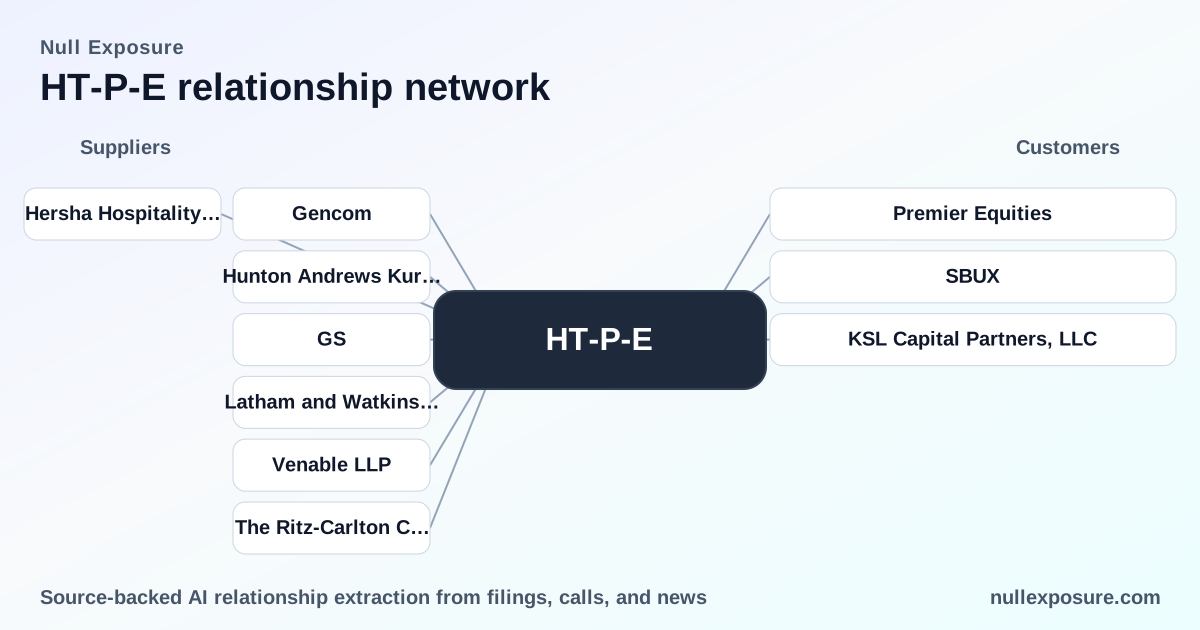
HT-P-E: Customer Relationships That Drive Cash Flow and Transaction Optionality
Hersha Hospitality Trust historically operated as an owner-operator of luxury and lifestyle hotels in gateway and resort markets, monetizing through room revenue, food & beverage and on-site retail leases, and through asset-level transactions (sales, lease purchases, and third‑party leasing arrangements). Recent document-level signals in the customer scope show a mix of retail lease monetization, asset dispositions to private owners/operators, and a controlling transaction that changes ownership — all of which materially affect revenue stability, lease cash flow, and strategic optionality for investors. For a centralized view of these relationship signals and how they influence underwriting, visit https://nullexposure.com/.
Why these customer ties matter for underwriting and valuation
Hersha’s customer relationships are not customer contracts in the traditional SaaS sense; they are asset-level commercial counterparties and lease tenants that convert real estate into recurring cash flow or enable one‑time liquidity events. From an investor perspective, these relationships reveal three persistent business model characteristics: (1) monetization through retail leasing and F&B, (2) active asset rotation and third‑party operating partnerships, and (3) vulnerability to control transactions that reset capital structure. Together, they shape both short‑term cash receipts and long‑term NAV dynamics.
Deal-by-deal: what each relationship means to investors
Premier Equities — an example of asset rotation and operator handoff
Premier Equities purchased the Tribeca (Duane Street) hotel that Hersha previously owned and signed Sonder as the lessee of the property, illustrating Hersha’s use of asset disposition as a value crystallization strategy and third‑party operating handoffs to specialist lessees. The Real Deal reported the Premier Equities acquisition and the Sonder lease arrangement in May 2021.
Starbucks (SBUX / Starbucks Coffee Company) — ground-floor retail converts property value into predictable rents
Hersha bought the lease for a Starbucks store on Fifth Avenue for $6.0 million as part of a hotel transaction, demonstrating how national retail tenants are monetized directly through lease purchases to secure low‑volatility cash flow from prime retail footprints. Hotel‑Online documented this lease purchase in connection with Hersha’s Midtown Manhattan acquisition (report dated July 2007).
KSL Capital Partners, LLC — control transaction resets capital and counterparty risk
KSL announced a definitive agreement to acquire all outstanding common shares of Hersha for $10.00 per share in an all‑cash transaction valued at approximately $1.4 billion, representing a full corporate control event that materially changes counterparty posture and strategic priorities for existing counterparties and lease arrangements. The KSL acquisition announcement was made public on August 28, 2023.
What these relationships collectively tell an investor about operating posture
- Contracting posture: Hersha’s model blends direct leasing and asset sale/leasing combinations — the company both operates hotels and acquires or sells retail lease positions to lock-in income streams. The Starbucks lease purchase is a direct example of converting a retail tenancy into an owned income asset.
- Concentration and counterparty quality: Relationships with national tenants like Starbucks introduce high-quality, creditworthy rent streams at the property level; transactions with specialized hotel operators (e.g., Sonder) show Hersha leverages third‑party operators to optimize occupancy and operations when divesting or repositioning.
- Criticality to cash flow: On-site retail and stable national tenants are incrementally important for lobby-level revenue stability, while asset sales provide liquidity and capital redeployment opportunities that can be material to balance sheet strength.
- Maturity and strategic flexibility: The KSL buyout demonstrates the company’s exit optionality for shareholders and indicates that many operational and leasing decisions will be evaluated under new ownership priorities following a control transaction.
Constraints and company-level signals for risk assessment
There are no structured constraint records provided in the customer-scope payload. As a company-level signal, this absence indicates the reviewed relationship feed did not include formal constraint excerpts (e.g., exclusivity clauses, duration caps, or covenant-triggered limitations). Investors should therefore treat the available relationship evidence as transaction- and tenant-centric facts rather than a complete picture of contractual constraints.
- Risk implication: Without explicit constraint disclosures, underwriters must rely on public filing diligence and direct lease reviews to establish lease length, rent escalators, and assignment restrictions, particularly for high-value ground-floor tenants.
- Operational implication: Expect recurring oversight around how new ownership (post‑KSL) evaluates short‑term cash generation versus long‑term repositioning — this is a governance risk that directly affects lease renewals and disposition timing.
Key takeaways for investors and operators
- Hersha converted property-level retail into stable income streams (example: the $6.0 million Starbucks lease purchase), a deliberate tactic to reduce volatility at high-traffic locations.
- Asset disposals and third-party operator leases (example: the sale of Duane Street to Premier Equities with Sonder as lessee) function as deliberate value‑realization levers and operating-risk transfers.
- Corporate control matters: the KSL acquisition is the defining corporate event in the dataset and reorients counterparty risk, capital strategy, and likely disposition timing for non-core assets.
- Due diligence imperative: absence of constraint excerpts requires investors to supplement this relationship-level evidence with lease abstracts and post‑acquisition operating plans to fully underwrite cash flow durability.
If you want a consolidated view of these customer‑relationship signals alongside other counterparty and asset-level analytics, consult our platform at https://nullexposure.com/ for integrated exposure mapping and deal-level summaries.
Final read: what to monitor next quarter
- Monitor KSL’s integration plan and public statements on disposition pacing and lease retention strategies.
- Confirm lease term and escalation details for material retail tenants to model long-term rent stability.
- Track future asset sales or operator handoffs (brands like Sonder) as indicators of Hersha’s balance‑sheet management and NAV realization cadence.
Bold, asset-level relationships and a control event like the KSL acquisition define the investment thesis here: stable retail leases and opportunistic asset rotation are the twin engines of value, while a change in ownership resets the timing and magnitude of that value realization.