HeartCore Enterprises (HTCR): Customer relationships that move valuation
HeartCore Enterprises operates a hybrid software and advisory model: it sells a mix of subscription SaaS, on‑premise licenses and professional services, and runs a high‑margin GO IPO consulting practice that is routinely compensated with cash fees and equity warrants or shares. The company monetizes through recurring subscriptions and maintenance, one‑time license and development fees, and lumpy, high‑impact consulting proceeds that have produced noncash consideration (warrants and stock) material to reported results. Investors should value HeartCore as a software business with an embedded, equity‑linked investment book tied to its IPO clients. Learn more at https://nullexposure.com/.
How HeartCore actually contracts and where value comes from
HeartCore’s commercial posture blends short subscription cycles and targeted long contracts. Most subscription agreements are one year or shorter and paid upfront with ratable revenue recognition, which creates high renewal dependency and churn sensitivity; simultaneously the company pursues on‑premise, long‑term license deals and bespoke consulting engagements that deliver larger one‑off cash and equity consideration. According to company filings (periods through FY2024–FY2025), the GO IPO consulting line generated sizeable noncash consideration — warrants and shares received as payment — and consulting fees per engagement typically range from $380k to $900k. The combination produces a dual revenue profile: recurring SaaS/license economics plus episodic, high‑variance consulting proceeds.
Key operating model signals:
- Contracting posture: predominantly short‑term subscription agreements with pockets of long‑term on‑premise licensing; consulting engagements are multi‑quarter and performance‑based.
- Concentration: consulting and a small number of IPO clients are material — one customer accounted for >10% of revenue in FY2024 — elevating client concentration risk.
- Criticality: the platform often houses primary customer records and renewal behavior drives profitability, so outages or data issues have outsized commercial consequences.
- Maturity: the installed base in Japan is large and active; international expansion (North America and EMEA) is ongoing but revenues remain concentrated in Japan and North America in the near term.
Customer relationships identified in the public record
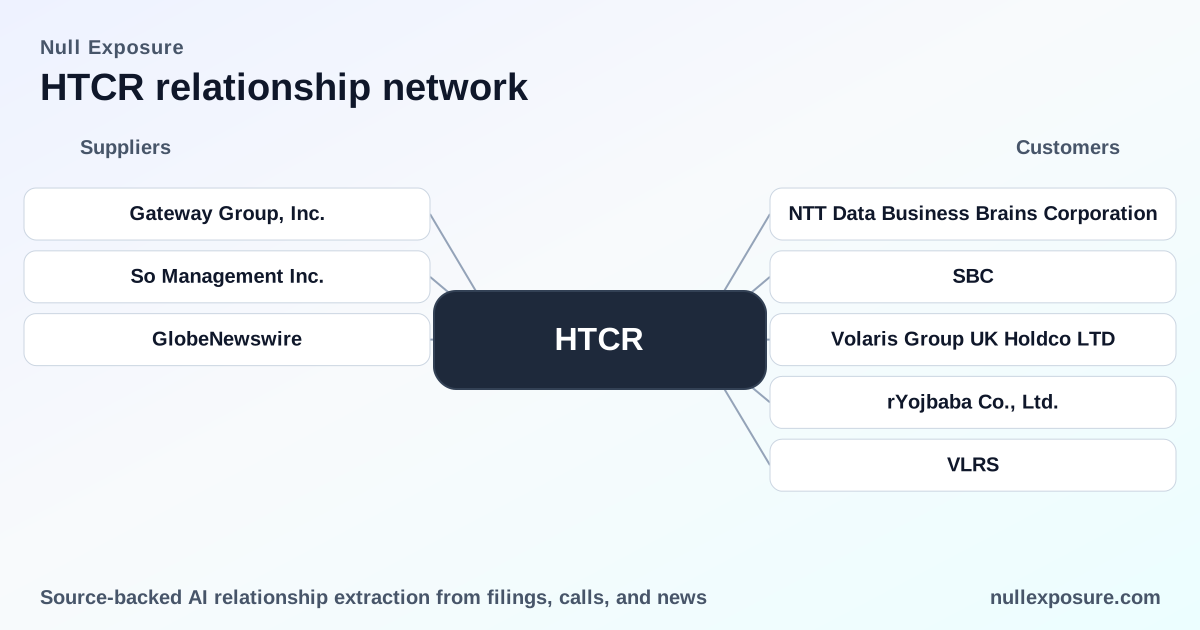
Below are the exact customer or counterparty relationships called out in external coverage and company releases, each with a concise, sourced description.
rYojbaba Co., Ltd. / RYOJ
HeartCore provided GO IPO advisory services to rYojbaba and received an aggregate $500,000 in initial fees plus warrants to acquire roughly 3% of rYojbaba’s fully diluted common stock; the company valued those warrants and reported material equity upside as of mid‑August 2025. (GlobeNewswire press release, Aug 18, 2025; HeartCore financial report, FY2025 / Nov 18, 2025.)
A market note also linked HeartCore’s stake in RYOJ to price moves after the listing, highlighting how small IPO tie‑ups can create rapid mark‑to‑market swings in HeartCore’s holdings. (TS2.tech coverage, March 10, 2026.)
SBC Medical Group Holdings Inc. (SBC)
HeartCore acted as a GO IPO client advisor for SBC Medical Group, which subsequently commenced trading on Nasdaq; HeartCore disclosed SBC as one of its Go IPO successes in FY2024 communications. (Whatech press coverage, March 10, 2026.)
NTT Data Business Brains Corporation
HeartCore entered a strategic partnership to implement its HeartCore CMS platform into NTT Data Business Brains’ website development service offering, positioning HeartCore as a SaaS/technology supplier to a large systems integrator and expanding indirect channel reach. (Yahoo Finance press item, March 10, 2026.)
Volaris Group UK Holdco LTD / VLRS
HeartCore sold its subsidiary HeartCore Co., Ltd. (“HeartCore Japan”) to Volaris Group UK Holdco LTD in an all‑cash transaction reported at approximately ¥1.8 billion (about USD $12 million based on the Oct 24, 2025 conversion). The divestiture monetized a legacy operating unit and materially changed HeartCore’s asset and customer footprint in Japan. (GlobeNewswire release, Oct 31, 2025; QuiverQuant summary, March 2026.)
Why these relationships matter to investors
HeartCore’s customer mix and these specific counterparties underline three valuation levers:
-
Equity exposure from consulting: GO IPO clients routinely compensate HeartCore with warrants or shares; that creates an asset line that is highly correlated to the stock performance of its clients and can swing fair‑value gains or losses materially quarter‑to‑quarter. The RYOJ position exemplifies this mechanism (GlobeNewswire, Aug/Nov 2025; market commentary March 2026).
-
Recurring vs. lumpy revenue balance: the SaaS and license base provides recurring revenue, but consulting accounted for roughly half of revenues in FY2024, and consulting fair‑value gains from IPOs were a major driver of gross profit improvement. This creates greater short‑term volatility than a pure subscription company (FY2024 financial disclosures).
-
Concentration and counterparty risk: one customer exceeded 10% of revenues in FY2024, and a small number of IPO clients yield oversized accounting and cash effects; the Volaris sale reduced operational exposure to HeartCore Japan but also converted an operating asset into cash, changing long‑term service capacity and revenue composition (GlobeNewswire, Oct 2025).
-
Channel and scale effects: the NTT Data Business Brains partnership is strategically important because it plugs HeartCore’s CMS into a larger integrator channel, increasing addressable market reach without commensurate immediate headcount investment (Yahoo Finance, Mar 2026).
Investment and risk checklist — what to watch next
- Track realized gains or losses on warrants and marketable securities tied to GO IPO clients and any subsequent sales (HeartCore disclosed warrant sales timing and proceeds in filings).
- Monitor subscription renewal rates and churn: short contract lengths amplify the impact of small renewal delta on near‑term revenue.
- Observe M&A and asset monetization flows (e.g., the Volaris sale) and how proceeds are deployed — balance sheet strength versus reinvestment in sales and product.
- Follow progress on channel partnerships (NTT Data Business Brains) for signs of scalable recurring revenue expansion.
- Watch regulatory or client‑level actions that could trigger refunds or settlements; a previously disclosed settlement obligated a refund of $500k following termination of one consulting agreement (June 28, 2024 filing).
Key near‑term signals for investors: valuations of client equities received as compensation, quarterly consulting revenue recognition and realized cash flow from any warrant sales, and subscription renewal metrics.
If you want a consolidated feed of HeartCore’s customer‑impact events and equity exposures, visit https://nullexposure.com/ for a focused view on how client relationships translate into balance sheet and earnings volatility.
Bottom line
HeartCore is a software company with a deliberate services overlay that transforms some client engagements into direct equity stakes. That duality creates upside and complexity: recurring SaaS economics are steady but subordinated, in accounting importance, to episodic consulting earnings and warrant‑linked valuation swings. Investors must price HeartCore for both subscription growth and the binary outcomes of its GO IPO clients’ public market performance.