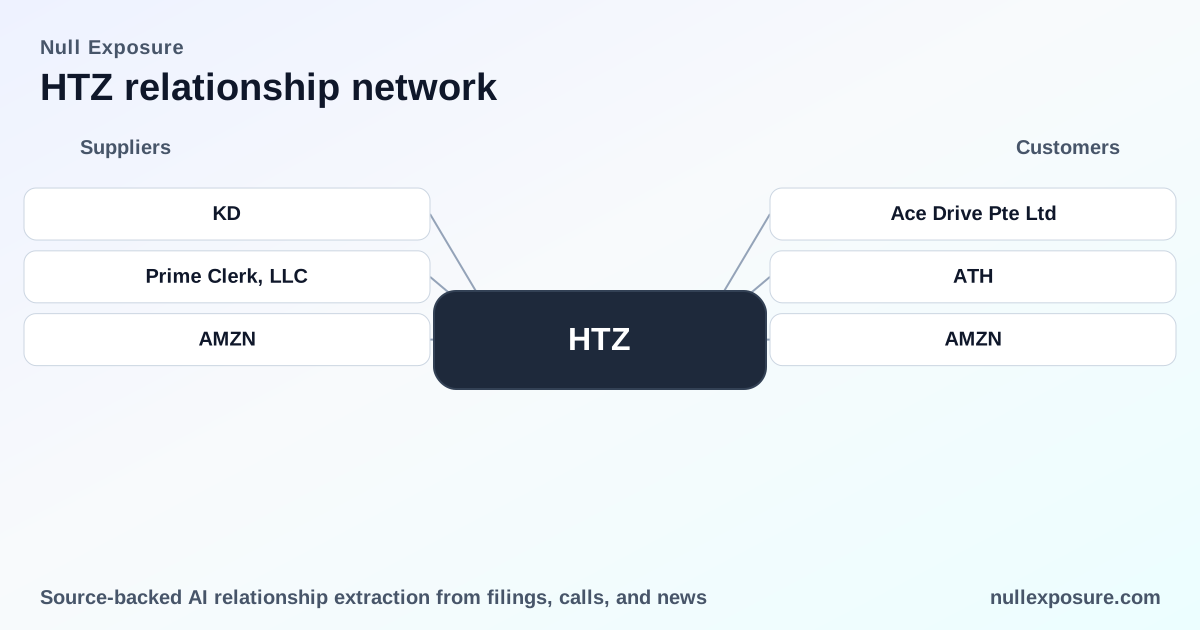
Hertz (HTZ) — Customer Relationships That Drive Fleet Economics
Hertz monetizes a global vehicle fleet through short-duration rentals, recurring ride-share and commercial contracts, franchise/licensing fees, and vehicle disposals; revenues come from rental rates plus ancillary, usage-based charges (tolls, fuel/charging, insurance add‑ons) and periodic sales of used vehicles. The company’s customer relationships therefore combine high transaction volume, pronounced seasonality, and meaningful counterparty diversity — from individual leisure renters to large strategic partners — which together determine fleet utilization, residual values and cash generation. For a concise, investor-ready map of those relationships, see our analysis below. Learn more at NullExposure.
How Hertz makes money and what the contract profile looks like
Hertz’s operating model is a hybrid of transactional and contracted revenue:
- Primary revenue driver is short‑term, usage‑based rentals (hourly/daily/weekly), where pricing and ancillary charges are recognized at the point of service and scale with transaction days. Contract language in company disclosures classifies these as short‑term, usage‑based performance obligations.
- Complementary long‑term and framework arrangements exist for commercial accounts, airport concessions and fleet financing/servicing agreements (e.g., master vehicle operating leases), which create recurring cash flows and structural obligations across the fleet lifecycle.
- Franchise and licensing relationships generate steady low-single-digit percentage royalty income and enable global scale via third‑party operators, while also exposing Hertz to franchisee performance risk.
- Counterparty mix ranges from millions of individual consumers and ride‑share drivers (material volume) to corporations and government agencies; this diversity reduces single‑counterparty concentration but amplifies operational complexity.
Operational constraints worth noting as company-level signals: high U.S. revenue concentration (Americas dominant), global footprint with regulatory/data‑privacy exposure, material reliance on fleet disposition markets for cash, and a combined short‑term/usage billing posture with some long‑term framework contracts.
Notable customer and partner relationships — a concise catalogue
Uber / Uber Technologies
Hertz’s newly launched Oro Mobility subsidiary has been named a primary fleet management partner for Uber’s autonomous robotaxi program and for driver‑led services, responsible for daily asset management functions including charging, maintenance, cleaning and depot staffing. This partnership extends Hertz’s traditional rideshare fleet role into autonomous vehicle operations and was announced by Hertz in May 2026 (Hertz press release, May 2026) and widely reported across market outlets in early May 2026 (TradingView, MarketBeat, TechCrunch coverage, Apr–May 2026).
Ace Drive Pte Ltd (Reach Group) — Singapore franchise partner
Hertz appointed Ace Drive Pte Ltd — part of Reach Group — as the new franchise partner in Singapore under its international franchise program, expanding Hertz’s local access and licensing footprint in Asia Pacific. The company announced the appointment in a Hertz press release dated October 30, 2025 (Hertz newsroom, Oct 2025).
Athene Holding Ltd / Donlen (historical divestiture)
Hertz sold substantially all assets of its Donlen fleet‑management business to Athene Holding Ltd in a transaction completed in 2021; the divestiture removed a previously material fleet‑management asset from Hertz’s balance sheet and shifted related servicing activity to a third party. Coverage includes the Royal Gazette report on the transaction (Mar 2021) and references in Hertz’s later filings and press materials (Hertz FY filings referencing the Donlen sale).
Wheels Up (Wheels Up Experience)
Hertz entered a strategic partnership with Wheels Up Experience to provide the private aviation membership service with access to Hertz’s electric vehicle offerings and premium benefits, integrating rental mobility into a high‑value customer channel. This alliance was publicized in mid‑2022 (industry reporting, Jun 2022).
T‑Mobile (TMUS) — loyalty / consumer perks integration
Hertz has been integrated into T‑Mobile’s Un‑carrier lifestyle perks, tying Hertz rental benefits to a major mobile carrier loyalty program and broadening customer acquisition channels through co‑marketing and member benefits. This strategic alliance was reported in May 2026 industry coverage (InsiderMonkey / news aggregation, May 2026).
Amazon.com Inc.
Hertz is working with Amazon and has developed a direct sales site to compete with used‑vehicle marketplaces; this relationship positions Hertz to leverage large e‑commerce and logistics platforms for retail vehicle distribution. Reporting on Hertz’s engagement with Amazon appeared in The Detroit News (Nov 4, 2025).
What these relationships mean for investors and operators
- Commercial/strategic partnerships (Uber, Oro Mobility) transform Hertz from a pure rental operator into a fleet services provider for next‑generation mobility, increasing recurring service revenue and operational leverage but also making fleet availability and depot logistics more critical to EBITDA conversion. The Uber tie‑up is strategically material given the scale of rideshare fleets and the operational intensity of autonomous deployments (Hertz press release, May 2026).
- Franchising and licensing (Ace Drive, global franchisees) expand coverage with low capital intensity and generate steady royalty income (~2% of revenues historically), but they introduce execution risk where franchisee performance and local regulation affect customer experience and brand economics (Hertz public filings).
- Divestitures of fleet services (Donlen → Athene) reduced ownership complexity and shifted servicing economics; investors should treat fleet‑management and asset‑disposition markets as critical drivers of liquidity and residual value recovery (Donlen sale documentation and Hertz filings).
- Retail and channel partnerships (Wheels Up, Amazon, T‑Mobile) diversify channels for customer acquisition and vehicle disposition, improving margin mix where Hertz captures more direct retail value or high‑margin ancillary benefits.
- Contracting posture is mixed: predominantly short‑term, usage‑based transactions underpin volume, while framework and long‑term agreements provide stability for commercial and fleet services; operators must optimize pricing, pass‑through fees and utilization to protect margins.
For a deeper operational signal set and more relationship mapping, visit NullExposure for the full brief.
Key takeaways for active investors
- Hertz’s revenue model is transaction‑heavy but increasingly augmented by strategic fleet‑services contracts (Uber/Oro Mobility), which change the margin profile from pure rentals toward integrated operations.
- Fleet disposition and residual values are central to free cash flow — historical divestitures and EV disposition programs materially affect liquidity and earnings volatility.
- Geographic concentration in the U.S. matters: Americas account for the majority of revenues, so U.S. travel trends and regulation disproportionally impact HTZ performance.
- Franchise/licensing and channel partnerships provide scalable, low‑capex growth options but require strong governance to protect brand and service quality across markets.
- Customer base is highly diversified (individuals, ride‑share drivers, commercial and government accounts), which reduces counterparty concentration risk but increases execution complexity and data/privacy obligations.
Bold signals: Uber partnership is operationally strategic, short‑term usage billing dominates, and fleet disposition markets and U.S. travel demand drive cash generation.
If you need a tailored briefing on how these partnerships affect HTZ’s credit profile, fleet economics, or scenario modeling, reach out via NullExposure for bespoke research.