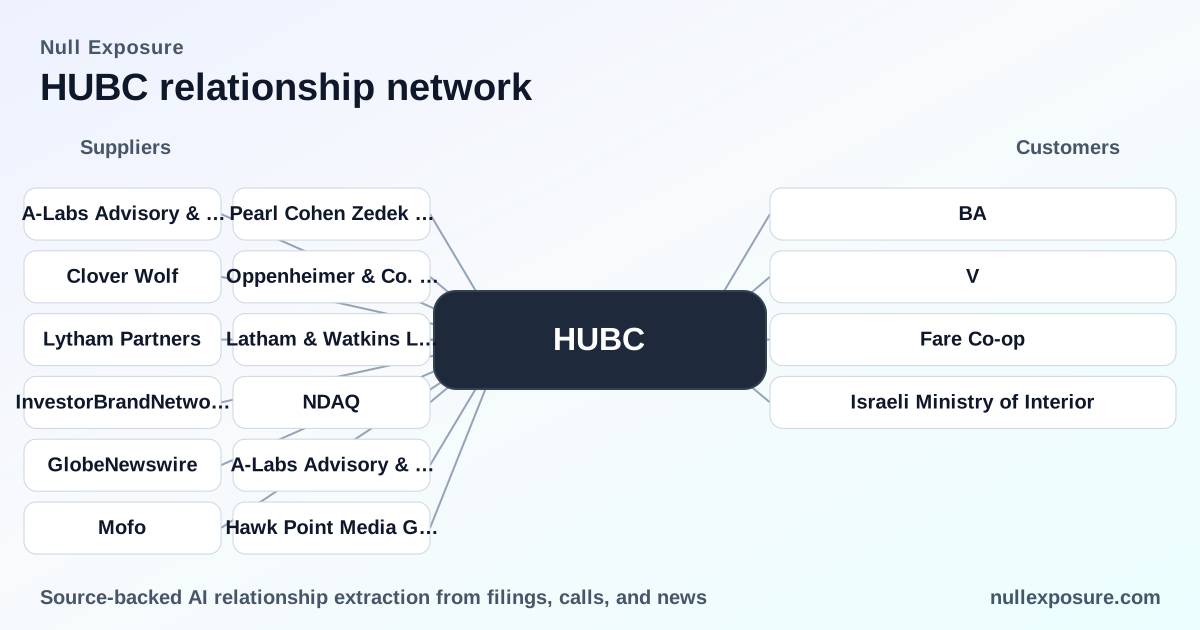
HUBC customer map: where Hub Cyber Security monetizes trust
Hub Cyber Security Ltd. sells confidential computing and secured data fabric technologies alongside a legacy professional services and consultancy arm; it monetizes through a mix of project-based professional services for blue‑chip clients, time‑boxed government contracts, and emerging productized trust infrastructure deployments that promise recurring and transaction‑anchored revenue. For investors, the story is one of commercial validation across three vectors — government, enterprise incumbents, and sector pilots — even as the company operates from a small revenue base and negative operating margins.
For a consolidated view of HUBC coverage and related signals, visit https://nullexposure.com/.
How Hub’s customer relationships reveal its operating posture
Hub runs a dual business model: a stable cash‑generating professional services practice and a product push into trust infrastructure that bundles identity, governance and capital sequencing features for specific industries. That posture drives several operational characteristics investors should track:
- Contracting posture: a mix of multi‑year government contracts and enterprise consultancy engagements that are often negotiated and phased; product rollouts (SecureRide, Tivani) are being embedded in staged deployments rather than full‑enterprise rip‑and‑replace projects.
- Concentration: the company’s revenue base is modest (Revenue TTM $28.97M), so single mid‑sized contracts are material to near‑term results; announced government awards and project embeddings will therefore move reported revenue line items.
- Criticality and stickiness: services with long‑standing blue‑chip clients provide defensive cash flow; productized trust infrastructure targets operational workflows (rideshare driver governance, contractor verification) where integration creates switching costs.
- Maturity: Hub’s business blends mature consultancy relationships dating back decades with nascent commercial product offerings — expect volatility as product commercialization scales.
Deal‑by‑deal: what each customer relationship signals for revenue and risk
Israeli Ministry of Interior
HUB secured a NIS 16 million (approximately US$5 million) contract from the Israeli Ministry of Interior, a government award that the company reported will generate roughly $4.5 million of revenue over two years, making it a material near‑term revenue contributor relative to reported TTM sales. According to QuiverQuant and company releases (March–May 2026), this is a phased government engagement focused on secure data infrastructure for public services.
V
In its 2024 Q2 earnings call, Hub described its legacy professional services and cyber consultancy business as providing stable revenue through long‑term relationships with blue‑chip clients, explicitly naming “V” as part of that cohort; the transcript positions these engagements as a bedrock of recurring, projectable cash flow. (Hub 2024 Q2 earnings call, referenced March 2026.)
Visa
Visa is cited as a long‑standing blue‑chip client in Hub’s professional services commentary, signaling multi‑decade consultancy ties that give the company a steady revenue floor while it commercializes product offerings. (Hub 2024 Q2 earnings call, 2024Q2.)
Boeing
Boeing is another named client in Hub’s legacy consultancy franchise, reinforcing that large enterprise security engagements underpin a portion of reported revenue and provide referenceability for cross‑industry sales. (Hub 2024 Q2 earnings call, 2024Q2.)
Ferrox Critical Minerals Ltd.
HUB has begun phased embedding of its Trust Infrastructure into the Tivani Tier‑1 Critical Minerals Project run by Ferrox Critical Minerals Ltd., covering contractor verification, governance and capital sequencing workflows as the project advances to pre‑construction and targets 2027 production. This deployment indicates Hub’s push into industrial capital projects where trust orchestration intersects with financing and contractor onboarding. (Bitget news, May 3, 2026.)
Fare Co‑op
Hub launched SecureRide™, a purpose‑built trust infrastructure for the Transportation Network Company (TNC) market, in partnership with Fare Co‑op — a driver‑owned, city‑managed rideshare platform — representing a commercial product go‑to‑market in the rideshare vertical. The press release describes this as a productized entry point into the $400B global rideshare opportunity. (Yahoo Finance / GlobeNewswire, March 10, 2026.)
What the relationship map implies for investors
- Revenue concentration risk is real. The Israeli Ministry of Interior engagement (~$4.5M over two years) represents a meaningful share of Hub’s reported trailing revenues, so contract timing and recognition will materially influence short‑term topline and cash flows.
- Blue‑chip services are a durability anchor. Longstanding relationships with Visa and Boeing provide a predictable baseline that reduces pure start‑up risk while product commercialization matures. This mix improves predictability but limits upside leverage until product revenue scales.
- Product commercialization is selective and staged. SecureRide and the Tivani embedding show Hub selling industry‑specific trust stacks that are integrated progressively, which reduces upfront deployment risk for buyers but delays full‑value capture for Hub.
- Operating leverage and margins remain the gating factor. Reported negative EBITDA and operating margins indicate that despite commercial wins, scale economics are not yet realized; investors should monitor gross margin expansion and the migration from services to recurring product revenue.
- Referenceability across sectors accelerates go‑to‑market. Public‑sector validation plus blue‑chip enterprise references gives Hub a credible story when pursuing regulated or capital‑intensive industries.
For deeper signal overlays and continuous tracking of Hub’s customer evolution, see https://nullexposure.com/.
Practical read for portfolio managers
- Treat Hub as a high‑beta, execution‑sensitive security: contract timing, recognition and a small revenue base mean headline wins can swing quarterly results.
- Monitor three KPIs in upcoming reports and calls: government contract revenue recognition schedules, product bookings for SecureRide/Tivani embeddings, and any client concentration disclosures.
- Upside scenario: successful conversion of pilot embeddings into multi‑year product contracts that shift revenue mix from services to recurring flows; downside: slower commercialization and continued margin pressure.
Bottom line
Hub Cyber Security’s customer relationships demonstrate real commercial traction across public sector, enterprise incumbents, and industry pilots, validating the company’s trust‑infrastructure proposition while underscoring sensitivity to a small revenue base and timing of recognitions. Investors should weight contract materiality and the services‑to‑products transition when sizing exposure; Hub has credible reference clients and nascent product revenue streams, but profitability improvements are the necessary next milestone before re‑rating.