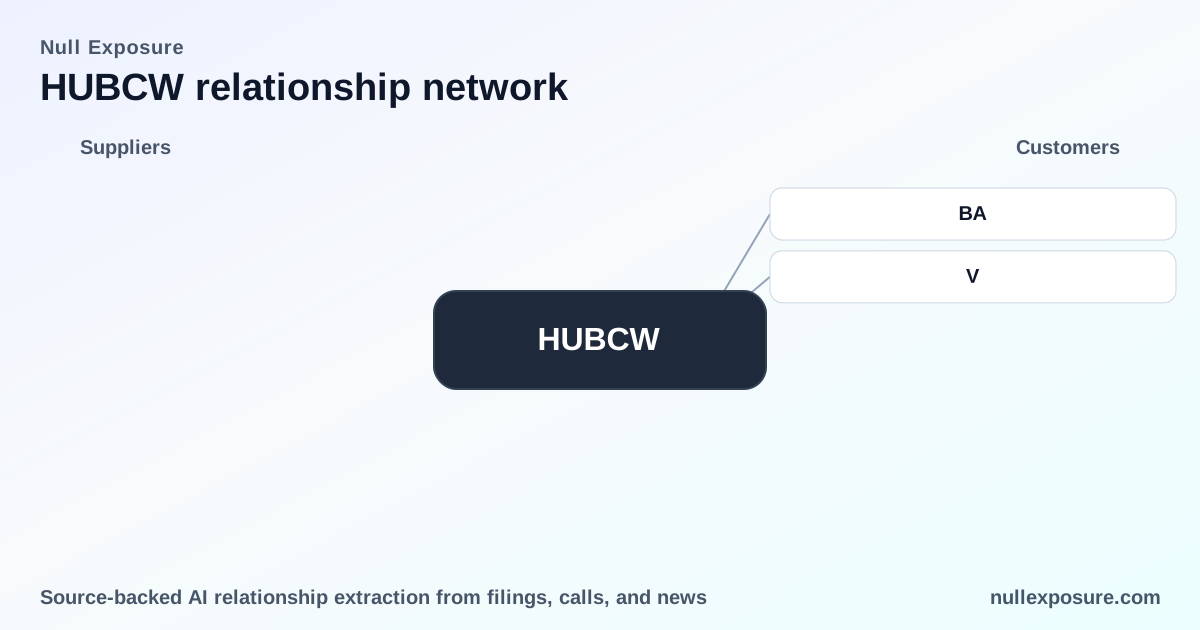
HUBCW: Blue‑chip relationships underpin a legacy services franchise
Hub Cyber Security operates a legacy professional services and cyber consultancy business that sells long‑duration advisory and implementation engagements to enterprise clients; the company monetizes through contracted consulting retainers, multi‑year professional services agreements and steady renewals with large corporate accounts. Management emphasizes stable revenue from long‑standing relationships with blue‑chip customers, which form the core commercial value the firm still carries into its product and services mix. For a focused view of customer signals and relationship risk, visit https://nullexposure.com/.
Why customers matter more than product for HUBCW today
Hub Cyber Security’s public disclosures position the firm as a professional services centric cybersecurity provider headquartered in Tel Aviv with an international client footprint. While the listed security is a warrant (HUBCW), the underlying company’s customer relationships drive commercial predictability: long-term consultative engagements with major enterprises deliver a baseline revenue stream that is less volatile than product‑sales, particularly relevant for investors evaluating earnings durability or downside protection.
Key operating model characteristics follow directly from the customer claims in the company’s investor commentary:
- Contracting posture – Long term and relationship-driven. Management described client engagements as relationships “that go back several decades,” indicating multi‑year engagement lifecycles and a services model that relies on continuity and trust rather than one‑off transactions.
- Concentration – Focused on large enterprise accounts. The company names Visa and Boeing as representative blue‑chip clients; that concentration reinforces revenue stability but also introduces client dependency risk if a handful of accounts represent material revenue.
- Criticality – Mission‑critical advisory for core operations. Cybersecurity consulting for payment processors and aerospace manufacturers is mission‑critical work, which increases switching costs and the stickiness of engagements.
- Maturity – Legacy professional services anchor the business. Management explicitly framed the consultancy as “legacy,” which signals a mature service line that underpins current cash generation even as the company pursues other strategic initiatives.
No additional operational constraints were recorded in the reviewed materials; that absence itself is a company‑level signal that investors must supplement with direct diligence on contract length, client revenue share and renewal cadence.
What management said on the record about client relationships
Management’s most explicit disclosure on customers came in the company’s 2024 Q2 earnings call, where they framed the legacy services business and identified specific blue‑chip names as pillars of that revenue. The remarks are concise but consequential for assessing business durability and client quality.
Boeing — decades‑long consultancy relationship
Management cited Boeing as an example of a long-term, blue‑chip client that contributes to a stable professional services revenue stream, reflecting decades of engagement in cyber consultancy and related services. This relationship underscores strategic client stickiness with a major industrial aerospace account. (Source: Hub Cyber Security 2024 Q2 earnings call, referenced March 7, 2026.)
V — the Visa ticker referenced by management
The transcript lists “V” alongside other blue‑chip customers; this shorthand corresponds to the Visa group and reiterates Visa’s role as a longstanding services client that supports steady consultancy revenue. The ticker reference confirms management’s intent to highlight a major payments company as a cornerstone client. (Source: Hub Cyber Security 2024 Q2 earnings call, referenced March 7, 2026.)
Visa — named explicitly as a blue‑chip client
Management explicitly named Visa when describing the legacy consultancy book, indicating multi‑decade professional relationships that deliver recurring services revenue and high client credibility for Hub Cyber Security. Visa’s inclusion signals strong industry validation for the firm’s cyber consultancy practice. (Source: Hub Cyber Security 2024 Q2 earnings call, referenced March 7, 2026.)
How these relationships translate into investor signals
Investors and operators should treat the named relationships as strategic assets rather than mere references. The presence of Visa and Boeing in management’s description has immediate implications:
- Revenue stability: Long‑standing contracts with established enterprises provide predictable cash flow and reduce quarter‑to‑quarter volatility relative to transactional product sales.
- Commercial defensibility: Serving mission‑critical functions for large clients increases switching costs and supports margin resilience for the services line.
- Concentration risk: While blue‑chip customers reduce counterparty risk, they can also create outsized exposure if revenue is concentrated among a small number of clients; investors must seek disclosure of client revenue breakdowns.
- Reputational leverage: Public association with leading firms helps sales and referenceability in new engagements, accelerating business development in adjacent accounts.
Given the company‑level signals and the earnings‑call language, the key tradeoff for investors is between stability from anchored blue‑chip relationships and the potential financial vulnerability if a few clients constitute a large share of revenue.
For investors who want a systematic view of customer signals, Null Exposure delivers curated relationship intelligence that makes these tradeoffs measurable — see https://nullexposure.com/ for coverage and methodology.
Tactical recommendations for due diligence
Operators and analysts evaluating HUBCW should prioritize the following actions to convert qualitative relationship claims into quantitative conviction:
- Request or model contract terms and renewal schedules for the largest accounts to quantify revenue durability and concentration.
- Verify client references and scopes of work to determine how embedded Hub Cyber Security is within each customer’s security program.
- Monitor disclosure updates for any material client losses or contract restructurings that would alter the services revenue base.
- Assess product versus services mix over time; an increasing reliance on services implies predictable cash flows, while a pivot to product would require separate go‑to‑market and scale assumptions.
Bottom line: customer relationships are the primary asset, but transparency is limited
Hub Cyber Security’s principal commercial value is its legacy professional services franchise anchored by blue‑chip clients such as Visa and Boeing. Management’s public commentary frames these relationships as decades‑long partnerships that drive stable consulting revenue. However, public financial disclosure for the listed warrant offers limited transparency on the magnitude or concentration of those client revenues, so investors must bridge the gap with focused diligence on contracts and renewal dynamics.
For investors tracking customer‑level risk and concentration across cybersecurity firms, Null Exposure provides the relationship intelligence and source‑level context required to move from narrative to actionable insight — learn more at https://nullexposure.com/.