Hut 8 (HUT): From Bitcoin Miner to Contracted AI Infrastructure Platform
Hut 8 operates an integrated energy-to-compute platform that builds, owns, and operates power assets and data centers, then monetizes capacity through a mix of colocation subscriptions, usage-based hosting, managed services, and legacy Bitcoin mining. Recent commercial actions convert development optionality into long-duration, high-value leases with AI customers—a structural shift from volatile mining revenue toward contracted, long-term cash flows backed by major cloud and AI players. For an in-depth look at counterparty exposure and credit profile, see NullExposure’s work at https://nullexposure.com/.
Why the commercial pivot matters to investors
Hut 8’s balance sheet and revenue profile historically reflected Bitcoin price volatility and short-term hosting contracts. The company now markets large-scale, application‑agnostic data centers to AI/cloud tenants under multi-year triple-net leases and subscription-style colocation. This changes the company’s risk stack: power and construction execution risk are still central, but counterparty longevity and lease backstops are now the dominant revenue drivers.
- Key structural change: long-duration, capital-backed leases (15‑year headline terms reported) replace a portion of spot mining and short-term hosting.
- Revenue mix shift: recurring MRR and usage-based charges coexist with noncash mining receipts; the firm continues to sell hardware and provide services across Power, Digital Infrastructure, Compute, and Other segments.
Operating model constraints — what the filings signal
Hut 8’s disclosures show a mixed contracting posture: the company runs a blend of short‑term, usage-based, and subscription contracts, while also signing multi‑decade lease commitments for its largest data center projects. The firm signals geographic concentration in North America but references global demand for digital assets and HPC. Financially, Hut 8 acknowledges material customer concentration in Power and Digital Infrastructure, and its digital‑assets revenue is a critical audit area because of complex measurement and noncash consideration (Bitcoin). Collectively, these signals show a company transitioning from commodity-style revenue to contract-backed infrastructure revenue, but one still exposed to execution, counterparty concentration, and power-market risks.
Commercial relationships: what investors need to know
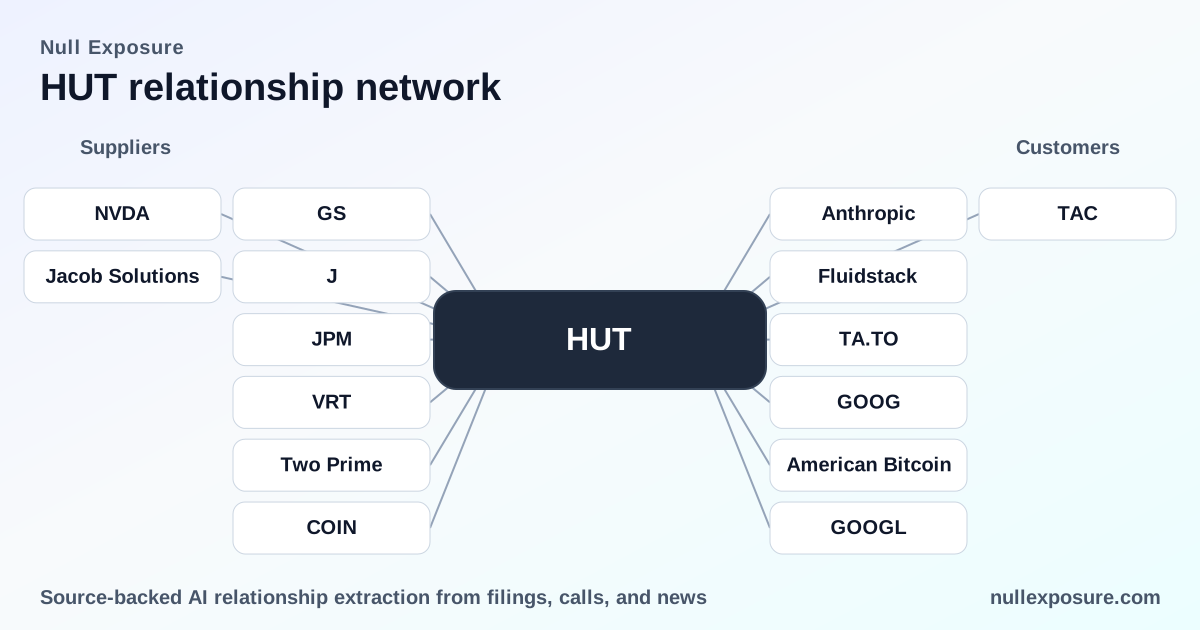
Below I cover every named counterparty referenced in Hut 8’s customer relationship results. Each entry includes a concise, plain‑English summary and a source reference.
Fluidstack — the anchor tenant for River Bend
Hut 8 signed a 15‑year, 245 MW IT lease with Fluidstack for the River Bend campus in Louisiana, a base‑term contract presented in news coverage as worth roughly $7.0 billion, with options and expansion rights that analysts and outlets have valued much higher. Management cited strong engagement with Fluidstack on the 2025 Q4 earnings call. (Sources: Hut 8 2025 Q4 earnings call; industry reports including DatacenterDynamics and SimplyWall 2026 coverage.)
Anthropic — strategic AI customer and developer partner
Hut 8 has an agreement to develop and deliver up to 2,295 MW of AI data center infrastructure that is linked to Anthropic through the River Bend partnership and related site development activity; management referenced Anthropic as a high‑engagement customer on the 2025 Q4 call. (Sources: Hut 8 2025 Q4 earnings call; DatacenterDynamics and TradingView reporting, March–May 2026.)
Google / Alphabet / GOOGL / GOOG — financial backstop and commercial optionality
Public reporting attributes financial backing or a long‑dated leasing relationship linked to Google/Alphabet, including a separate 15‑year agreement reported in some outlets as having upside to $17.7 billion if renewal options are exercised; analysts have cited Google support as a credit enhancer for project financing. (Sources: CoinCentral, InsiderMonkey, SimplyWall and TradingView coverage, Dec 2025–May 2026.)
TransAlta / TA.TO / TAC — power asset counterparty on Canadian disposition
Hut 8 agreed to sell four Ontario natural‑gas power plants to TransAlta, a transaction referenced in multiple reports as part of reshaping the Power layer and recycling capital into the River Bend project. (Sources: DatacenterDynamics, SimplyWall reporting, March 2026.)
American Bitcoin / American Bitcoin Corp. — mining/customer procurement relationship
American Bitcoin purchased hashpower capacity (reported as 3.05 EH/s for Hut 8’s reactivated Drumheller site), reflecting continued demand from third‑party miners for colocated ASIC hosting. This is an example of Hut 8’s legacy colocation and equipment sale flows. (Sources: Finviz and TradingView summaries, March–May 2026.)
Contracting and revenue mechanics in plain language
Hut 8’s contract mix is explicit in its filings: the company employs subscription (fixed monthly MRR) models for colocation, usage‑based billing for overage and consumption, and long‑term leases for major data center projects. Filings disclose that some hosting consideration is settled in Bitcoin under mining‑pool arrangements, and that certain contracts are terminable with short notice—creating a dual profile of stable long leases and operationally flexible, short‑duration relationships.
Materiality and concentration — where the risks cluster
Hut 8’s disclosures classify customer renewal rights as immaterial in many hosting contexts, yet the firm separately identifies digital mining revenue as a critical audit matter, underscoring accounting complexity and revenue recognition risk. Management acknowledges material reliance on a small number of customers for Power and Digital Infrastructure revenue; the River Bend deals reduce some price/volume uncertainty but increase single‑project execution risk and dependence on a handful of large counterparties.
Financing structure and project risk
Project coverage in the press notes that River Bend financing is syndicated non‑recourse debt and amortizing term‑debt matched to lease cashflows; reporting emphasizes the leases are structured triple‑net and in some cases financially backstopped by global cloud/AI players, improving bankability while keeping project completion and ramp risk front and center. (Sources: Blockspace Media; DatacenterDynamics, May 2026.)
Investment implications — what to watch next
- Execution and construction milestones at River Bend and related sites will determine whether contracted future revenue is realized as cash flow.
- Counterparty credit: confirm consolidation of the reported Google/Fluidstack/Anthropic arrangements into definitive contracts and review any sponsor backstops.
- Power and regulatory risks: the sale of Canadian gas plants reduces operational ownership but concentrates exposure on the US Gulf Coast project delivery and power sourcing.
- Accounting and liquidity: the coexistence of Bitcoin‑settled hosting and traditional cash leases keeps headline volatility in reported EPS and cash flow; monitor deferred revenue movements and the progress of non‑recourse financing closings.
If you are evaluating exposure or preparing diligence on Hut 8’s customer book, NullExposure has curated the primary articles and filings cited above and updates coverage as financing and lease documentation close — see https://nullexposure.com/ for our ongoing analysis.
Bottom line
Hut 8 has repositioned from cyclical Bitcoin mining toward contract‑backed AI infrastructure, replacing some spot risk with long‑dated lease economics anchored to prominent tenants. This transformation improves revenue visibility if projects are delivered on time and leases are fully financed, but it concentrates execution, counterparty, and power‑sourcing risk into fewer, larger projects. Investors should treat current market valuations as a binary play on project delivery and lease crystallization rather than a simple re‑rating of legacy compute cash flows.