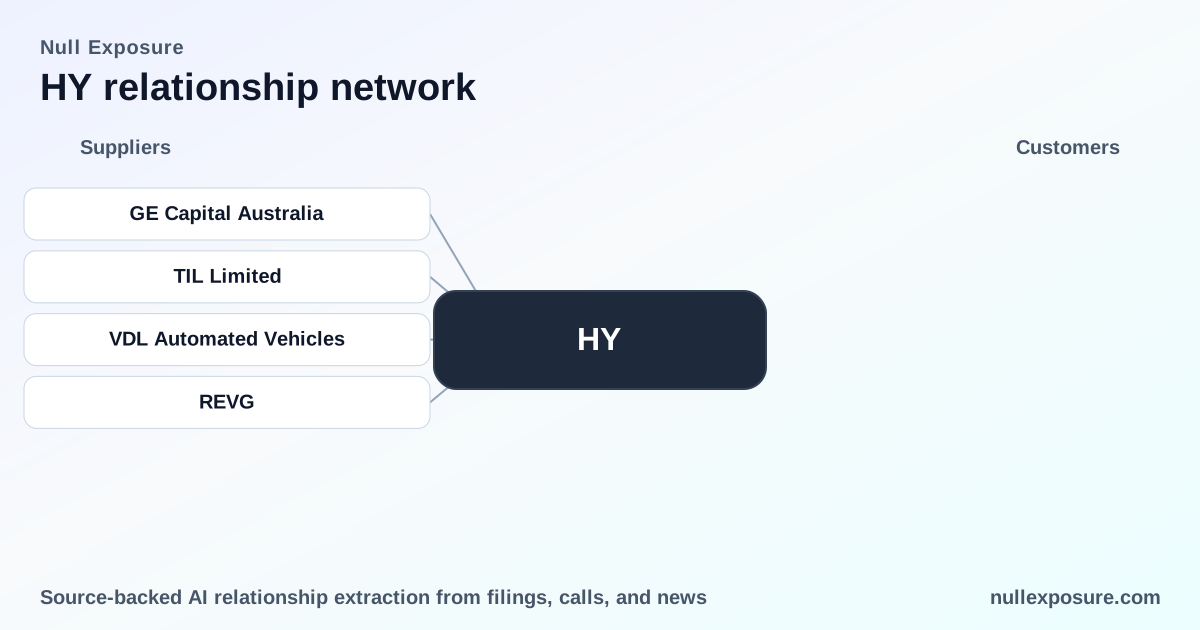
Hyster‑Yale (HY): Customer Relationships Drive Scale, Margins and Cyclicality
Hyster‑Yale designs, manufactures and sells lift trucks and aftermarket parts through a global network of independent dealers and a direct‑sales program for major accounts; it monetizes by selling new lift trucks (the core product), parts and extended service agreements, and by providing financing-backed sales and fleet services. Revenue is concentrated in lift trucks (≈75% of sales) with parts and services providing recurring aftermarket economics, while distributor and direct account channels control go‑to‑market leverage. For a deeper read on customer signals and counterparties, see https://nullexposure.com/.
Executive takeaway: why customers matter to valuation
Hyster‑Yale is a classic industrial OEM whose earnings trajectory is tightly linked to capital expenditure cycles in logistics, manufacturing and distribution. Customers drive both revenue volatility (new truck orders) and durability (parts & extended warranties), creating a split economic profile: cyclical top‑line with steady aftermarket cash flows. The company’s dealer network and direct major‑account program create distribution optionality, but also concentration and contingent liabilities through financing, recourse and repurchase commitments that matter to credit and equity investors.
The single relationship in the public record: dealer consolidation with Alta
Alta Equipment / NITCO (ALTG)
- Alta and NITCO are identified as award‑winning dealers for Hyster‑Yale, specializing in sales, rental and service of materials‑handling and construction equipment; the report notes dealer consolidation activity where Alta acquired NITCO, reinforcing dealer concentration trends. (Construction Equipment Guide, March 9, 2026: https://www.constructionequipmentguide.com/alta-equipment-acquires-nitco-northland-jcb/44102)
This dealer consolidation is material to distribution efficiency and local market coverage because independent dealers are the primary channel for Hyster‑Yale’s retail sales; consolidation among dealers can shift bargaining power, influence discounting and affect local service capacity.
Company‑level constraints that define customer economics
The firm’s SEC filings and disclosures reveal a mixed contract posture and operating constraints that shape customer relationships:
- Contract types are mixed and weighted to short‑term product transactions but include material long‑term service contracts. Hyster‑Yale provides standard warranties (6–12 months typical; some series 1–3 years) and sells extended warranty and maintenance agreements (2–5 years), with revenue for these agreements recognized over the life of the contract (company filing, FY2024). That structure creates predictable recurring revenue but requires deferred revenue management and warranty reserves.
- Licensing and technology revenue exist at modest levels and involve named counterparties. The company discloses income from licensing technology to an entity referred to as SN (income recognized in FY2023 and FY2022, limited in FY2024), and contracts for engineering services on a cost‑plus basis with SN (company filing disclosures).
- Spot and usage economics exist in parts and aftermarket sales. Parts revenue is recognized on shipment; the company also uses volume rebates for high cumulative purchase customers—this creates usage‑based incentives in aftermarket spend (FY2024 disclosures).
- Financing and contingent liabilities are large and visible. Hyster‑Yale records significant recourse and repurchase obligations in connection with third‑party financing arrangements to support dealer and customer purchases; total amounts subject to recourse or repurchase were $219.2 million at December 31, 2024 (company filing).
- Geographic scale is global but skewed to the Americas. The lift truck business operates across Americas, EMEA and JAPIC regions; Americas account for the majority of revenue but EMEA and APAC are material for bookings and production planning (FY2024 results).
- Customer counterparty types are diverse but include large enterprise and government buyers. Major account direct sales are a strategic channel (accounting for 23% of new lift‑truck unit volume in 2024), while government agencies and large centralized purchasers are included in the end‑user base.
- Materiality signals: the customer base is broad and no single outside country contributed ≥10% of revenues, which mitigates single‑country concentration risk while leaving industry and channel concentration intact.
What these constraints imply for investors and operators
- Contracting posture: The mix of short‑term equipment sales and long‑term aftermarket contracts means cash flow is lumpy but operating leverage on parts & service supports margins during downturns. Extended warranties create deferred revenue and warranty reserve risk that requires active management.
- Concentration and criticality: Dealer network health is critical. Independent dealers account for the majority of retail distribution; dealer consolidation (as exemplified by the Alta/NITCO transaction) concentrates local market power and can compress margins or improve service economics depending on negotiation dynamics.
- Maturity and lifecycle: The installed base is large and mature; parts and service represent stable annuity potential (≈14% of revenue), while new truck demand is cyclical and sensitive to macro capex cycles.
- Counterparty risk: Direct sales to major, geographically dispersed customers reduce single‑dealer dependencies but increase exposure to large‑account negotiation and bespoke pricing. Financing arrangements (and the related recourse) shift credit risk back to Hyster‑Yale in stressed scenarios.
- Operational risks: Warranty provisions, inventory management (significant manufactured inventory on LIFO accounting), and FX exposure across multiple currencies are persistent operational levers that affect margin realization.
Investment signals and risk highlights
- Positive: A large installed base, meaningful aftermarket margins and a global manufacturing footprint support long‑term cash flows and product leverage. Direct major‑account sales give the company scale in global customers where fleet decisions lead to multi‑unit orders.
- Negative: Cyclical demand for capital equipment, sizeable contingent recourse obligations (~$219m), dealer concentration shifts and regional manufacturing inefficiencies (EMEA operating loss in 2024) create downside to operating margins in a downturn.
- Quantitative context: Lift trucks comprised roughly 75% of revenue in 2024, parts ~14%, and services ~7%; these shares highlight the core product dependency and the stabilizing but smaller aftermarket revenue stream.
Practical next steps for analysts and operators
- For analysts: track dealer consolidation activity and recourse obligations; changes here are high‑signal for margin and credit risk. Monitor extended warranty backlog and deferred revenue roll‑forward to understand future service margins.
- For operators: prioritize dealer service capacity and parts distribution resilience, particularly in EMEA where manufacturing inefficiencies impacted operating profit in 2024.
For additional intelligence on counterparties and dealer network moves, visit https://nullexposure.com/ for focused customer mapping and relationship signals.
Bold final takeaway: Hyster‑Yale’s economics rest on cyclical new‑truck sales complemented by steady aftermarket and service revenues; distribution concentration and financing‑related contingent liabilities are the primary hooks for valuation and credit analysis.