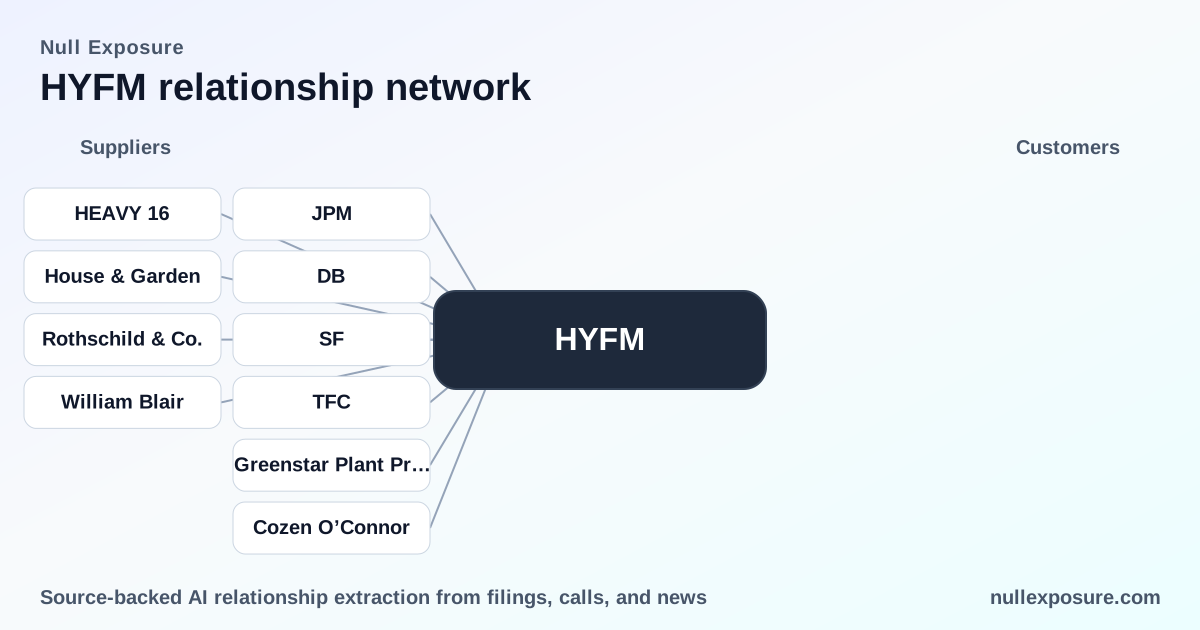
Hydrofarm (HYFM) — Customer Relationships, Operational Posture, and Key Counterparty Signals
Hydrofarm Holdings Group (HYFM) manufactures and distributes controlled-environment agriculture (CEA) equipment and consumables across North America and selected international markets. The business monetizes through a mix of branded proprietary products and distribution services, with recurring revenue concentrated in consumables (grow media, nutrients and supplies) and transactional sales of durable equipment. Revenue is generated when control of goods transfers to wholesale customers and resellers; the company supplements product sales with logistics, licensing and after‑sales service arrangements. For investors, the critical read is that recurring consumables drive a large share of sales while distribution and manufacturing fixed costs and regulatory exposure drive material operating leverage and risk. For a concise corporate view, visit https://nullexposure.com/.
Quick financial and strategic snapshot investors need to know
Hydrofarm reported TTM revenue around $134.3M with negative EBITDA and meaningful operating losses, signaling a challenged margin profile in a seasonally driven market. The business is highly tied to North American cannabis cultivation dynamics, and management has executed restructuring and asset sales to reduce manufacturing capacity and inventory exposure. Balance-sheet and liquidity considerations, plus covenanted credit facilities with country-specific restrictions on sales into prohibited jurisdictions, are central to the investment case.
How Hydrofarm contracts and the commercial posture that matters
Hydrofarm’s commercial footprint blends several contract types and relationship durations:
- Long‑term leases and facility commitments: The company carries multi‑year leases (example: a 15‑year lease with escalating rent) that create fixed-cost exposure in distribution/manufacturing footprints.
- Short‑term, transactional revenue recognition for the majority of product sales, with most revenue recognized within one year.
- Licensing activity exists: the company licenses trademarks and may grant usage rights to distributors/resellers, which supports branded distribution but introduces IP/brand control risk.
- Spot asset sales have been used tactically (including an $8.7M asset sale related to durable equipment production).
Taken together, Hydrofarm operates a hybrid model: capital‑intensive real estate and manufacturing commitments on the cost side, with predominantly short‑cycle customer receipts on the revenue side, amplifying sensitivity to demand swings.
Geographic concentration and channel structure — where customers sit
Hydrofarm is primarily North America‑focused, operating eight distribution centers across the U.S. and Canada and generating the bulk of net sales from those markets. The company also maintains a distribution presence in EMEA (a distribution center in Zaragoza, Spain) and sources product globally, which exposes margins to shipping and FX volatility. Credit facility covenants explicitly restrict sales into jurisdictions that prohibit cannabis activities, which constrains international route-to-market for certain end uses.
Channel roles, materiality and spend patterns
Hydrofarm acts as both manufacturer and distributor, and sells through third‑party retailers and resellers while supporting large commercial customers through programs such as Distributor Managed Inventory (DMI). Key operating signals:
- Core dependency on consumables: Approximately three‑quarters of net sales are consumable, recurring products — a structural advantage for predictability but a revenue concentration on a single end‑use vertical.
- No single customer concentration: No customer accounted for more than 10% of revenues or accounts receivable in 2024 or 2023 — this preserves counterparty diversification at the individual customer level.
- Material regulatory and reputation risk: Federal/state cannabis enforcement, product registrations, and product liability risks are material to operations and financial performance.
- Spend band evidence: Corporate real‑estate transactions in recent years have been in the $1M–$10M range, consistent with mid‑scale asset monetizations and leaseback activity.
These signals indicate a diversified customer base by account, but concentrated exposure by end‑market (cannabis/C EA consumables), which is the primary demand risk.
Relationship lifecycle and stage characteristics
Hydrofarm maintains long-standing, mature relationships with specialty hydroponic retailers, commercial resellers, garden centers and e‑commerce partners, while also engaging in active buyer and seller transactions (including asset sales and leasebacks) to optimize its footprint. The company classifies many relationships as active and mature, but regulatory constraints introduce the possibility of operationally terminated channels under adverse legal or compliance scenarios.
One customer-level relationship extracted from public results
Hydrofarm’s extracted customer-level mention in the provided coverage is limited to:
CM Fabrication, LLC
Hydrofarm recorded a loss on asset disposition tied to the sale in Q2 2024 of inventories and property, plant and equipment associated with its Innovative Growers Equipment branded products to CM Fabrication, LLC. This disposition is disclosed in Hydrofarm’s FY2025/FY2026 results narrative. (Source: Hydrofarm press release of March 27, 2026 reporting fourth quarter and full‑year 2025 results on GlobeNewswire.)
Implications for investors and operators
- Revenue durability comes from consumables, but profitability is fragile: negative EBITDA and operating losses reflect persistent margin pressure and legacy manufacturing footprints.
- Operational flexibility has increased via asset sales and consolidation, reducing capacity for less profitable durable equipment lines while preserving consumable supply chains. The CM Fabrication asset sale is an example of executing non‑core divestitures to free cash and simplify manufacturing exposure.
- Regulatory exposure is a premier risk — credit agreements and federal statutes can constrain channels and banking for certain customers; governance and compliance execution are value levers.
- Geographic diversification is limited: North America is the base, with targeted EMEA presence; shipping, FX and legal regimes affect international expansion economics.
What to watch next
- Quarterly cadence on volume/mix recovery in consumables and margins in distribution.
- Covenant metrics and liquidity path given negative EBITDA and ongoing restructuring impact.
- Any incremental asset monetizations or lease renegotiations that reduce fixed costs.
- Shifts in regulatory or federal enforcement posture that could materially affect end‑market demand.
For a consolidated view of Hydrofarm’s customer signals and to track counterparties and operational constraints across the HYFM profile, see https://nullexposure.com/.
Bold takeaway: Hydrofarm’s value rests on recurring consumables and distribution scale, but realization depends on margin recovery, effective footprint rationalization, and navigation of legal/regulatory constraints that materially affect end‑market demand.