Hyzon Motors: customer proof points and what they mean for investors
Hyzon Motors builds and sells hydrogen fuel cell commercial vehicles—primarily heavy-duty trucks and specialty commercial vehicles—and monetizes through vehicle sales, fleet trials, and commercial pilot agreements with logistics, waste-management and industrial fleet operators. Revenue today is concentrated in early-stage fleet deployments and pilot programs that validate the technology and create commercial references; translating those proof points into recurring, scaled orders is the critical next step for valuation. For a concise view of how these relationships track to execution, see NullExposure’s coverage at https://nullexposure.com/.
Business model drivers are clear: technology licensing and hardware sales to fleet operators, supported by deployment partnerships and after-sales service. The company’s cash flow profile remains dependent on conversion of pilots into production orders and on regional partners to localize assembly and support.
How Hyzon wins customers — operating posture and practical constraints
Hyzon operates with a pilot-first sales cadence: the company secures trials and small initial deliveries to establish range, refueling cadence and uptime in real-world operations, then seeks follow-on fleet orders. That posture produces several company-level signals:
- Contracting posture: Predominantly short-duration pilots and small commercial agreements rather than large, binding multi-year supply contracts. This accelerates customer proof but limits near-term revenue visibility.
- Concentration and criticality: Customers are fleet operators and industrial groups where vehicle reliability and refueling logistics are mission-critical; these relationships are high-impact for references but are not yet broad enough to de-risk Hyzon’s top-line growth.
- Commercial maturity: The relationship set indicates early commercial maturity—multiple pilots and one-off deliveries across geographies rather than mature, high-volume OEM supply contracts.
These characteristics imply revenue volatility and execution risk until Hyzon converts pilots into fleet-scale orders and establishes repeatable manufacturing and service processes.
If you want a succinct map of these customer proofs and sources, NullExposure maintains a consolidated view at https://nullexposure.com/ — useful for comparative diligence.
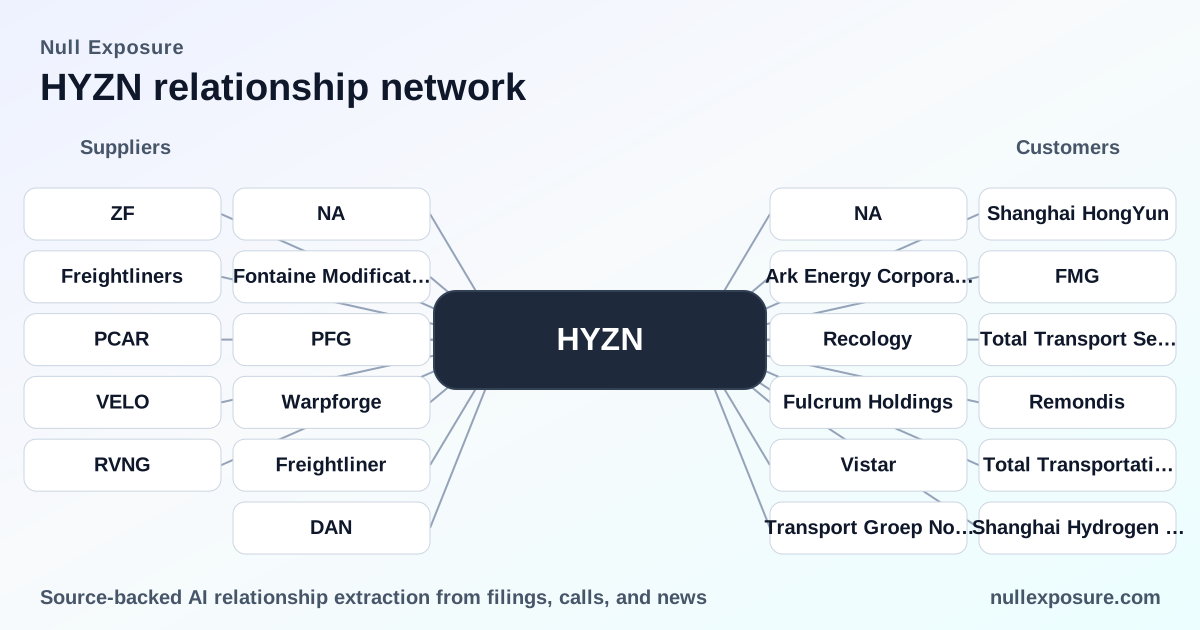
Customer roster and evidence — every relationship in the public record
-
Unnamed mention in Hyzon 2024 Q3 earnings call. Hyzon’s Q3 2024 earnings call references “our latest commercial agreement with GreenWaste” as a North American proof point for a fuel cell refuse truck. (Hyzon 2024 Q3 earnings call, first cited Mar 8, 2026)
-
GreenWaste. Hyzon announced a commercial agreement for 12 fuel cell trucks to be delivered in Q4 2025, positioning GreenWaste as a municipal/recycling sector customer reference in North America. (Trucking Dive, FY2024)
-
Performance Food Group (PFGC). Performance Food Group deployed Hyzon trucks using the earlier 110 kW fuel system and reported ranges up to 350 miles with rapid refueling; Hyzon also delivered four trucks to PFG’s Vistar facility in Fontana, Calif., in December 2023. (Trucking Dive, FY2024; Transport Topics, FY2025)
-
Vistar (a PFG division). Vistar participated in trials and deliveries as part of PFG’s adoption of Hyzon fuel cell electric vehicles for distribution use-cases. (VendingTimes press release, FY2023; TankTransport reporting, FY2025)
-
Ark Energy Corporation (Korea Zinc subsidiary). Ark Energy ordered five Hyzon 154-tonne trucks for operations at the Sun Metals zinc refinery in Townsville, an early industrial customer in Australia. (pv-magazine Australia, FY2021)
-
Southern California Gas Co. (SoCalGas). Hyzon announced delivery of a Class 3 fuel-cell utility truck to SoCalGas, expanding into utility service vehicles. (ACT News coverage, FY2021)
-
Transport Groep Noord / Royal FrieslandCampina. Hyzon delivered a 55-ton milk truck for transport services supporting FrieslandCampina, demonstrating use in refrigerated dairy logistics. (DairyReporter, FY2021)
-
Mt. Diablo Resource Recovery. Hyzon stated a partnership to pioneer hydrogen fuel cell technology in heavy-duty waste management with Mt. Diablo Resource Recovery. (Fleet Equipment Magazine, FY2024)
-
Recology. Recology tested a hydrogen fuel cell-powered refuse vehicle developed with New Way Trucks and Hyzon in San Francisco as part of municipal waste fleet trials. (The Buzz EV News, FY2024)
-
Remondis. Hyzon deployed its first hydrogen-powered waste collection truck in a commercial trial with Remondis, establishing a European waste-management reference. (FuelCellsWorks, FY2023)
-
Total Transportation Systems Inc. / Total Transport Services Inc. (drayage operators). Hyzon conducted port drayage trials with Southern California drayage operators, including a Freightliner Cascadia retrofit trial; these partners also signed LOIs for fuel cell trucks in related industry pilots. (FreightWaves, FY2022; Transport Topics, FY2022)
-
Shanghai HongYun / Shanghai Hydrogen HongYun Automotive Co. Hyzon announced a major order for 500 trucks from a Chinese customer (Shanghai HongYun), and later deliveries of 29 fuel cell trucks through Shanghai Hydrogen HongYun Automotive Co. for Chinese industrial users. (Yahoo Finance shareholder alert, FY2021; FreightWaves, FY2022)
-
Fortescue Metals Group (FMG). FMG contracted for up to 10 custom Hyzon coaches for Christmas Creek mining operations, testing performance in extreme temperatures. (Sustainable Bus, FY2021)
-
TMB Barcelona. Hyzon bid for a tender to supply 8 fuel cell buses to TMB Barcelona, indicating activity in transit procurements. (Sustainable Bus, FY2021)
-
NEOM Company. Hyzon, together with a Saudi industrial group, signed an MOU with NEOM for a vehicle assembly facility in NEOM, signaling strategic localization efforts in the Middle East. (Saudi Gazette, FY2021)
-
Shanghai Hydrogen HongYun Automotive Co. (deliveries for steel conglomerate). In December (FY2022), Hyzon delivered 29 fuel cell trucks to be used by a major Chinese steel conglomerate via Shanghai Hydrogen HongYun Automotive Co., underlining China market activity. (FreightWaves reporting, FY2022)
-
Fulcrum Holdings (real estate transaction). Hyzon finalized sale of its Honeoye Falls property to Fulcrum Holdings for $3.125 million, part of corporate restructuring and consolidation of operations. (Rochester Beacon, FY2024)
-
GreenWaste (Trucking Dive trial coverage). In addition to the earnings-call reference, press coverage confirms the 12-truck deal with GreenWaste for 2025 deliveries. (Trucking Dive, FY2024)
-
Performance Food Group press coverage (VendingTimes). VendingTimes reported PFG’s agreement to deliver in fuel cell electric vehicles supplied by Hyzon, reinforcing PFG’s role as a commercial fleet customer. (VendingTimes, FY2023)
-
Vistar trial note (TankTransport). TankTransport records Hyzon’s FCEV trial with Vistar (a PFG division) in Q3 2022, reflecting multi-year pilot history with the customer. (TankTransport reporting, FY2025 referencing FY2022 trial)
Each of these relationships constitutes a pilot, trial or small commercial order that generates operational data and referenceability for Hyzon. Several are industrial or municipal partners where vehicle uptime and refueling integration are critical to wider fleet adoption.
Investment implications and headline risks
- Proof-of-concept progress: The spread of pilots across logistics, waste management, utilities and mining shows successful early commercial penetration and geographic diversity in references—this is a positive signal for product fit in heavy-duty applications.
- Revenue conversion risk: The evidence set still skews to pilots and small deliveries rather than high-volume recurring contracts, so near-term revenue growth depends on scaling these pilots into large fleet orders.
- Execution dependencies: Local assembly partners, regional refueling infrastructure and after-sales service networks are required to convert trials into fleet rollouts; failure to deliver those capabilities materially impairs conversion.
- Balance-sheet sensitivity: Given Hyzon’s negative EBITDA and concentrated institutional ownership, conversion speed directly influences financing and valuation trajectories.
Bottom line
Hyzon’s customer footprint demonstrates targeted success in converting pilots across multiple verticals into tangible deliveries and trials. The company is collecting the references needed for scale, but the core investment question is whether Hyzon can convert these proofs into sustained, large-scale purchase programs. For ongoing tracking of Hyzon customer activity and consolidated source links, visit NullExposure at https://nullexposure.com/.