Independent Bank Corporation (IBCP): customer relationships and strategic implications
Independent Bank Corporation is the bank holding company for Independent Bank, headquartered in Grand Rapids, Michigan. The company monetizes through traditional banking channels—net interest income from lending and deposits, fee income from payments and services, and periodic gains on mortgage loan sales—while operating primarily across rural and suburban Lower Michigan. For investors, the business is a regional commercial/retail bank with concentrated geography, material operational risk considerations, and a services-first revenue mix. Explore our coverage
Why customer relationships matter for a regional bank like IBCP
Regional banks derive competitive advantage from sticky deposit relationships, local commercial lending, and deposit-to-loan franchise economics. Independent Bank’s revenue profile—interest and fees on loans, other interest, and non-interest income—is tightly coupled to the stability and composition of its customer base. That makes each large customer or block of customers meaningful to credit quality, liquidity and deposit funding. The historical sale of branches and ongoing service arrangements are evidence of how the firm manages footprint and concentration.
Deal history that still informs credit and funding dynamics
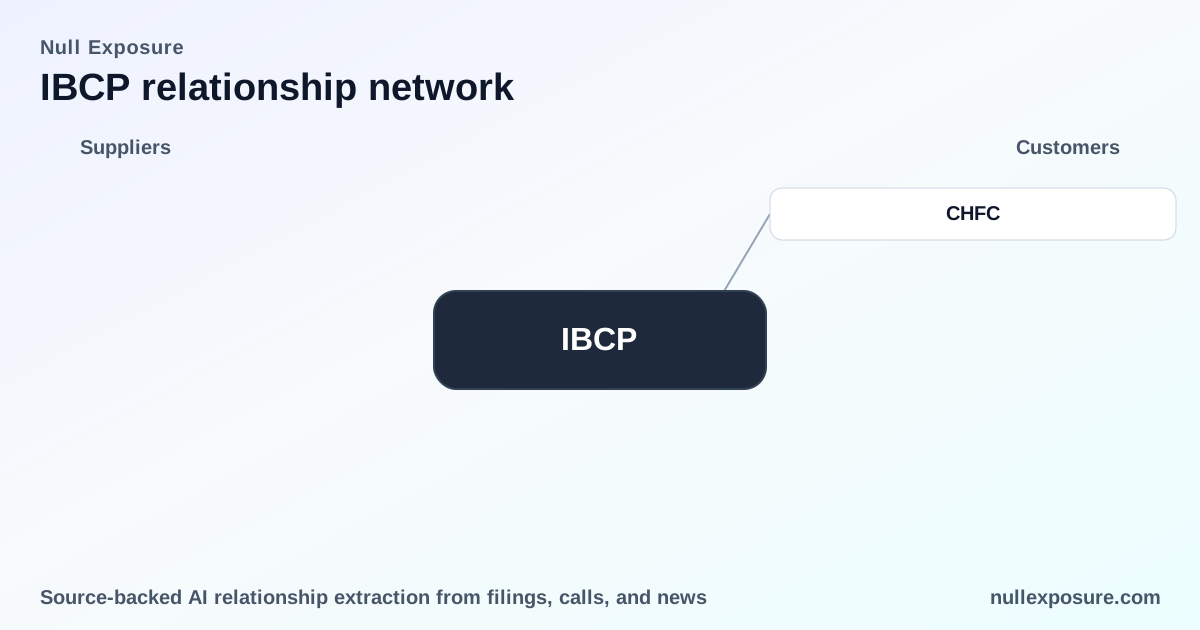
Two records in our coverage document the same material transaction: in FY2012, Independent Bank sold 21 branches to Chemical Bank (Chemical Financial Corporation/CHFC). This transaction reduced the bank’s branch count and shifted deposit relationships to the buyer, altering local deposit concentration and franchise reach.
-
Chemical Bank (CHFC) — FY2012: Chemical Financial Corporation’s subsidiary Chemical Bank entered into a definitive agreement to purchase 21 branches from Independent Bank. This was a branch-sale transaction that transferred deposit relationships and local customer accounts to Chemical Bank. According to a Sentinel‑Standard news report dated May 23, 2012, the purchase was an explicit branch acquisition from Independent Bank.
Source: Sentinel‑Standard news report, May 23, 2012. -
CHFC (duplicate record) — FY2012: The same Sentinel‑Standard article is recorded again in the coverage set, indicating the same 21-branch sale. The duplicate entry reinforces that the transaction is part of public historical record and continues to be referenced in relationship-tracking.
Source: Sentinel‑Standard news report, May 23, 2012.
Key takeaway: the FY2012 branch sale demonstrates management’s willingness to reshape physical footprint and cede retail deposit relationships when strategic or regulatory factors demand it. That precedent is relevant when assessing current deposit concentration, liquidity planning, and market exit/entry options.
What the broader relationship signals say about operating posture
The supplied constraints — derived from company disclosures and public filings — paint a coherent picture of Independent Bank’s operating model and the commercial reality for counterparties and investors:
-
Contracting posture: Independent Bank operates direct, regulated banking relationships with individuals and small-to-medium businesses. The firm’s contracting environment is governed by bank regulation, FDIC insurance rules, and FinCEN customer due diligence requirements, which means counterparties face standard KYC/AML processes and contracts typical of regional banks.
-
Concentration and geography: The company is heavily centered in Lower Michigan (rural and suburban markets). This geographic concentration increases exposure to local real estate cycles and regional economic shocks but also supports deep local customer relationships and market knowledge.
-
Criticality of services: Core banking systems—customer relationship management, general ledger, deposit, loan and other operational systems—are critical to ongoing operations; any interruption or breach would materially affect customer service, regulatory compliance and financial results. Cybersecurity risk is identified as a material company-level exposure.
-
Maturity and stage of relationships: The relationship-stage signal registers as active, consistent with a live retail and commercial lending footprint, ongoing deposit servicing, and recurring loan originations and sales (mortgage pipeline activity).
-
Spend scale: The provided spend band signal indicates exposure-levels in the $1M–$10M range for certain measured items (for example, non-performing loans around $5–6 million), suggesting moderate single-event financial impacts rather than outsized counterparty exposures.
Collectively these signals present a conservative, service-centric banking model where regulatory compliance, local market concentration, and operational resilience are central to enterprise risk management.
Relationship-by-relationship coverage (complete list)
Below are every recorded customer-relationship mention in the provided results; each entry is summarized in plain English and tied to the supporting source.
-
Chemical Bank / Chemical Financial Corporation (CHFC) — FY2012: Independent Bank sold 21 branches to Chemical Bank, shifting customers and deposits to the purchaser and reducing Independent Bank’s retail footprint. This transaction is documented in a Sentinel‑Standard article from May 23, 2012.
Source: Sentinel‑Standard news report, May 23, 2012. -
CHFC (duplicate entry) — FY2012: The coverage includes a repeated record of the same 21‑branch sale to Chemical Bank, reinforcing the public visibility of the transaction in historical reporting. The underlying source is the same Sentinel‑Standard article.
Source: Sentinel‑Standard news report, May 23, 2012.
Investment implications and principal risks
-
Deposit and funding risk is regional. With a concentrated Michigan footprint, local GDP, employment, and real estate trends directly influence deposit stability and loan performance. Independent Bank’s ROE and profit margins reflect a successful local banking franchise, but geographic concentration is a two-edged sword.
-
Operational and cybersecurity risk are material. The company highlights cybersecurity and systems resilience as potential material threats; as a service provider to retail and commercial clients, any failure in core systems would have outsized reputational and regulatory consequences.
-
Margin drivers remain traditional. Net interest income and loan sales are primary profit levers; interest-rate cycles and mortgage pipeline dynamics determine near-term earnings volatility.
-
Historical willingness to reshape footprint. The FY2012 branch sale shows management’s readiness to strategically divest branches and transfer customer relationships when the strategic calculus favors that move—this is relevant for liquidity and capital planning scenarios.
Bottom line and next steps for due diligence
Independent Bank is a regionally focused, service-oriented bank with a classic retail/commercial funding model and identifiable operational risks. For investors assessing IBCP’s customer relationships, prioritize: (1) deposit concentration and local real estate exposure, (2) operational resilience and cybersecurity posture, and (3) management’s appetite for footprint adjustments as a lever to preserve capital and liquidity.
If you want a deeper read into how the firm’s customer relationships translate into risk and opportunity across portfolio lines, visit our homepage for broader coverage and relationship monitoring: https://nullexposure.com/
For direct access to transaction histories and ongoing relationship signals, consult the Independent Bank filings and historical press coverage cited above.