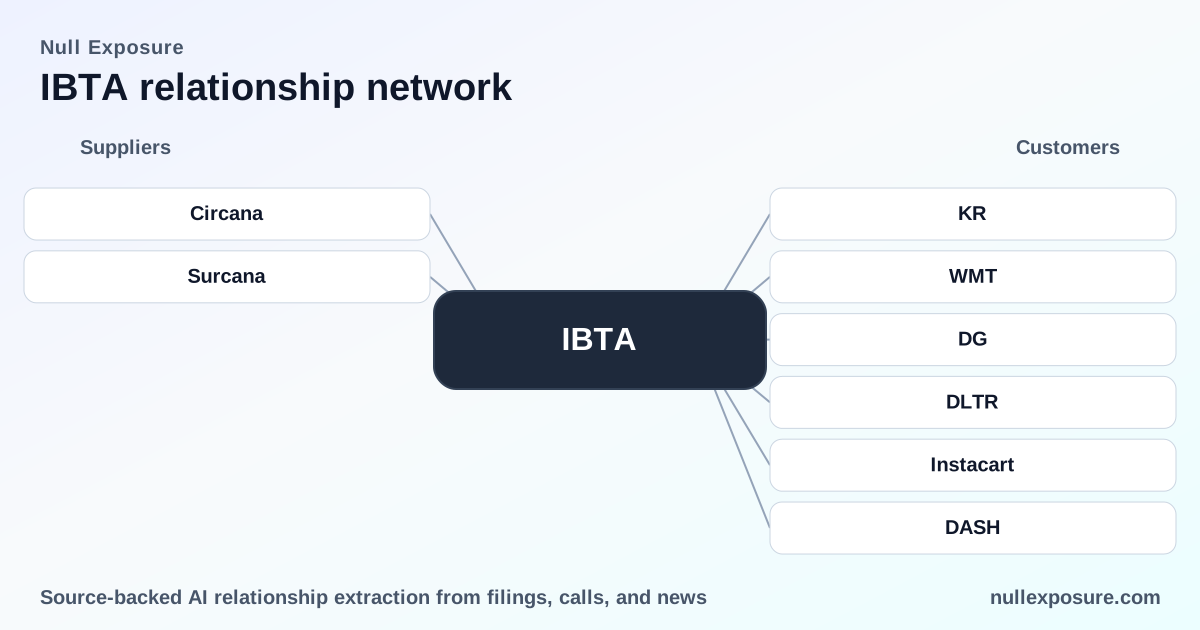
Ibotta (IBTA): customer map, commercial model, and what investors should price in
Ibotta operates an AI-enabled marketing platform—the Ibotta Performance Network (IPN)—that delivers digital promotions for CPG brands through its own D2C properties and a growing roster of third‑party publishers. The company monetizes primarily on a fee‑per‑redemption (usage‑based) model, supplemented by ad products, data licensing and one‑off services; growth is a function of redemptions, publisher distribution, and CPG spend. For investors, the focal points are revenue sensitivity to redemption volumes, renewal and campaign cadence for CPG clients, and the legal/regulatory visibility tied to large retail partnerships. For more structured signals on counterparty risk and concentration, see NullExposure’s platform at https://nullexposure.com/.
How Ibotta makes money and what that implies for customers and cash flow
Ibotta is a performance marketer: the core economics are pay‑for‑sale—clients pay a fixed dollar fee per verified redemption or a percentage of basket value for promoted items. That structure aligns revenue to measurable shopper behavior and improves ROI disclosure to CPG advertisers, but it also creates revenue volatility tied to short campaign lengths and campaign budgets. The company supplements redemption revenue with ad inventory and data/licensing products that are typically billed on flat fees.
Operationally, the business combines a consumer‑facing product (52 million registered users as of Dec 31, 2024) with white‑label integrations into retailer and publisher properties; Ibotta handles offer sourcing, verification, billing and publisher payouts. Gross profit is therefore a function of redemptions net of consumer awards, publisher shares, and platform costs—and the timing of collections versus publisher payouts drives working capital dynamics.
Visit https://nullexposure.com/ for the underlying relationship evidence and signals that informed this review.
The customer relationships that matter — one‑line takes (with sources)
Below are the distinct partner and publisher relationships present in the public record for IBTA, each with a concise plain‑English summary and a source reference.
-
The Kroger Co. — A class‑action wave of filings alleges Ibotta failed to disclose that its Kroger agreement is terminable at will, raising investor concern about revenue stability tied to a large retailer relationship. Source: multiple law‑firm press releases and media reporting, including GlobeNewswire and PR Newswire (June–Nov 2025) and follow‑on reports in 2026.
-
Walmart (WMT) — Ibotta has a multi‑year strategic relationship with Walmart and issued a common stock purchase warrant to Walmart in May 2021 as part of that arrangement, positioning Ibotta as the exclusive provider of digital item‑level rebate content for Walmart U.S. and creating a durable, strategic distribution channel. Source: Ibotta disclosures cited in company filings and summarized in its SEC discussion (warrant terms disclosed May 17, 2021).
-
Dollar General (DG) — Dollar General is listed among third‑party publisher relationships cited by Ibotta as a driver of third‑party publisher revenue growth, contributing to the material uplift in publisher‑sourced redemptions. Source: TradingView coverage of Ibotta’s SEC filings and 2025 revenue commentary.
-
Family Dollar — Family Dollar is named alongside Dollar General and Walmart as a third‑party publisher that helped drive a step‑up in third‑party publisher revenue during the recent period. Source: TradingView summary of Ibotta’s FY2025 disclosures.
-
Instacart — Instacart is reported as a third‑party publisher partner contributing to redeemer growth and distribution reach; Ibotta cites Instacart among platforms that expanded redemption volume. Source: TradingView SEC coverage and company commentary cited in press coverage (FY2025).
-
DoorDash (DASH) — Ibotta credits partnership expansion with DoorDash (announced January 2025) as a contributor to a 19% year‑over‑year increase in total redeemers, signaling increased reach into food delivery channels. Source: The Globe and Mail reporting on Ibotta’s earnings call and press releases (FY2025).
-
Uber (UBER) — Public reporting indicates Uber entered a multi‑year partnership with the Ibotta performance network, expanding merchant and consumer touchpoints beyond grocery and traditional retail. Source: Intellectia.ai coverage summarizing the partnership announcement (reported 2026).
Each of the relationships above is documented in the public press filings and media summaries listed in Ibotta’s relationship feed; the Kroger litigation and Walmart warrant are the two items with the strongest legal and contractual visibility in the record.
How contract structure and counterparty mix shape the business (company‑level signals)
Ibotta’s public disclosures collectively describe a business with the following structural characteristics—presented as company‑level signals unless a document explicitly names a counterparty.
-
Usage‑based primary revenue model: The IPN is a fee‑per‑sale engine; the majority of revenues derive from fees charged when consumers redeem offers. This aligns revenue to performance but concentrates cash flow risk on redemption trends.
-
Short campaign tenors for CPG clients: Most CPG agreements and campaigns run under twelve months and individual campaigns commonly run a few weeks to three months, which drives recurring sales cycles and revenue lumpyness.
-
Some long‑term strategic arrangements: While many commercial touchpoints are short or event‑driven, Ibotta holds multi‑year strategic relationships in the publisher layer—Walmart’s warrant and exclusivity clause is explicitly disclosed—providing pockets of stability within an otherwise campaign‑driven model.
-
Mixed counterparty base: The platform serves millions of individual consumers (critical demand side) and a mix of large enterprise retailers/publishers and many smaller CPG brands, producing both scale advantages and concentration/collection risk.
-
US‑centric geography: Ibotta generates all current revenue in the United States and is subject to U.S. privacy, communications and advertising rules, concentrating regulatory and market risk domestically.
-
Materiality and criticality: Revenue is highly dependent on securing CPG offers and on publisher distribution; the company characterizes these relationships as critical to IPN performance.
Investor risk checklist — what to watch next
-
Kroger litigation and disclosure risk: The class‑action filings around Kroger’s contract terms introduce reputational and legal expense risk and could influence investor perception of contract stability and disclosure controls. Source: consolidated press notices from June–Nov 2025 and 2026 reporting.
-
Redemption and renewal cadence: Track month‑to‑month redemption volumes and the renewal/expansion rate of CPG clients; the revenue model is directly tied to these KPIs. Source: Ibotta’s FY2024–FY2025 reporting and investor commentary reflected in press summaries.
-
Concentration of publisher distribution: While Walmart and other large publishers create scale, they also create negotiation leverage and payment timing impacts; monitor payment terms, receivable trends, and publisher commissions.
-
Privacy and communications regulation: U.S. federal and state rules on data and electronic messaging are operationally material for targeting and campaign effectiveness; regulatory shifts will affect addressability and measurement.
Bottom line and next step
Ibotta’s value proposition is a highly measurable, fee‑for‑performance ad platform that scales with redemptions, but that same structure makes revenue sensitive to campaign budgets, short campaign tenors, and the health of large retail partners. The Kroger disclosure litigation and the Walmart strategic arrangement are the two public relationship narratives investors must price explicitly today.
For a deeper relationship signal map and time‑series alerts on partner events, visit NullExposure’s research hub: https://nullexposure.com/.