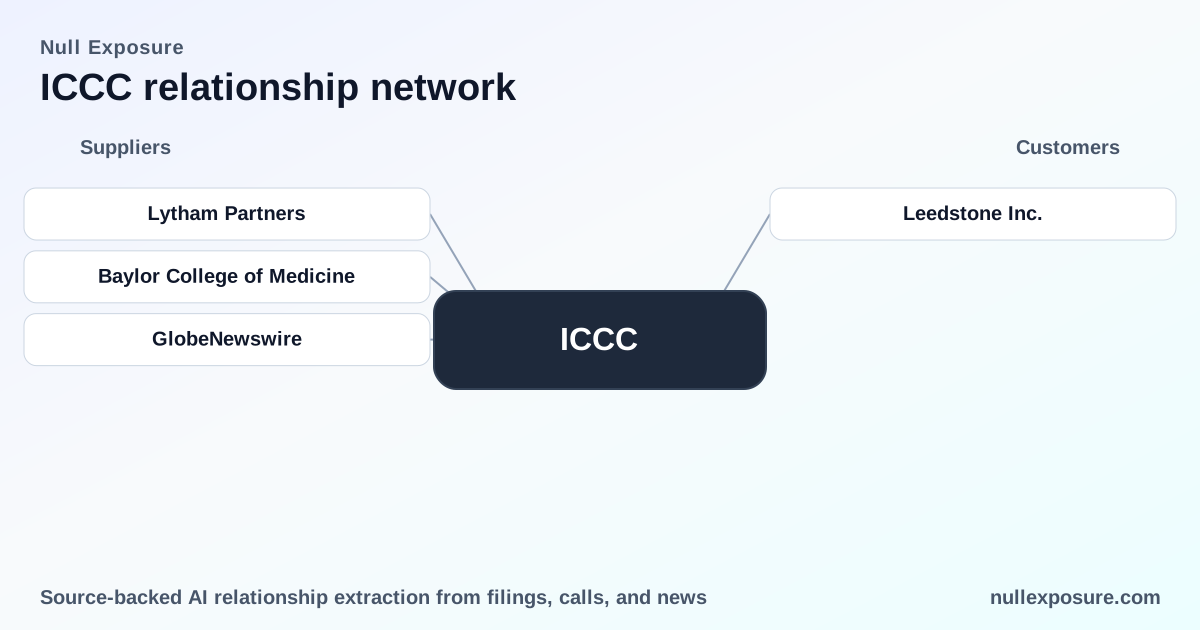
ImmuCell (ICCC) — Customer Relationships, Concentration and Operational Constraints Investors Need to Know
ImmuCell is a narrowly focused animal health manufacturer that monetizes primarily through product sales of its USDA‑licensed First Defense® line to distributors and end customers in the U.S. and select international markets, with historical and incidental licensing/grant revenues. Revenue is recognized at shipment and the business is distribution‑centric: First Defense accounts for virtually all product sales, and a small number of large distributors drive the majority of receivables and revenue. For investors evaluating customer risk and commercial durability, focus on distribution concentration, manufacturing reliability, and the controlled commercialization path for the second product, Re‑Tain®.
For a concise vendor-risk briefing or to integrate this customer intelligence into your diligence workflow, see the Nillexposure home page: https://nullexposure.com/
One-line investor thesis
ImmuCell sells a mission‑critical, niche biological product with high customer dependency on consistent supply and a business model that translates manufacturing capacity directly into revenue growth; the near‑term investment thesis balances capacity-driven upside (installed freeze‑dryers and expanded facilities) against high concentration and supply risk that can rapidly depress revenues and customer relationships.
The customer roster — the relationships you must not overlook
Leedstone Inc.
Leedstone Inc. is a domestic distributor controlled by ImmuCell’s board chair, David S. Tomsche; his affiliated company purchased $567,114 in 2024 and $231,405 in 2023 of ImmuCell product on terms consistent with other distributors. This is disclosed in ImmuCell’s Form 10‑K for the year ended December 31, 2024. (Source: ImmuCell Form 10‑K, FY2024)
Note: the company’s public disclosures identify Leedstone by name and quantify purchases; investors should treat purchases from Leedstone as both commercial volume and related‑party flow that is contractually described as consistent with other distributor terms. (Source: ImmuCell Form 10‑K, FY2024)
Why distribution concentration matters for valuation and operations
ImmuCell’s go‑to‑market model is distribution‑first: the company sells primarily to major animal‑health distributors who resell to veterinarians, stores and farms. The 10‑K discloses that 77%–79% of product sales in 2024 and 2023 were made to two large distributors, and 78% of trade receivables were due from those same counterparties at year‑end 2024. This structure creates three investment‑relevant dynamics:
- High counterparty concentration: A small number of distributors control working capital exposure and order flow; credit or logistical issues at one distributor transmit quickly to ImmuCell’s top‑line. (Source: ImmuCell Form 10‑K, FY2024)
- Spot/short‑term contracting posture: Revenue recognition is at shipment and invoices are typically paid ~30 days after control transfers, indicating largely transactional commercial terms rather than long‑term supply contracts. (Source: ImmuCell Form 10‑K, FY2024)
- Related‑party distribution: Board ownership links to at least one distributor (Leedstone), which creates governance and related‑party considerations alongside commercial volume. (Source: ImmuCell Form 10‑K, FY2024)
Operational constraints and company‑level signals that shape customer economics
ImmuCell’s regulatory, manufacturing and market context imposes constraints that determine customer serviceability and pricing power:
-
Manufacturing-driven revenue ceiling: First Defense® is the core product representing 99% of product sales. ImmuCell invested roughly $9.9 million (2019–2024) to expand capacity, and the company reports achieving estimated annual capacity of ~$30 million or more based on current selling prices and yields. Manufacturing yields, freeze‑drying throughput and quality control therefore directly control revenue scale. (Source: ImmuCell Form 10‑K, FY2024)
-
Production reliability is critical: Contamination events and equipment failures in 2023 produced scrapped inventory and backlogs that materially impacted results and customer inventories; ImmuCell attributes lost customers to that shortage. Supply continuity is the single operational risk with the largest near‑term impact on customer retention and revenue. (Source: ImmuCell Form 10‑K, FY2024)
-
Distribution and geographic focus: The primary market is North America; international sales rose meaningfully in 2024 but still represent a minority (international ~14% of sales in 2024). The company uses in‑country distributors for Canada and targeted markets in EMEA and APAC. Cross‑border expansion is possible but is resource‑constrained and sensitive to tariffs and regulatory approvals. (Source: ImmuCell Form 10‑K, FY2024)
-
Contract types and payment terms: Evidence indicates predominantly spot, short‑term sales (revenue at shipment, typical 30‑day payment) with some historical licensing/grant offsets to investment spending. Licensing revenue historically offset R&D investment (not a core recurring revenue line today). (Source: ImmuCell Form 10‑K, FY2024)
-
Customer maturity and product lifecycle: First Defense® is a mature market leader (USDA approval since 1991; cumulative doses >36 million), whereas Re‑Tain® is in a controlled, pilot‑style commercial rollout contingent on FDA regulatory status and managed launch. The company explicitly plans a selective initial distribution for Re‑Tain® to optimize outcomes and avoid early missteps. (Source: ImmuCell Form 10‑K, FY2024)
Relationship‑level detail you should verify in diligence
- Confirm the identity and commercial terms with ImmuCell’s two largest distributors, including credit limits and inventory buffering practices; concentrated receivables create material counterparty exposure. (Source: ImmuCell Form 10‑K, FY2024)
- Review related‑party commercial terms for Leedstone and any other distributor linked to insiders; the 10‑K shows purchases from the chair‑controlled Leedstone and states those purchases were on terms consistent with other distributors. (Source: ImmuCell Form 10‑K, FY2024)
- Validate backlog resolution timelines and yield improvements post‑contamination remediation; backlog figures were approximately $4.4–$4.7 million in late 2024/early 2025 and are a direct signal of near‑term revenue catch‑up potential. (Source: ImmuCell Form 10‑K, FY2024 / company filings through March 2025)
For a consolidated view of ImmuCell’s customer relationships and actionable risk flags, visit Nillexposure: https://nullexposure.com/
Investment implications — risk and return in a snapshot
- Upside: capacity conversion and a successful, controlled Re‑Tain® launch can materially expand addressable market and gross margin dollars; First Defense® pricing and product mix improvements support margin expansion.
- Downside: single‑product concentration and distributor dependency expose the stock to outsized operational risk; a repeat production disruption or distributor credit event would compress revenue quickly.
- Governance nuance: related‑party distribution via Leedstone introduces an element that investors should monitor for disclosure and arm’s‑length verification.
Practical due‑diligence checklist for acquirers and analysts
- Obtain distributor contracts, credit limits and historical days‑sales‑outstanding by counterparty.
- Validate remediation documentation for the 2023 contamination events and process yield metrics since Q4 2024.
- Review channel inventory levels and distributor stocking policies (buffer stock vs pull).
- Confirm related‑party procurement terms and independence of pricing for Leedstone.
- Stress‑test revenue scenarios against capacity and yield assumptions, and model the cadence of Re‑Tain® ramp under a controlled launch.
Conclusion — ImmuCell is a focused, manufacturing‑centric animal health company with clear commercial leverage to production capacity and substantial distribution concentration that creates both leverage and risk. Investors evaluating customer relationships should prioritize verification of distributor exposure, supplier and manufacturing resilience, and the governance treatment of related‑party distribution flows.