Intercontinental Exchange (ICE): Customer Relationships that Drive Durable Revenue and Structural Risk
Intercontinental Exchange operates a diversified, vertically integrated marketplace and fintech platform: regulated exchanges and six clearing houses that generate transaction fees, recurring subscriptions for data and connectivity, and SaaS-style mortgage technology revenues. ICE monetizes through a mix of point-in-time transaction fees, volume-sensitive clearing charges, subscription data contracts and long-term software hosting agreements, creating a revenue base that is both cyclical (trading/clearing) and recurring (data, listings, mortgage tech). For primary diligence and to explore the platform-level implications of these relationships, visit NullExposure.
Why customers matter to ICE’s economics — operating model signals investors need to hold top of mind
ICE’s revenue mix reflects distinct contracting postures: subscription and long-term contracts dominate data and mortgage technology, supporting recurring cashflows and predictable ASV growth, while transaction- and usage-based fees drive volatility and scale in the exchanges segment. Regulatory and counterparty-criticality constraints are central: ICE is a systemic provider — its clearing houses and benchmarks are mission-critical to market infrastructure globally, and that creates both pricing power and heightened operational/regulatory risk. Customer concentration is low — no single customer accounted for more than 10% of consolidated revenue in 2025 — yet the company’s fiscal position is material because clearing and custody exposures (tens of billions in margin/guaranty funds) make counterparty and operational resilience a core investor focus. ICE’s footprint is truly global (NA/EMEA/APAC), so currency, cross-jurisdictional regulation (DORA, EMIR, BMR), and equivalence decisions remain constant governance items for management and investors.
Quick investor takeaway: what to watch in relationships and product exposure
- Revenue durability: High renewal rates and long-term mortgage tech contracts underpin recurring revenue.
- Cyclicality and concentration: Transaction revenues amplify earnings volatility; customer-level concentration is low but systemic counterparty exposure is high because clearing houses mutualize risk.
- Regulatory sensitivity: Access decisions in EU/UK and index/benchmark licensing can materially affect client access and product distribution.
- Product mix growth: Data and custody initiatives (ICE Digital Trust) are strategic growth vectors but raise operational and reputational risk.
For a deeper, product-level read on how relationships flow through ICE’s P&L, see NullExposure.
Catalogue of recent relationships and public mentions
Below are concise, plain-English summaries for every relationship item in the data feed, each with a short source citation.
- GME-WS — Warrants tied to GameStop were reported as listed and freely tradable on the New York Stock Exchange. Source: Benzinga, March 9, 2026.
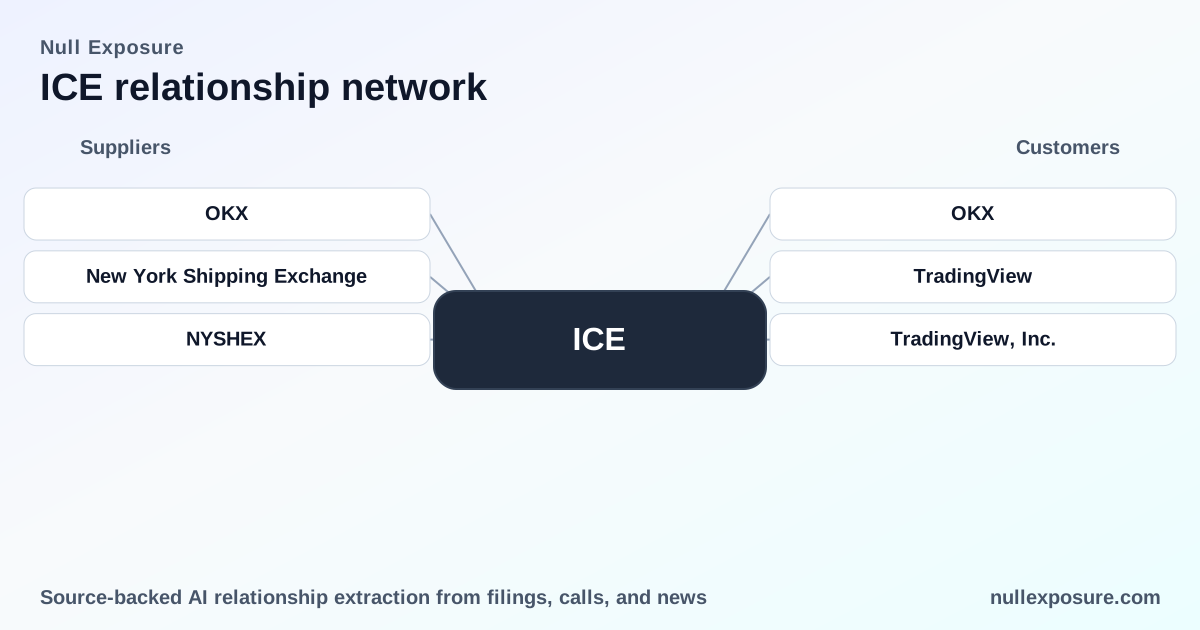
- OKX — OKX will distribute ICE’s U.S. futures and tokenized equities markets to a global audience under a strategic partnership. Source: IndexBox summary, March 10, 2026.
- OKX — ICE will license OKX spot crypto prices for futures while OKX will offer ICE futures and tokenized equities to U.S. customers. Source: CoinDesk, March 5, 2026.
- AZN (AstraZeneca) — AstraZeneca began trading ordinary shares on the NYSE to expand U.S. investor access. Source: Research-Tree press release, March 9, 2026.
- KBON — Karbon Capital Partners units (Class A and warrants) expected NYSE listing upon separate trading commencement. Source: Yahoo Finance, March 10, 2026.
- ABXL — Abacus Global Management announced transfer of its Class A listing to the NYSE from Nasdaq. Source: Yahoo Finance, March 9, 2026.
- BAM (Brookfield Asset Management) — Brookfield noted purchases under a buyback will be made through NYSE facilities. Source: The Globe and Mail press release, May 2, 2026.
- MIAX — Miami International set IPO terms with a plan to list on the NYSE under MIAX. Source: Renaissance Capital, March 10, 2026.
- FISV (Fiserv) — Fiserv will transfer its common stock listing to the NYSE, citing strategic alignment. Source: FX News Group, March 9, 2026.
- LXP-P-C — LXP Industrial Trust announced split-adjusted trading on the NYSE following a reverse split. Source: Quiver Quant, March 10, 2026.
- Q-W (Qnity Electronics) — NYSE facilitated Qnity’s listing and initial trading day activities. Source: FinancialContent market minute, March 10, 2026.
- BAM (duplicate) — Brookfield reiterated purchases could be made on NYSE facilities in multiple filings. Source: Ritzau press, March 9, 2026.
- WSBF (Waterstone Mortgage) — Waterstone’s digital mortgage is powered by ICE Mortgage Technology (formerly Ellie Mae). Source: TheTruthAboutMortgage review, citation referencing ICE MT, March 10, 2026.
- BKKT-WS — Bakkt’s prospectus supplement references continued access to a line of credit with Intercontinental Exchange Holdings. Source: The Globe and Mail/BizWire, March 9, 2026.
- BMNR (Bitmine Immersion) — Bitmine announced uplisting to the NYSE from NYSE American effective April 9, 2026. Source: PR Newswire, May 2, 2026.
- BMNR (duplicate) — Bitmine’s NYSE debut and buyback were covered in market reports on its first day trading. Source: Benzinga, April 26, 2026.
- Q-W (duplicate) — Market reporting reiterated NYSE role in Qnity’s listing. Source: FinancialContent, Nov 3, 2025 (rereported).
- CHMI-P-B (Cherry Hill Mortgage Investment) — The company initiated a position in ICE SOFR Futures and plans to expand usage as portfolio hedging. Source: MarketBeat call highlights, Feb 27, 2026.
- JENA-U — Jena Acquisition’s units began trading on the NYSE under JENA.U. Source: Chronicle Journal report on May 29, 2025 listing, cited March 10, 2026.
- GRP-U (Granite REIT units) — Announcement that trading on NYSE for Granite trust units ended as part of delisting actions. Source: The Globe and Mail, March 9, 2026.
- DLY (DoubleLine Yield Opportunities Fund) — DLY declared monthly distributions and trades on NYSE under DLY. Source: NationalToday coverage, March 2026.
- BKKT — Bakkt’s liquidity disclosure referenced a $40m secured revolving line of credit with ICE Holdings. Source: QZ earnings coverage, March 2026.
- JBS — Coverage of JBS’s NYSE debut (dual listing) referenced in local press. Source: Safras, May 3, 2026.
- BODI (Beachbody) — Beachbody announced a voluntary transfer from NYSE to Nasdaq following compliance flags. Source: Sgbonline/AthletechNews, March 2026.
- ABLLW / ABLLW (Abacus transfer duplicate) — Abacus transfer to NYSE and new ticker activity reported. Source: StockTitan, March 9, 2026.
- NWAX — America Acquisition Corp prospectus indicated expected NYSE listings for Class A shares and warrants. Source: Yahoo Finance, May 3, 2026.
- NMAX (Newsmax) — Newsmax trading movement and price action noted on the NYSE under NMAX. Source: Yahoo Finance, March 10, 2026.
- XFLH-U — XFLH Capital SPAC units began trading on NYSE under XFLHU on Feb 12, 2026. Source: Investing.com and duplicate reports, May 4, 2026.
- DSAQ-U — Direct Selling Acquisition units listed on NYSE since Sept 24, 2021; referenced in IPO summary. Source: IPO-Edge reposting, May 2, 2026.
- MDV — Modiv Inc. announced Class C shares trading on NYSE under MDV in 2022 (historical listing cited). Source: FinancialContent BizWire, historical disclosure.
- IGR-R-W — CBRE Global Real Estate Income Fund rights are transferable and expected to list on NYSE as IGR RT. Source: FinancialContent BizWire, 2023 filing.
- FINS — Angel Oak Financial Strategies Income Term Trust rights and trading on NYSE under FINS RT and FINS were reported. Source: BizWire / WRAL / Yahoo, 2025–2026.
- FSLY (Fastly) — Fastly announced transfer of listing from NYSE to Nasdaq Global Select Market effective December 2025. Source: Investing.com reports, May 2026.
- GDV-P-H — Gabelli fund noted series preferred shares trading on NYSE tickers including GDV Pr H. Source: Investing.com SEC/filing coverage, May 3, 2026.
- AGNC — AGNC launched three Agency MBS indices with Intercontinental Exchange. Source: StockTitan reporting, March 9, 2026.
- BKT-R — BlackRock Income Trust referenced NYSE-based Formula Price mechanics tied to NYSE trading. Source: StockTitan rights offering notice, March 2025.
- GROW (WAR ETF) — U.S. Global Investors launched an actively managed ETF on NYSE under WAR. Source: US Funds press release, 2024 historical listing referenced.
- BHM — Bluerock Homes Trust expected NYSE American listing for Class A common stock. Source: CityBiz, historical press.
- BCSS — Bain Capital GSS units began trading on NYSE under BCSS.U. Source: Investing.com IPO recap, Sept 30, 2025.
- LB (Landbridge) — Landbridge Class A shares expected to begin trading on NYSE on June 28, 2024 (historical). Source: Vinson & Elkins / Velaw press, historical disclosure.
- FLOC — FlowCo continued NYSE listing under FLOC after a share offering. Source: MiniChart Singapore, March 24, 2026.
- FNGU / NYSE FANG+ Index — The NYSE FANG+ Index is an ICE Data Indices product used in ETN listings. Source: BMO press release, 2025.
- AGM-P-E — Farmer Mac anticipated NYSE listing for new preferred series under AGM PRH. Source: PR Newswire, March 2025.
- BUR (Burford Capital) — Burford noted as a public NYSE-listed company in its annual results. Source: Research-Tree, March 9, 2026.
- GRNT-WS — Granite Ridge Resources noted common stock and warrants trading on NYSE in SEC filing. Source: SEC 424B3, 2023 (referenced March 2026).
- BKKT-WS (duplicate commentary) — Market commentary tied Bakkt warrant price action to regulatory or ICE arrangements. Source: Meyka blog, Jan 2026 (recovered March 2026).
- TradingView / TradingView, Inc. — Multiple pages confirm that select market data is provided by ICE Data Services. Source: TradingView site pages, March–May 2026.
- SII (Sprott Inc.) — Sprott’s NYSE/TSX listings and NCIB purchases reference use of NYSE facilities in filings and press releases. Source: GlobeNewswire, March 2026.
- RITM-P-D — Rithm Capital preferred stock listing details on NYSE were disclosed in offering reporting. Source: GuruFocus press, May 3, 2026.
- RWT / RWT-P-A — Redwood Trust planned NYSE listings for debt issuance or preferred notes; press reported expected NYSE admission. Source: HousingWire / Investing.com, 2024–2025.
- EFC (Ellington Financial) — Series A preferred trading suspension on NYSE in relation to redemption was reported. Source: Investing.com, May 2, 2026.
- BPRE (Bluerock Private Real Estate Fund) — BPRE trades on the NYSE and disclosed a monthly distribution in PR releases. Source: PR Newswire, March 2026.
- PHGE — BioMX reverse stock split noted continued trading on NYSE American (historical mention). Source: QuiverQuant, Nov 2025.
- ABLLW (duplicate Abacus) — Abacus transfer and NYSE commencement mentioned in StockTitan news. Source: StockTitan, March 2026.
- PED (Pedevco) — Reverse split and adjusted trading on NYSE American for PED reported. Source: TradingView news, March 13, 2026.
- VIRT (Virtu Financial) — Virtu’s transfer to NYSE highlighted the long-standing partnership with the exchange operator. Source: FX News Group, March 2026.
- SB-P-D (Safe Bulkers) — Safe Bulkers noted multiple securities listed on the NYSE, including preferred series. Source: GlobeNewswire, Feb 9, 2026.
- CRH — Share buyback transactions executed across U.S. venues including NYSE were reported. Source: The Globe and Mail, May 2, 2026.
- CBNA (Chain Bridge Bancorp) — Chain Bridge’s Class A common stock approved for NYSE listing subject to issuance notice. Source: PR Newswire / Investing.com, 2024–2026.
- TRC (Tejon Ranch) — Investor engagement event hosted at NYSE described in TradingView coverage. Source: TradingView, March 2026.
- ING — ING ADRs noted as listed on NYSE and other European exchanges in company releases. Source: ManilaTimes/GlobeNewswire, March–May 2026.
- ATH-P-E (Athene preferred series) — Multiple depositary share listings for preferred series on NYSE disclosed in dividends press. Source: GlobeNewswire, April 2026.
- AEFC (Aegon funding notes) — Application to list Tier-2 notes on NYSE referenced in DutchNews / businesswire coverage of bond issuance. Source: DutchNews, May 2026.
- BMFBOVESPA / TradingView references (market data attribution) — TradingView pages label ICE Data Services as a source for select market data. Source: TradingView site, 2026.
- Various other NYSE listing and rights announcements (multiple tickers such as BCH, KPHO, DSAQ-U, etc.) — Numerous issuers in the feed referenced NYSE listing mechanics, rights transferability, or distribution channels that depend on ICE-managed venues. Source: respective press and financial news items aggregated March–May 2026 (e.g., Investing.com, BizWire, MarketBeat, PR Newswire).
(Note: the feed contains several duplicate or near-duplicate items and multiple historical listing references; each entry above maps to the related source article date in the crawl.)
Closing perspective for investors and operators
ICE’s customer book is broad, low in single-customer concentration, and strategically diverse across trading, clearing, data and mortgage software. That structure produces both stable recurring cashflow and exposure to episodic trading-driven upside. For investors, the primary monitor set is regulatory access/equivalence in Europe, clearing house collateral integrity, and mortgage tech renewal metrics; for operators, focus on operational resilience, custody controls and data licensing continuity. For a focused intelligence brief or bespoke exposure mapping on ICE counterparties, visit NullExposure.
Key watch items for the next 12–24 months: retention and ASV trends in data and mortgage tech, trading and clearing volumes (SOFR/Treasury product adoption), and regulatory developments affecting benchmark licensing and third‑party data provision.