IDACORP (IDA) — Customer relationships that drive a regulated utility investment case
IDACORP monetizes primarily through its regulated electric utility, Idaho Power, by selling electricity, transmission capacity and related services under tariffed rates and a mix of long‑term special contracts and short‑term wholesale transactions. Revenue generation is rate‑regulated and volume‑driven: retail tariffs, power cost adjustment mechanisms and Idaho’s FCA create predictable recovery patterns, while large industrial customers and special contracts supplement growth and require capital investment. For investors, the thesis is straightforward: regulated cash flow backed by regulatory cost recovery, concentrated geography, and a growing pipeline of enterprise loads that both increase earnings potential and force near‑term capital intensity. Learn more at https://nullexposure.com/.
How the company contracts and why it matters
IdaCorp’s commercial posture is a hybrid: a framework of regulatory and FERC rules underpin long‑term PPAs and transmission service, while retail and wholesale energy sales remain predominantly short‑term or usage‑based. Company disclosures show an active Equity Distribution Agreement and short‑dated forward sale arrangements (FSAs) for capital management, and the OATT and power cost adjustment mechanisms constrain pricing and cost pass‑through. These characteristics create a business model that is capital‑heavy, rate‑dependent, and sensitive to load growth and regulatory outcomes.
- Contract mix: long‑term PPAs and special contracts coexist with short‑term wholesale and meter‑based retail billing.
- Counterparty profile: dominant retail base (residential), meaningful large‑enterprise customers (data centers, manufacturers), plus some municipal and cooperative counterparties.
- Geography and regulation: ~95% retail revenue from Idaho with the remainder in Oregon; IPUC/OPUC/FERC oversight is a central operating constraint.
- Materiality: Idaho Power is the core operating asset and regulatory decisions are a critical value driver, with substantial regulatory assets/liabilities recorded on the balance sheet.
Relationship-by-relationship: what management disclosed and where it matters
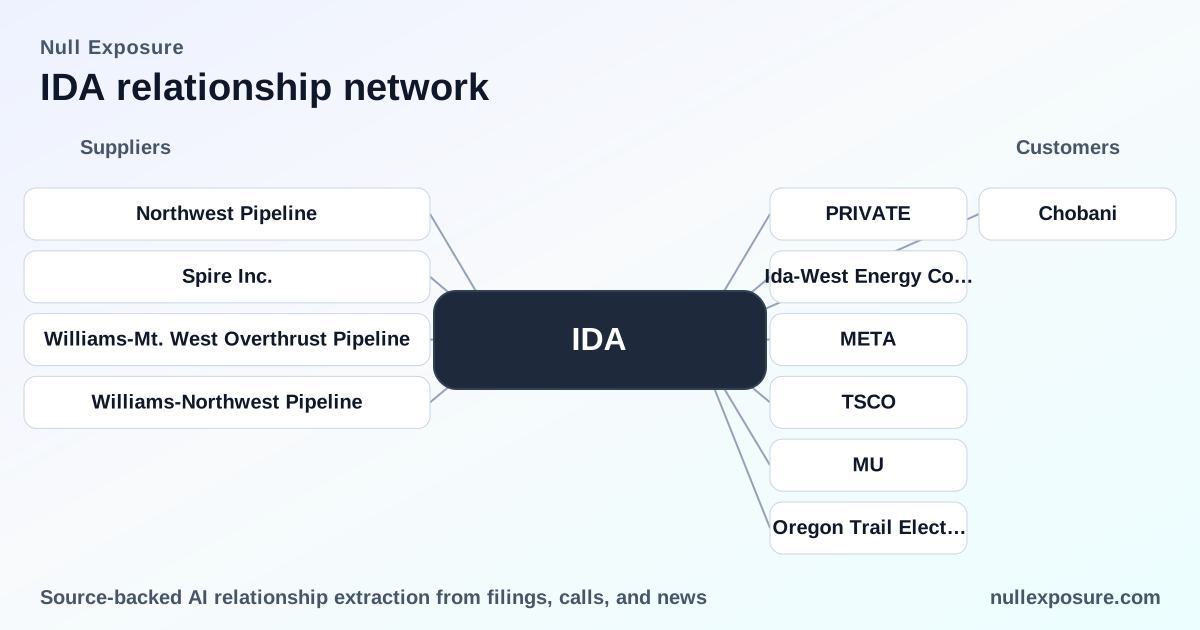
The following summaries cover every customer relationship cited in the company sources provided.
PRIVATE (unspecified industrial projects)
Management referenced unspecified private industrial customers in the Q4 2025 earnings call while describing Idaho Power’s role in enabling local industrial expansions, including discussions that overlapped with the Chobani and Tractor Supply projects. Source: Idaho Power Q4 2025 earnings call transcript (reported March 2026).
Ida‑West Energy Company
Idaho Power purchased all output from Ida‑West’s four Idaho hydropower projects for roughly $10 million in 2024, reflecting a small but recurring PURPA supply relationship. Source: IDACORP FY2024 Form 10‑K (filed Dec 31, 2024).
Chobani
Idaho Power facilitated an expansion of Chobani’s yogurt production facility by providing the energy infrastructure and service needed as the project came online, cited by management on the Q4 2025 earnings call. Source: Q4 2025 earnings call transcript (Mar 2026) and related earnings‑call coverage (InsiderMonkey, Mar 2026).
Oregon Trail Electric Cooperative (OTEC)
Idaho Power entered into a definitive asset purchase agreement to sell distribution and certain transmission assets in Oregon to OTEC; after closing, Idaho Power will provide power under a transitional PPA for a defined period. Source: Q4 2025 earnings call (Mar 2026) and earnings‑call reporting (InsiderMonkey, Mar 2026).
Meta / Brisbie (enterprise data center customer)
Meta (via the Brisbie special contract) is a large special‑contract enterprise load: management reported that Meta’s Boise data center progressed to initial power deliveries in the last year and the Brisbie Special Contract underpins long‑term service and incremental load that will ramp over multiple years. Source: Q4 2025 earnings call (Mar 2026) and prior regulatory filings approving the Brisbie Special Contract (May 2023; referenced in FY2024 filing).
Tractor Supply (TSCO)
Idaho Power helped bring a Tractor Supply distribution warehouse online by providing required service connections and transmission/distribution support, a cited example of the company’s role enabling regional logistics and industrial development. Source: Q4 2025 earnings call (Mar 2026) and earnings transcript coverage (InsiderMonkey, Mar 2026).
Micron (MU)
Micron’s new semiconductor facility continued toward completion in 2025; Idaho Power disclosed that Micron would buy energy from a to‑be‑built 40 MW solar facility under a 20‑year PPA structure and that load and CapEx forecasts are being updated to reflect possible Micron expansion. This is a material long‑term special contract that will materially affect load and capital plans. Source: Q4 2025 earnings call (Mar 2026) and FY2024 Form 10‑K discussion of anticipated PPAs.
PPTA (Perpetua / project developer)
Industry reporting (TradingView summary of Perpetua Resources filings) identified Idaho Power as a contracted provider for long‑lead power infrastructure and construction‑camp power services for a large mining/project development effort, illustrating Idaho Power’s role in industrial project infrastructure beyond pure retail service. Source: TradingView summary of Perpetua Resources 2025 filings (May 3, 2026).
Constraints that shape the customer franchise (company‑level signals)
- Regulatory framework dominates pricing and recovery. Rate cases, PCAs and the Idaho FCA drive timing and completeness of cost recovery; regulatory approvals determine whether capital investment earns a return. The company records large regulatory assets and liabilities (~$1.5B assets, ~$1.0B liabilities as of Dec 31, 2024).
- Mixed contract tenor creates capital planning complexity. Idaho Power runs a portfolio of long‑term PPAs and special contracts alongside predominantly short‑term wholesale sales and monthly retail billing, which forces careful liquidity and hedging management.
- Usage‑based retail billing and FCA reduce volume risk but not capital exposure. Retail rates and tiered summer pricing link revenue to consumption; FCA decouples some fixed cost recovery but infrastructure spend remains required.
- Geographic concentration increases regulatory and operational risk. With ~95% of retail revenue from Idaho, regulatory rulings and regional load growth materially affect earnings.
- Materiality profile is mixed: the utility business is critical to IDACORP’s results, and several items (rate recovery, environmental compliance, large enterprise load growth) are material to near‑term performance.
Investment implications — what to watch
- Rate case outcomes and PCA/FCA adjustments will determine near‑term cashflow and the recovery of major programs (e.g., WMP, Bridger-related costs).
- Ramping enterprise loads (Meta, Micron, other industrial projects) create upside in volumetric sales but push capital spend into transmission and generation; monitor capital program execution and regulator responses.
- Regulatory accounting remains a double‑edged sword: it smooths earnings if recoveries are approved, but regulatory reversals would hit reported results significantly.
For a focused breakdown of customer exposures and contract mix across IDACORP’s filings, visit https://nullexposure.com/ to review how these relationships map to revenue and regulatory risk.
Bold, visible load growth from enterprise customers paired with a rate‑regulated revenue base defines IDACORP’s risk/return profile: stable regulated cash flows with episodic capital intensity tied to industrial load growth and regulatory decisions.