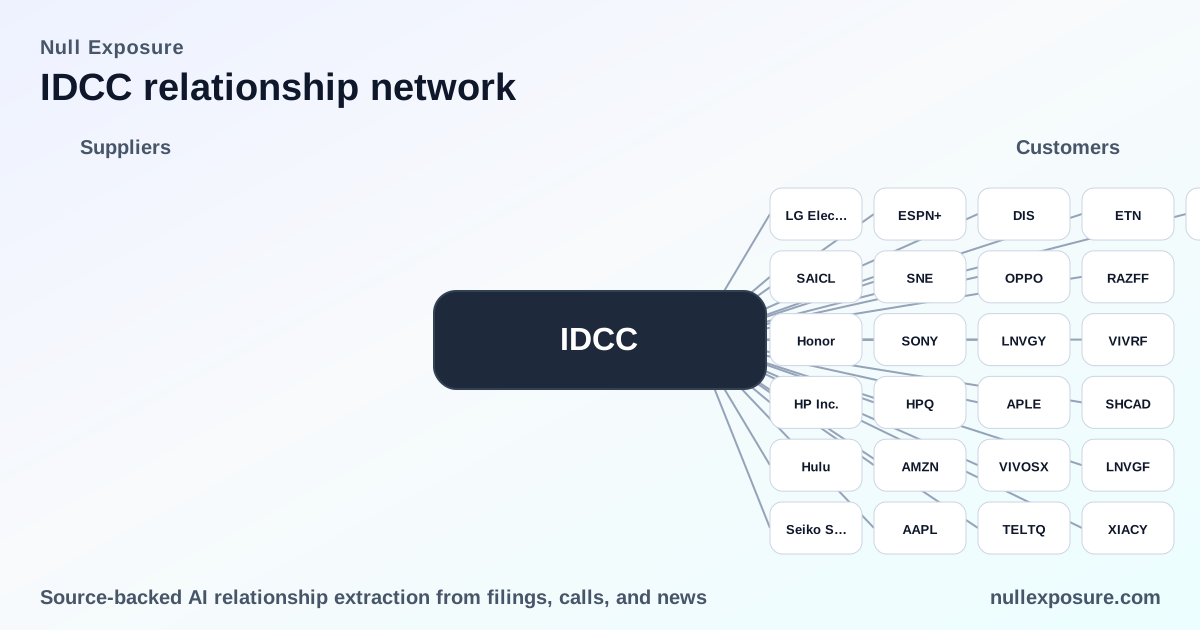
InterDigital (IDCC) — Customer Relationships That Drive a Licensing Engine
InterDigital monetizes a deep portfolio of wireless, video and AI patents by licensing those technologies to device manufacturers and service providers on multi‑year, royalty‑bearing contracts. The business converts R&D into high‑margin cash through fixed‑fee and hybrid license agreements, supplemented by usage royalties and active enforcement; the result is durable recurring revenue concentrated in a small set of very large counterparties. For a concise briefing of the company's customer map and what each relationship implies for revenue stability and risk, read on. Learn more at https://nullexposure.com/.
What investors need to know up front
- Business model: InterDigital is a licensor of standards‑essential and video patents; revenue is primarily fixed‑fee licensing with a material variable/usage component.
- Concentration and scale: A handful of large licensees drove a large share of 2025 revenue — Samsung, Apple and vivo each comprised 10%+ of consolidated revenue — creating both upside from renewals and downside from customer‑specific churn.
- Enforcement posture: InterDigital actively enforces patents; litigation and arbitration are integral to obtaining, validating and monetizing licenses.
- Global footprint: Contracts and disputes span APAC, EMEA and North America; licensing is worldwide in scope.
The relationship roll call — what each partner means for IDCC
Below are every counterpart named in the compiled results, with concise plain‑English summaries and source references.
- Apple (AAPL) — Apple is a long‑standing licensee and is licensed “through the end of the decade,” providing a large, predictable revenue stream central to smartphone ARR. Source: Q4 2025 earnings call and FY2025 Form 10‑K disclosures.
- Samsung (SSNLF) — Samsung’s multi‑year agreements include an eight‑year arbitration outcome that set royalties at $1.05 billion and materially increased recurring revenue; Samsung is one of the company’s largest single customers. Source: FY2025 Form 10‑K and Q4 2025 earnings call.
- Xiaomi (XIACY) — InterDigital renewed its license with Xiaomi early in 2026; the agreement covers cellular products and standardized patents, supporting smartphone ARR. Source: FY2025 Form 10‑K and Q4 2025 earnings call.
- vivo (VIVRF / vivo) — A new multi‑year, worldwide, non‑exclusive license with vivo was signed in 2025 and is reported among the major Chinese OEM deals that boosted 2025 revenue. Source: FY2025 Form 10‑K.
- Honor (Honor) — InterDigital signed a multi‑year global license with Honor in 2025, part of the company’s push into additional Chinese smartphone vendors. Source: FY2025 Form 10‑K.
- OPPO (OPPO) — OPPO is cited among licensees associated with catch‑up revenue in 2025; prior enforcement and negotiated resolution influenced new licensing. Source: FY2025 Form 10‑K and media summaries.
- Lenovo (LNVGY / Lenovo) — Lenovo is referenced in 2025 revenue commentary tied to TV licensing and catch‑up revenue; the relationship reflects expansion into CE licensing. Source: FY2025 Form 10‑K and news coverage.
- Sony (SONY) — InterDigital signed a global patent license with Sony in February 2026 covering cellular, Wi‑Fi and video patents across Sony end‑user devices; management described the deal as a renewal of a long‑term relationship. Source: PR announcement reported by ManilaTimes/PR Newswire and Q1 2026 commentary.
- LG Electronics (LG / LGEAF) — A new license completed in January 2026 covers digital TV and computer display monitors, expanding device coverage beyond handsets. Source: FY2025 Form 10‑K and Q4 2025 earnings call.
- HP Inc. (HP / HPQ) — InterDigital signed a multi‑year license with HP in April 2025 licensing HP personal computers to InterDigital’s Wi‑Fi and video decoding technologies. Source: FY2025 Form 10‑K and company commentary.
- Buffalo Americas, Inc. — April 2026 filings and press reports show agreements for Wi‑Fi 5 and Wi‑Fi 6 network devices, illustrating IDCC’s push into network hardware licensing. Source: April 2026 press releases and market commentary.
- Sharp (SHCAD / Sharp) — Sharp is reported as a renewed licensee in 2025, consistent with the company’s CE licensing program. Source: Q4 2025 earnings call and FY2025 10‑K notes.
- Seiko Solutions Inc. — InterDigital entered device licenses with Seiko Solutions as part of broader device and IoT licensing activity in 2025. Source: FY2025 Form 10‑K.
- Eaton (ETN / Eaton) — Eaton appears among device license signings in 2025, reflecting non‑smartphone device coverage (industrial/embedded applications). Source: FY2025 Form 10‑K.
- Teltronic — Teltronic is listed as another device licensee entered into during 2025, broadening sector exposure. Source: FY2025 Form 10‑K.
- Transsion — InterDigital secured an injunction in Brazil against Transsion for alleged 5G patent infringement; the case illustrates enforcement leverage in emerging markets. Source: Q1 2026 earnings call and news coverage.
- Amazon (AMZN) — IDCC launched enforcement proceedings against Amazon in late 2025, including ITC and US district court filings, as part of efforts to secure video‑standard royalties. Source: Q4 2025 earnings call and media reports (Dec 2025 filings).
- Disney / Disney+ / Hulu / ESPN+ (DIS) — InterDigital initiated an enforcement campaign targeting Disney’s streaming services early in 2025 and secured injunctive rulings in Germany tied to HEVC patents. Source: Q4 2025 earnings call and March 2026 news reports.
- Razer (RAZFF) — Razer is referenced as a demo/partner in product showcases, signaling co‑marketing and demonstration partnerships rather than a core licensing headline. Source: Q4 2025 earnings call.
- Sharp and SAICL (SAICL) — SAICL is listed alongside Sharp as a renewed agreement in 2025, noted in earnings commentary. Source: Q4 2025 earnings call.
- Weiu and Owner — These names appear in market commentary referencing broad smartphone program signings; they are cited in secondary reporting of 2025 licensing activity. Source: news transcripts and coverage.
- RMNI — RMNI appears in an external news feed unrelated to primary licensing but is included in search results; it does not change IDCC’s licensing profile. Source: news sentiment feed entries.
What the contractual constraints tell investors
InterDigital’s operating model shows four defining characteristics:
- Contracting posture — long‑dated, fixed‑fee orientation. The company’s revenue mix is dominated by dynamic fixed‑fee and static fixed‑fee licenses; in 2025 fixed‑fee agreements accounted for ~93% of revenue and many contracts run multiple years. The Samsung arbitration, which set an eight‑year royalty path, is an explicit example of long‑term contracting. Source: FY2025 Form 10‑K.
- Payment mechanics — hybrid with material usage elements. While fixed fees dominate, hybrid agreements with minimum guarantees and incremental per‑unit royalties create upside linked to unit volumes; revenue recognition uses both fixed‑fee amortization and usage tracking. Source: FY2025 Form 10‑K.
- Concentration and criticality. A small group of very large licensees contributes a majority of revenue and receivables; licenses are commercially critical to manufacturers and streaming services, which justifies aggressive enforcement and arbitration. Source: FY2025 Form 10‑K.
- Global maturity and enforcement‑led monetization. Licensing is worldwide, enforcement and arbitration are routine levers for setting royalties, and catch‑up revenue from negotiated/arbitrated settlements materially affected 2025 results. Source: FY2025 Form 10‑K and public filings.
Investment implications and risks
- Upside: Renewals with the largest OEMs and expansion into TV, PC and network hardware diversify revenue pools and raise the baseline for ARR. Fresh large agreements (e.g., Samsung, Sony, HP, Xiaomi, vivo) underpin recent record revenue.
- Risks: Customer concentration, geopolitical/regulatory shifts in SEP/FRAND policy, and the need to defend patents via litigation/arbitration create both revenue sensitivity and volatility in timing of cash receipts. Enforcement is a source of revenue but also of litigation exposure.
For a deeper breakdown of counterparties and to monitor future license announcements and enforcement outcomes, visit https://nullexposure.com/.
Bold takeaway: InterDigital is a licensing engine built on long‑term, high‑value contracts with the largest hardware and services companies; its near‑term cash flows are robust but remain concentrated and enforcement‑dependent.