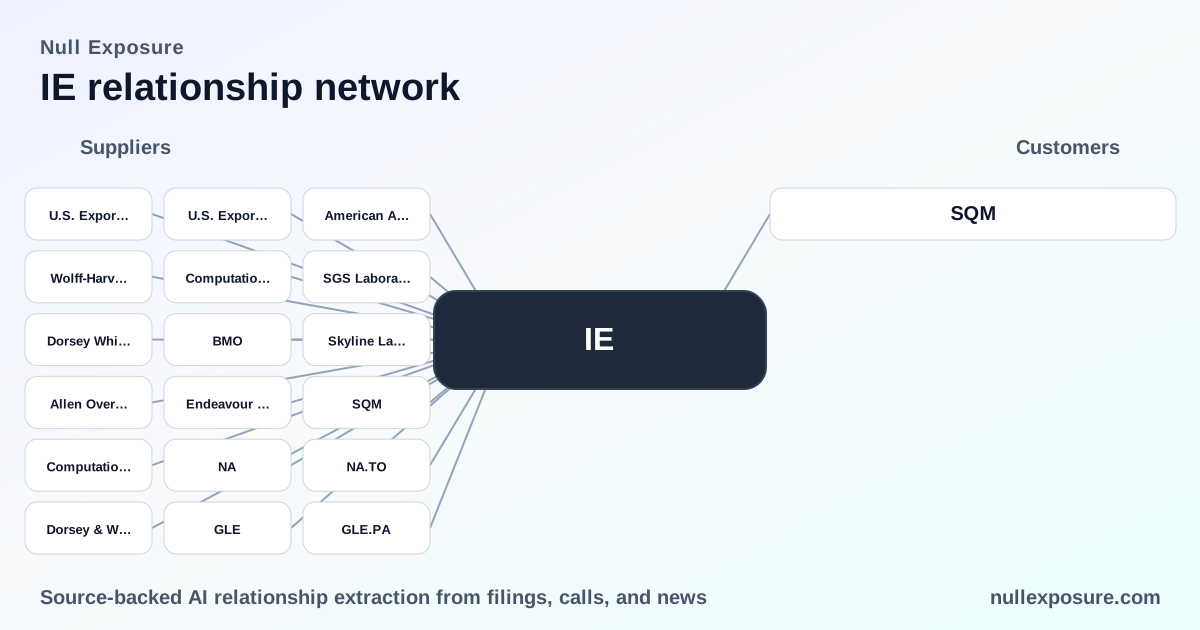
Ivanhoe Electric (IE): Customer relationships that shape near‑term value
Ivanhoe Electric monetizes a mix of advanced geophysical hardware, proprietary inversion software and fee‑for‑service exploration work by partnering with major miners and taking operator roles on funded exploration campaigns; revenue flows come from licensed software, Typhoon system deployments and exploration funding or asset sales. The company’s commercial model leans on partner‑funded exploration and licensing economics, where a small number of large counter‑parties drive outsized near‑term cash inflows and optionality for JV conversion. For more structured signals and relationship mapping, see https://nullexposure.com/.
Key takeaways
- High‑value, partner‑funded work: Strategic partners fund initial exploration programs that use Ivanhoe’s Typhoon hardware and CGI inversions.
- Concentration and strategic optionality: A single large customer historically drove material revenue; recent partner deals continue that pattern.
- Mixed revenue streams: The business blends hardware sales/field operations, software licensing and services that can convert into JVs or asset sales.
How partnerships convert into cash and upside
Ivanhoe Electric sells access to its Typhoon geophysical systems, supplies geophysical processing through its CGI subsidiary, and structures partnerships where counterparties fund initial exploration with options to form 50/50 joint ventures or acquire assets. This operating posture produces near‑term cash from funded programs and licensing fees while preserving upside through JV earn‑ins or asset dispositions. The company’s market capitalization and institutional ownership reflect investor appetite for that risk/reward profile.
Role‑by‑role review: every customer relationship in the coverage set
Sociedad Química y Minera de Chile (SQM)
Ivanhoe Electric signed a definitive Collaboration and Exploration Agreement with SQM covering 2,002 km² of northern Chile concessions, with SQM committing an initial US$9 million to a three‑year exploration phase that uses Ivanhoe’s Typhoon systems and CGI inversion software and could convert into a 50/50 JV where SQM would have the option to operate and appoint the JV CEO. Source: The Globe and Mail press release (March 2026) and related industry reports (Global Mining Review, Jan–Mar 2026).
JCHX Mining Management Co., Ltd. (JCHX)
Ivanhoe’s majority‑owned subsidiary obtained shareholder approval for an agreement to sell its remaining 50% interest in the Alacrán Project in Colombia to JCHX, and later amended the sale agreement (the $128 million transaction) with JCHX and related parties to modify previously disclosed terms. Source: Investing.com SEC filing summaries (May 2026).
BHP Billiton Ltd. (BHP)
Ivanhoe maintains an exploration alliance with BHP in the southwestern United States under which BHP provides initial program funding (an initial $15 million commitment referenced for a related program) and Ivanhoe supplies Typhoon systems and CGI data inversions while acting as the exploration operator during the funded phase. Source: ResourceWorld coverage and IBTimes reporting (May 2026).
Naipu Mining Machinery
Under an amendment to the previously disclosed sale documentation, Naipu Mining Machinery was explicitly removed as a party to Ivanhoe’s original sale contract for the Colombian asset. This reflects restructuring of counterparties in the Alacrán transaction. Source: Investing.com SEC filing summary (May 2026).
Hong Kong Zhongan Industry Development Co., Limited
Hong Kong Zhongan was likewise removed from the original sale contract by the amended agreement, clarifying the buyer/seller parties and the final structure of the Colombian asset sale. Source: Investing.com SEC filing summary (May 2026).
What the relationship set implies about Ivanhoe’s operating model and constraints
- Contracting posture — partner‑funded, option‑rich: Multiple press reports show partners funding the first phase of exploration (SQM’s US$9m and BHP’s $15m initial commitment), while Ivanhoe contributes systems, technical services and the option to convert to JV structures or asset sales. That creates a recurring commercial template: funded exploration leading to either JV formation, continued services revenue, or asset monetization.
- Revenue concentration and criticality: Company disclosures indicate a previous year where one customer accounted for 82% of sales (company signal). This is a material concentration risk; the business economics are skewed toward a few large counterparties whose funded programs drive most recognized revenue.
- Product mix — hardware, software, services: Internal excerpts and filings characterize revenue across hardware (Typhoon deployments), software (CGI licensing) and services (fee‑for‑service processing and operator work). The combination creates diversified revenue possibilities, but each depends on upstream partner decisions to fund exploration.
- Licensing and service roles (CGI): Ivanhoe’s 94.3%‑owned Computational Geosciences Inc. (CGI) functions as both service provider (data processing, in‑field analysis) and licensor (software licensing agreements), including non‑exclusive licensing arrangements referenced in filings; these roles anchor the company’s software‑driven margin potential.
- Geography and market reach: The firm operates globally across mineral and energy exploration markets, with active programs in Chile, Colombia and the southwestern U.S., indicating a global geographic footprint for commercial deployment and revenue capture.
For a compact intelligence brief and signal visualizations, visit https://nullexposure.com/ for expanded coverage.
Investment implications — where value and risk converge
- Upside: Partner‑funded programs de‑risk cash requirements and create binary upside through JV formation or asset sales (e.g., Alacrán sale and the SQM JV option). Institutional ownership (~72%) and analyst coverage showing a consensus target near $21.92 indicate market recognition of this upside.
- Risk: High customer concentration and reliance on a small set of counterparties to authorize funded programs translate into episodic revenue and earnings volatility; historical negative operating margins and net losses underline sensitivity to the timing of funded work and asset dispositions.
- Execution: The dual‑track model (hardware + CGI software/services) supports scaling if the company converts pilot programs into recurring licensing and larger JV projects; success depends on consistently winning funded exploration mandates from majors.
Bottom line
Ivanhoe Electric leverages proprietary Typhoon hardware and CGI inversion software to convert partner funding into near‑term cash and optional long‑term value through JV formation or asset sales. The company’s commercial successes with SQM, BHP and the Alacrán transaction with JCHX demonstrate the model at work, but material customer concentration and execution timing remain the principal risks for investors monitoring near‑term earnings and cash flow.
For further relationship mapping and periodic signal updates, see https://nullexposure.com/.