IFLO customer relationships: distribution, noise, and where the risk lives
IFLO manufactures and commercializes continuous infusion devices and related disposables, monetizing primarily through product sales to healthcare distributors and hospitals and through channel partnerships that scale clinical deployment. Revenue flows from device manufacturing and downstream distribution agreements, while profitability and valuation hinge on concentration in distributor relationships, litigation exposure tied to device use, and the firm’s ability to defend clinical claims and retain market access. Visit the company homepage for further background: https://nullexposure.com/
Why distribution partnerships matter for IFLO's bottom line
IFLO products are not consumer packaged goods — they are medical delivery systems that reach end users through distributors and integrated hospital purchasing channels. That operating model creates three persistent business characteristics investors must price into IFLO’s valuation:
- Contracting posture: IFLO operates as an OEM supplier to downstream distributors and institutional purchasers, so contract terms, pricing leverage, and indemnities in distribution agreements materially affect cash flow predictability.
- Concentration risk: A small number of large distributors can dominate revenue; loss of a key channel accelerates revenue volatility.
- Operational criticality and maturity: Devices used in postoperative pain management are clinically critical in the short term, and legacy products with long clinical history can be simultaneously a moat and a litigation exposure.
These are company-level signals about IFLO’s business model; they are not assigned to any specific counterpart unless the underlying source explicitly names that party.
DJO — distributor relationship and litigation context
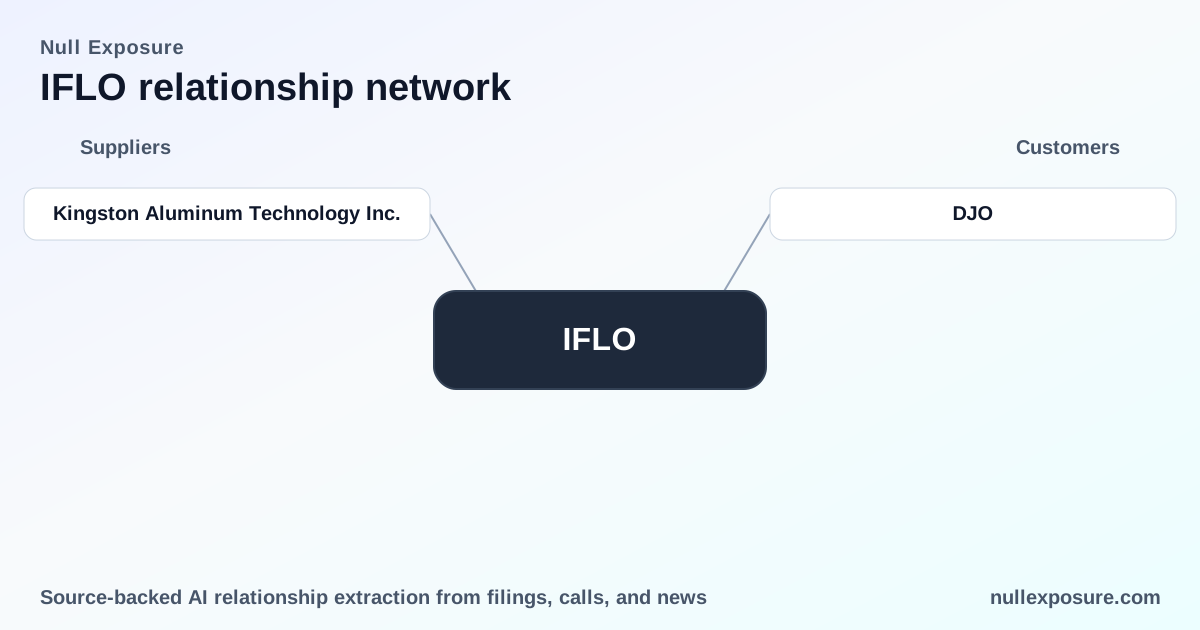
DJO distributes the On-Q Painbuster, a continuous infusion device manufactured by I-Flow, and has been associated in reporting with off‑label use in shoulder procedures that led to patient injury claims. According to an AboutLawsuits report from March 2026, the On‑Q Painbuster has been used off‑label to deliver medication into the shoulder joint space for 48–72 hours following arthroscopic surgery, and that use is the subject of litigation alleging joint damage. This relationship highlights a direct commercial channel for IFLO products and an active litigation vector that can influence revenue and liability exposure. Source: AboutLawsuits, “I‑Flow On‑Q Painbuster lawsuit — shoulder damage,” March 2026 (news report).
Investor takeaway: DJO functions as a commercial conduit for IFLO’s On‑Q product and therefore links IFLO to distributor-level reputation and liability risk. Litigation tied to off‑label clinical use increases potential indemnity and recall risk, and it can interrupt procurement by hospitals or prompt contract renegotiations.
Joyburst Beverages — a mismatched hit in surveillance results
A May 2026 report in Just‑Drinks covered a three‑year manufacturing deal between Flow Beverage Corp. and Joyburst Beverages; the article does not reference I-Flow or indicate a customer relationship with IFLO. The result in IFLO’s customer-relation feed therefore reflects a topical mismatch rather than a verified commercial link. There is no source-based evidence connecting IFLO to Joyburst or to Flow Beverage Corp. in the provided reporting. Source: Just‑Drinks, “Flow Beverage signs production deal with Joyburst Beverages,” May 2026 (news report).
Investor takeaway: Treat this entry as a false positive for IFLO customer analysis — it underscores the need for human validation when mapping third‑party news to contract-level relationships.
How these relationships translate into investor risk and value drivers
The DJO relationship is the only item in the results that confirms an observable distribution channel for IFLO products; the litigation referenced is directly relevant for investors assessing downside risk. From a valuation perspective, three themes dominate:
- Revenue concentration and channel dependence: With distributor-reliant monetization, loss or reputational impairment of a major channel like DJO would compress near-term sales and raise customer acquisition costs.
- Litigation as a cash‑flow constraint: Active lawsuits tied to device use can generate legal costs, reserve requirements, and settlement risk; they also influence hospitals’ purchasing committees and renewal dynamics.
- Product maturity and defendability: A long-standing device can have broad adoption yet also legacy clinical issues; successful defense of product safety is necessary to maintain contracts and margins.
These themes should be included in downside scenario modeling and in any diligence that seeks to stress-test IFLO’s revenue durability.
Practical red flags and monitoring priorities for operators and investors
Monitor the following items as part of ongoing surveillance and diligence:
- Legal filings and recall notices that reference On‑Q or other IFLO-branded devices.
- Contract renewals and press releases from major distributors that confirm continued distribution or expanded agreements.
- Hospital purchasing notices and clinical guideline updates that could change the standard of care (and therefore device utilization).
Keeping a tight watch on distributor communications and regulatory filings will capture the fastest signals of revenue disruption or recovery.
Bottom line and recommended next steps
DJO is a confirmed commercial partner that positions IFLO products into clinical channels, and litigation tied to product use is an active risk factor. The Joyburst item in the feed does not connect to IFLO and should be discarded in customer-mapping exercises. For investors and operators valuing IFLO, focus diligence on distributor contract terms, indemnities, and the scope of any litigation reserves.
If you want a consolidated view of IFLO’s counterparty network and real‑time updates on distributor ties and regulatory events, review our coverage and intelligence offerings at https://nullexposure.com/.
Key takeaway: distribution relationships drive both revenue and legal exposure for IFLO; investors must underwrite channel concentration and litigation scenarios when modeling value.