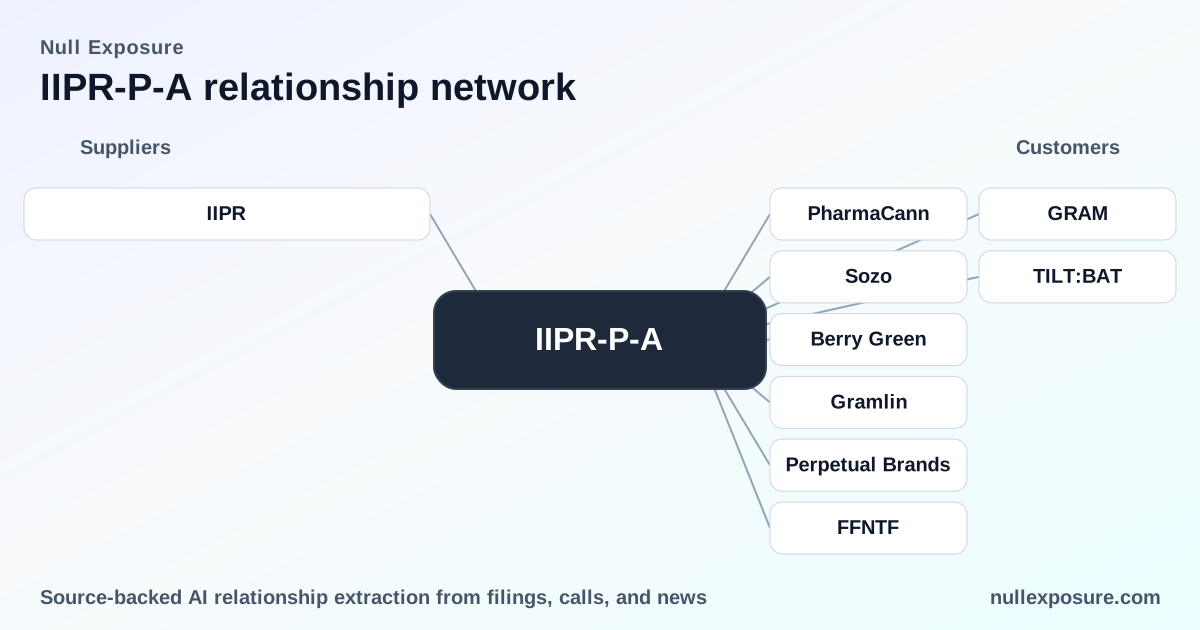
IIPR-P-A: How tenant dynamics shape the preferred-income story
Innovative Industrial Properties (IIPR) operates as a specialized REIT that acquires, owns and leases industrial properties to licensed cannabis operators, monetizing through long-term, often triple‑net leases that generate predictable rental cash flows and support preferred‑stock distributions. For holders of the 9.00% Series A preferred (IIPR‑P‑A), the core credit to monitor is tenant cash‑flow and the company’s demonstrated ability to recover and re‑lease assets when operators default.
For ongoing relationship tracking and source-level detail, see NullExposure’s homepage: https://nullexposure.com/
Why tenant credit and re‑tenanting matter more than square footage
IIPR’s model is not a generic industrial landlord: tenants operate in a highly regulated end market, so lease performance is a function of operator liquidity, state rules, and receiver/receiver‑sale outcomes. That makes contracting posture, tenant concentration, tenant criticality, and portfolio maturity the true operational levers for preferred‑stock investors.
- Contracting posture: IIPR structures long‑dated leases that transfer operating risk to tenants, but payment defaults have shown those protections are not absolute in the current cycle.
- Concentration: several headline tenants accounted for material rental shortfalls in FY2025–FY2026, elevating near‑term income volatility.
- Criticality and recoverability: IIPR has recovered properties and negotiated settlements, demonstrating operational capability to convert defaulted assets to new cash‑flow.
- Maturity and transition: the portfolio is in active re‑tenanting, with full‑building leases and backfill discussions signaling a transition from remediation to stabilization.
Tenant roll call — what each customer relationship means right now
PharmaCann
PharmaCann was a previously significant tenant that defaulted on rent and entered litigation; IIPR received partial payments, reached a settlement that included monetary judgments, and required PharmaCann to surrender several facilities by May 2026. According to press coverage and the company’s results, PharmaCann’s insolvency was a major driver of investor uncertainty and subsequent turnover of assets (The Globe and Mail; InvestingNews; MGMagazine; SimplyWall).
Sources: https://www.theglobeandmail.com/investing/markets/stocks/IIPR/pressreleases/1347393/iipr-and-cannabis-reform-280e-relief-and-schedule-iii-upside/, https://investingnews.com/innovative-industrial-properties-reports-fourth-quarter-and-full-year-2025-results/, https://mgmagazine.com/press-releases/innovative-industrial-properties-reports-first-quarter-2025-results/, https://simplywall.st/stocks/us/real-estate/nyse-iipr/innovative-industrial-properties/news/what-innovative-industrial-properties-iiprs-pharmacann-settl
Gold Flora (GRAM)
Gold Flora was a defaulted tenant that made sizable catch‑up payments in late 2025 and early 2026—payments that contributed material amounts to quarterly earnings and were applied against unpaid rent during receivership. InvestingNews and market summaries report roughly $3.7–$3.74 million collected and applied to arrears in FY2026.
Source: https://investingnews.com/innovative-industrial-properties-reports-fourth-quarter-and-full-year-2025-results/, https://finviz.com/news/325914/alliance-global-boosts-iipr-valuation-on-improving-tenant-payment-outlook
4Front Ventures / 4Front (FFNTF)
IIPR executed sale‑leaseback and purchase agreements tied to 4Front assets and has reported tentative agreements to retenant multiple former 4Front properties, including several large Massachusetts and Illinois buildings, as part of its backfill strategy. InvestingNews and The Globe and Mail describe definitive and tentative deals centered on moving former 4Front assets back to income.
Source: https://investingnews.com/innovative-industrial-properties-announces-fourth-quarter-2025-earnings-release-date-and-conference-call/, https://www.theglobeandmail.com/investing/markets/stocks/IIPR/pressreleases/1347393/iipr-and-cannabis-reform-280e-relief-and-schedule-iii-upside/
TILT (TILT:BAT)
TILT‑leased properties contributed to a reduction in rental revenue in FY2025–FY2026 due to tenant defaults; the company reported a specific decline tied to TILT when disclosing revenue impacts for the quarter. MG Magazine and InvestingNews cite TILT among tenants whose defaults reduced rental income.
Source: https://mgmagazine.com/press-releases/innovative-industrial-properties-reports-first-quarter-2025-results/, https://investingnews.com/innovative-industrial-properties-reports-fourth-quarter-and-full-year-2025-results/
Gramlin
In January 2026 IIPR executed a full‑building lease of 204,000 square feet at its Desert Hot Springs, CA property to Gramlin, representing a clear re‑tenanted asset returning to stabilized income. InvestingNews reported the Gramlin lease as part of IIPR’s re‑tenanting momentum in FY2026.
Source: https://investingnews.com/innovative-industrial-properties-reports-fourth-quarter-and-full-year-2025-results/
Berry Green
IIPR leased 205,000 square feet in Warren, Michigan to Berry Green in April (reported in the company’s quarterly disclosures), signaling successful local leasing activity and backfill capability. MG Magazine recorded the Berry Green transaction in the Q1 commentary.
Source: https://mgmagazine.com/press-releases/innovative-industrial-properties-reports-first-quarter-2025-results/
Perpetual Brands
Perpetual Brands signed a 58,000 square foot full‑building lease in November 2025 for the Holliston, Massachusetts property, reflecting IIPR’s ability to execute large, single‑tenant leases post‑turnover. InvestingNews included the Perpetual Brands transaction in the FY2026 lease roll.
Source: https://investingnews.com/innovative-industrial-properties-reports-fourth-quarter-and-full-year-2025-results/
Sozo
IIPR applied security deposits to satisfy rent on several properties, including those leased to Sozo, as part of its collection and default‑management processes in Q1 2025. MG Magazine’s Q1 release documents the use of deposits across multiple tenant situations.
Source: https://mgmagazine.com/press-releases/innovative-industrial-properties-reports-first-quarter-2025-results/
What the relationship mix means for IIPR‑P‑A holders
- Earnings volatility is linked to tenant credit events, but the company has operational levers—settlements, security‑deposit application, and active re‑leasing—demonstrated across FY2025–FY2026. Sources show IIPR recovered cash and converted several former problem assets to new leases (InvestingNews; Finviz; SahmCapital).
- Preferred income remains supported by lease structures, but near‑term distributions reflect remediation outcomes and re‑tenanting cadence. Expect episodic earnings benefit when defaulted balances are collected and when large leases (Gramlin, Berry Green, Perpetual Brands) stabilize occupancy.
Source examples: https://finviz.com/news/328727/piper-sandler-raises-innovative-industrial-properties-inc-iipr-price-target-to-45-from-44, https://www.sahmcapital.com/news/content/iipr-clarifies-portfolio-after-pharmacann-resolution-and-new-leases-2026-03-17
Constraints and data coverage signal
No explicit constraints were provided in the source feed for IIPR‑P‑A; as a company‑level signal, the dataset contains active news and earnings coverage but no structured constraint entries to adjust interpretation. Investors should treat that absence as an information gap—operational detail exists in filings and press releases, but no independent constraint tags were supplied here.
For a deeper, continuously updated view of tenant movements and to monitor re‑lease progress across IIPR properties, visit NullExposure: https://nullexposure.com/
Bottom line — concise takeaways
- Tenant defaults drove headline volatility in FY2025–FY2026, but IIPR has converted several distressed assets to new leases.
- Collections from defaulted tenants materially benefited reported earnings in late 2025 and early 2026.
- Preferred holders should monitor re‑lease cadence and settlement outcomes as the primary drivers of distribution resilience.
This tenant map shows a REIT transitioning from remediation toward stabilization—cash recovery and full‑building leases are the evidence investors need to track to judge whether IIPR‑P‑A income is on a sustainable footing.