ImageneBio (IMA): Investor briefing on strategic counterparties after the Ikena transaction
ImageneBio is a clinical‑stage biotechnology company that advances immunological and inflammatory therapeutics and monetizes primarily through collaborative licensing, occasional asset divestitures, and capital transactions tied to corporate restructurings. Revenue generation is nascent and episodic; value realization for investors will depend on licensing outcomes, milestone capture, and the cadence of non‑operating financing events such as private placements tied to M&A activity. For an investor-oriented view of counterparties and what they imply for balance‑sheet resilience and strategic optionality, see https://nullexposure.com/.
How ImageneBio operates and what that means for counterparties
ImageneBio runs a classic clinical‑stage biotech operating model: science and IP development up front, followed by monetization through licensing, collaborations, or selective asset sales. The company’s public financials show minimal recurring revenues (Revenue TTM $0.8M) and substantial operating losses (Operating margin TTM -60.6%), which makes external capital and partner licensing central to sustaining R&D.
Key operating characteristics and constraints:
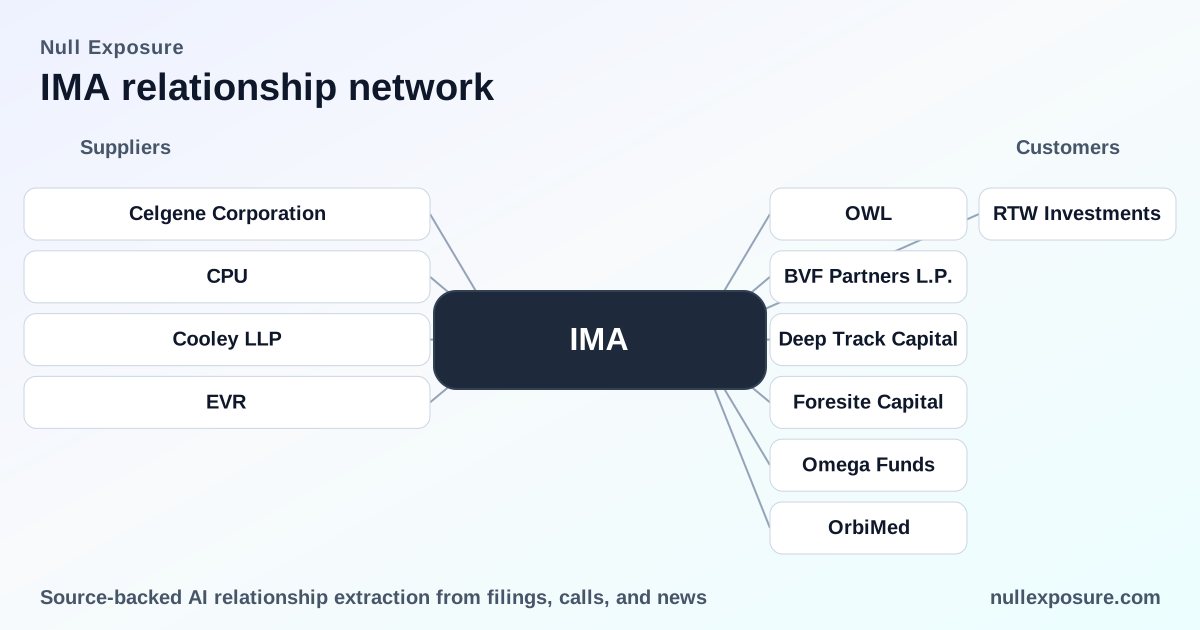
- Contracting posture: The company relies on negotiated licensing agreements and one‑off transactions rather than product sales; its 2019 collaboration with Celgene/Bristol‑Myers Squibb is a documented example of a licensing arrangement to develop and commercialize targets. That agreement establishes a precedent of partner‑led clinical development and contingent economics rather than direct commercial revenue.
- Cashflow drivers and concentration: Financing events and asset sales are material to near‑term liquidity; an asset sale in November 2024 generated a $1.5M cash inflow. Capital raises — not product sales — are the dominant cash source today.
- Criticality and maturity: Partnerships with large biopharma or specialist investors de‑risk program advancement only if milestone and licensing economics are attractive; current revenue and EPS metrics indicate early‑stage maturity with high dependency on external funding.
- Strategic flexibility: The firm uses a mix of licensing rights, asset disposals, and capital syndicates to extend runway and create optionality for lead programs.
The capital syndicate named in the Ikena transaction — what investors should note
ImageneBio’s most visible counterparty activity in FY2025 was the closing of a merger with Ikena Oncology together with a $75.0 million private placement. That private placement was syndicated across a mix of specialized healthcare funds and investment managers. Each named participant is listed below with a concise, investor‑facing summary and source.
- Blue Owl Healthcare Opportunities — A capital provider in the $75M private placement that closed concurrent with the Ikena merger; Blue Owl’s participation signals institutional support from a diversified alternative asset manager. According to a GlobeNewswire press release dated July 25, 2025, Blue Owl Healthcare Opportunities was included among existing and new investors in the syndicate (FY2025).
- BVF Partners L.P. — Identified as an existing Ikena investor participating in the private placement, BVF’s involvement represents continuity from Ikena’s pre‑merger backers and underscores investor alignment behind the combined strategy. GlobeNewswire reported BVF Partners L.P. as a participant in the July 25, 2025 transaction announcement (FY2025).
- Deep Track Capital — Listed among new and existing investors in the $75M placement; Deep Track’s participation adds specialist biotech capital to the syndicate mix. The GlobeNewswire release of July 25, 2025, includes Deep Track Capital in the syndicate roster (FY2025).
- Foresite Capital — Named as a member of the investor group that contributed to the private placement; Foresite brings healthcare‑focused growth capital and domain expertise to the cap table. GlobeNewswire’s July 25, 2025 announcement lists Foresite Capital among syndicate members (FY2025).
- Omega Funds — Cited as an existing Ikena investor that joined the financing; Omega’s presence signals continued support from long‑only or crossover healthcare investors. The GlobeNewswire press release on July 25, 2025 notes Omega Funds as part of the $75M syndicate (FY2025).
- OrbiMed — A well‑known healthcare investor included in the private placement syndicate; OrbiMed’s participation provides sector credibility and access to commercialization networks. GlobeNewswire identified OrbiMed as a participant in the July 25, 2025 release (FY2025).
- OWL (inferred symbol OWL) — The dataset lists OWL separately and also denotes Blue Owl Healthcare Opportunities; OWL is effectively the same Blue Owl participant represented by its trading symbol and was counted among investors in the July 25, 2025 private placement announcement via GlobeNewswire (FY2025).
- RTW Investments — Included among the investor syndicate for the $75M private placement and merger financing; RTW’s involvement adds another specialist public and private healthcare investment firm to the round. RTW Investments is named in the GlobeNewswire release dated July 25, 2025 (FY2025).
Each of these counterparties is an investor rather than a commercial customer; the GlobeNewswire announcement of July 25, 2025 is the primary source for this syndicate disclosure.
What these relationships imply for valuation and risk
- Funding profile shift: The syndicate comprised of specialist healthcare investors and alternative asset managers reduces immediate dilution risk relative to a broad public financing and provides runway tied to strategic milestones post‑merger. That said, this is financing, not revenue‑generating partnership economics.
- Concentration of support: A concentrated set of healthcare‑focused backers increases alignment on program advancement but raises concentration risk if follow‑on financing is required from the same narrow investor base.
- De‑risking versus commercialization: These relationships fund development; they do not yet validate late‑stage commercial potential. Licensing precedent with large pharma (Celgene/Bristol‑Myers Squibb in 2019) shows the company can secure development collaborations, but material value realization depends on future license milestones or successful clinical outcomes.
- Operational implications of spot transactions: The November 2024 asset sale that generated $1.5M is indicative of management’s willingness to monetize non‑core assets on a spot basis to conserve capital — a pragmatic approach for a firm with limited operating revenues.
Bottom line for investors
ImageneBio is financed through targeted investor syndicates and tactical asset sales rather than recurring customer revenues; the July 2025 $75M placement alongside the Ikena merger materially reshapes the cap table and extends the company’s development runway. For investors evaluating counterparty strength, the syndicate contains well‑known healthcare investors who provide credibility and follow‑on capital capacity, but these are financing relationships rather than commercial revenue contracts. For more context on counterparties, transactional timing, and how those inputs factor into risk models, visit https://nullexposure.com/.
Bold takeaway: ImageneBio’s immediate risk profile is financing‑driven; commercial upside will be realized only if licensing milestones or clinical progress convert development assets into partner revenues or favorable exit outcomes.