Immersion Corporation (IMMR): Customer Relationships That Drive a Licensing Franchise
Immersion monetizes patented haptics and touch technologies by licensing IP and enabling software to large device makers, collecting a mix of fixed license fees and per‑unit royalties. The business is a classic intellectual‑property licensing model with concentrated counterparty exposure, geographically skewed revenue, and revenue that is recurring but tied to product cycles and unit volumes. Learn more about how these customer links shape valuation and risk at NullExposure.
What investors need to know in one line
Immersion is a licensor of mission‑critical haptics technology to major consumer and gaming hardware companies; revenues are driven by a handful of large licensees and per‑unit royalties, creating high potential upside with concentrated counterparty and geographic risk.
The roll call: every customer relationship surfaced in public reporting
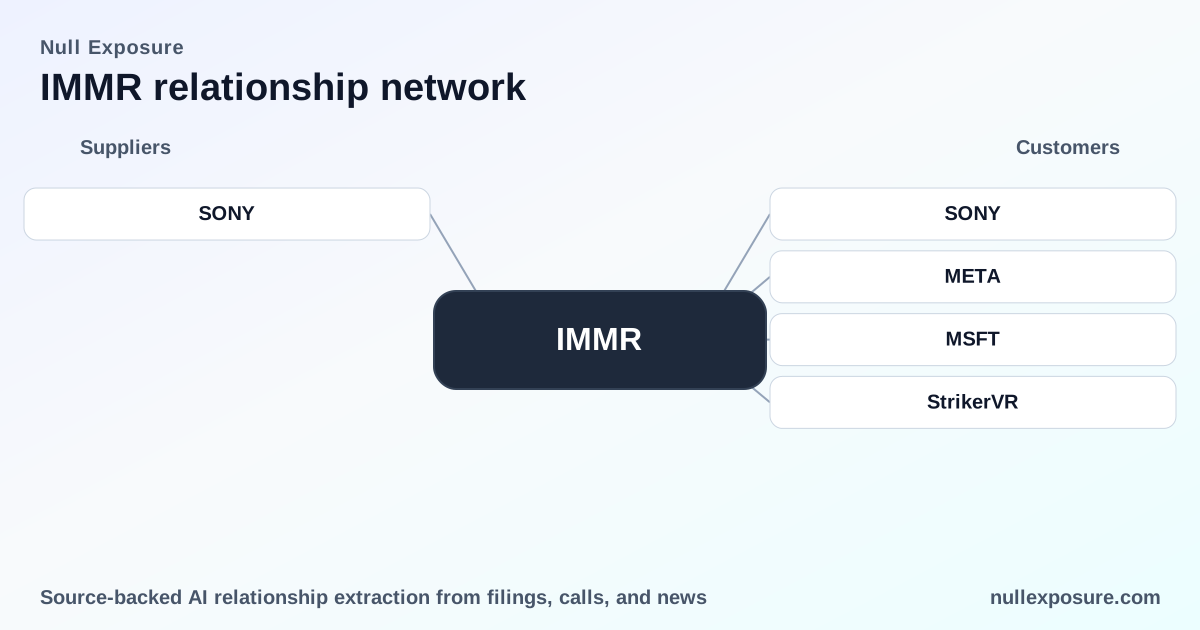
Below I summarize each customer relationship shown in the collected results, with source notes for verification.
-
SONY — Immersion signed a licensing agreement to provide its advanced haptics patent portfolio for gaming and VR controllers, positioning Immersion as the IP supplier for Sony’s tactile features. Source: MP1st report on the licensing deal (reported March 10, 2026).
-
Sony Interactive Entertainment — Immersion and Sony Interactive Entertainment executed a license to bring Immersion’s haptics patents and technology into PlayStation hardware and related controllers, formalizing the commercial use of Immersion’s IP in Sony gaming products. Source: MP1st coverage of the Sony Interactive Entertainment agreement (reported March 10, 2026).
-
Meta — Immersion announced a license with Meta to make Immersion’s patents available to Meta and its affiliates across hardware, software, VR and gaming products, resolving IP access for Meta’s VR product lines. Source: TechCrunch summary of Immersion’s press release regarding the Meta license (February 14, 2024).
-
Microsoft — Immersion’s earliest major commercial relationship was with Microsoft, integrating haptic and touch technology into Microsoft’s developer APIs; historic litigation with Microsoft led to a settlement that included Microsoft acquiring a 10% equity stake and a perpetual license. Source: TechCrunch retrospective on Immersion’s early Microsoft relationship and settlement terms (February 14, 2024).
-
StrikerVR — Immersion publicly announced a collaboration with StrikerVR to use Immersion trigger technology in accessories and peripherals, signaling adoption of Immersion technology by smaller VR peripheral makers alongside major OEMs. Sources: Wccftech and TechTimes coverage of the StrikerVR collaboration (2021 reporting).
How these relationships map to Immersion’s operating model
Immersion’s contract and revenue profile is visible through these relationships and company disclosures:
-
Contracting posture: licensing-first, royalties second. Immersion’s contracts are predominantly patent and technology licenses, with revenue made up of fixed license fees and per‑unit royalties tied to product shipments rather than subscription services. This is a deliberate cash model that aligns revenue to device market cycles.
-
Counterparty concentration is material and strategic. The company itself reports that three customers accounted for 31%, 23% and 14% of revenue in a recent year, which creates significant dependency on a small set of large enterprise licensees rather than a broad retail customer base.
-
Geographic exposure is skewed to Asia and international markets. International revenues represented approximately 91% of total revenue in 2023, with Asia contributing the majority (74%), European markets ~17% and North America ~9%, so product success in APAC drives the royalty engine.
-
Relationship criticality and maturity favor enforcement and long‑term licensing. Immersion’s historic settlements (e.g., Sony’s $150 million payment and Microsoft’s equity and perpetual license) demonstrate that customers treat Immersion’s IP as operationally material and defensible, supporting a durable licensing franchise rather than one‑off services.
-
Product and revenue cyclicality is durable but lumpy. Per‑unit royalties create recurring streams when licensees ship devices, but revenues will ebb and flow with device refresh cycles, component adoption, and OEM design choices.
Financial implications for investors
-
Upside comes from penetration and volume growth. If Immersion expands into more OEMs and device classes (VR headsets, peripherals, mobile, automotive), per‑unit royalty leverage scales profitably since marginal costs of licensing are low.
-
Downside is concentrated counterparty risk. A loss of one of the top licensees would materially reduce revenue given reported customer concentration; contractual termination or design‑arbitrage by large OEMs would depress royalties quickly.
-
Geographic concentration increases macro sensitivity. With the majority of revenue generated in Asia, investor exposure includes APAC device cycles, trade dynamics, and regional OEM pricing decisions.
What the individual relationships imply for commercial strategy
-
Sony / Sony Interactive Entertainment: Having Sony as a licensee places Immersion inside a marquee gaming platform—this is highly strategic for visibility and royalties across console and controller lifecycles (MP1st, March 2026; Wccftech/TechTimes, 2021).
-
Meta: The Meta license broadens Immersion’s addressable market into VR headsets and platform software, supporting long‑term royalty potential as Meta’s hardware refreshes and accessory ecosystem scales (TechCrunch, February 2024).
-
Microsoft: Historical settlement terms with Microsoft indicate a willingness by large OEMs to secure perpetual access, and that Immersion can monetize IP both through cash settlements and strategic equity/capacity deals (TechCrunch, February 2024).
-
StrikerVR: Collaboration with smaller peripheral makers signals a two‑pronged commercial approach—target major OEMs for scale and niche peripheral vendors for incremental adoption and per‑unit royalties (Wccftech, TechTimes, 2021).
Key risks and what to watch next
-
Watch customer mix and any announced new licensees to see whether concentration decreases. A meaningful diversification of licensees would reduce downside risk from any single OEM.
-
Monitor royalty mix versus fixed fees. A shift toward more fixed license fees increases revenue visibility; a heavier royalty weight raises volatility but increases upside with volume growth.
-
Track APAC device cycles and gaming/VR adoption curves. Given geography and product focus, device market growth in Asia and VR/headset adoption are direct revenue drivers.
For a structured, comparative view of these relationships and how they map to revenue sensitivity across geographies and customer concentration, see the full analysis at NullExposure.
Bottom line
Immersion is a focused IP licensor with highly material customer relationships that provide a clear profit model—fixed license fees plus per‑unit royalties—but bring concentration and geographic risk. The company’s historic settlements and marquee licensees underscore the commercial value of its patents, while royalty dependence ties financial performance to OEM product cycles and APAC market demand. Investors should weigh durable IP cash flows against the asymmetric risk of losing a major licensee.