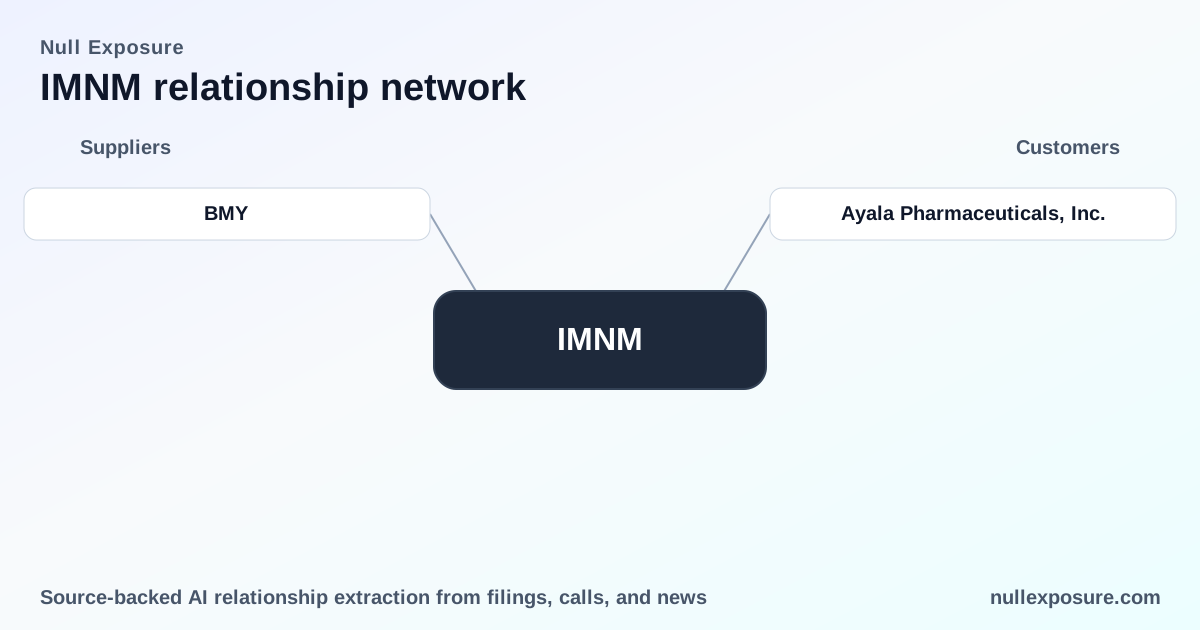
Immunome (IMNM): Customer Relationships and Strategic Partner Map
Thesis — Immunome develops antibody-based therapeutics for oncology and infectious disease and monetizes primarily through strategic partnerships and asset transactions rather than product sales. Revenue to date is driven by collaboration receipts (not commercial product revenue) and selective asset acquisitions to broaden the pipeline; investors should value Immunome as a partnership-centric, early-stage biopharma whose near-term cash flows depend on deal economics and milestone/license receipts rather than recurring product sales. For deeper relationship intelligence, visit https://nullexposure.com/.
Why relationships drive the investment case
Immunome’s balance sheet and operating profile reflect a classic development-stage biotech: limited product revenue, negative operating margins, and outsized valuation metrics relative to trailing revenue. The company’s commercial posture is contractual rather than transactional — partners provide funding tied to R&D performance and option/collaboration structures rather than purchase finished goods. That contracting posture concentrates revenue sources and elevates counterparty importance: partner payments from a single large collaborator can dominate near-term top-line recognition. According to the company’s FY2024 disclosure, collaboration payments from AbbVie are the principal source of recognized revenue and are recorded over the expected performance period under the collaboration agreement.
- Concentration: near-term revenue is concentrated in a single collaboration stream rather than diversified product sales.
- Criticality: partner performance and milestone timing materially affect reported revenue and cash runway.
- Maturity: asset acquisitions and option agreements indicate a pipeline-growth strategy rather than immediate commercialization.
Snapshot of key financial signals investors should note
Immunome’s trailing revenue is small relative to market cap — Revenue TTM ~$6.9 million vs. Market Cap ~$2.64 billion, reflecting a valuation driven by prospective pipeline value and partner optionality rather than current sales. The firm reports negative operating margins and EBITDA, underscoring development-stage cash burn dynamics. Analyst sentiment tilts positive: consensus target price sits materially above current trading levels, reflecting expectations for pipeline value realization through collaborations and potential product approvals.
Relationship inventory — what the filings disclose
Below is a concise review of every counterparty relationship identified in the public customer-scope results.
Ayala Pharmaceuticals, Inc.
Immunome disclosed that it acquired the investigational anti-amyloid gamma-secretase inhibitor varegacestat from Ayala Pharmaceuticals in March 2024, integrating the asset into its pipeline to broaden therapeutic reach. This was presented as an asset acquisition in the company’s FY2024 Form 10-K. (Source: Immunome 2024 Form 10-K, FY2024 filing.)
Takeaway: This is an asset transaction that extends Immunome’s R&D inventory and is not presented as a revenue source; it reflects strategic pipeline aggregation.
(For a comprehensive, interactive map of counterparty exposures and filings, see https://nullexposure.com/.)
What the filings say about how Immunome earns revenue
A company-level disclosure in the FY2024 Form 10-K clarifies the operating model: Immunome has generated revenue through a Collaboration and Option Agreement with AbbVie, and the company recognizes collaboration payments over the expected performance period. This contracting method means revenue recognition is matched to deliverables and performance obligations rather than immediate cash realization at deal signing. (Source: Immunome 2024 Form 10-K, revenue recognition discussion, FY2024.)
- Contracting posture: delivery-tied, performance-based recognition reduces near-term earnings volatility if performance is steady, but creates step changes tied to milestone achievement.
- Revenue criticality: collaboration receipts drive reported revenue today; any change in partner funding cadence will materially impact reported results.
Operational implications for investors and operators
Investors should treat Immunome as a partnership-levered growth vehicle. Key operating signals drawn from the filings and relationship disclosures:
- Revenue dependency: with collaboration payments as the principal revenue source, cash runway and headline revenue will be driven by partner milestone schedules and agreement terms rather than product sales. Expect lumpiness in reported revenue.
- Concentration risk: a limited number of collaborators imply counterparty concentration; downside scenarios include payment delays or changes in partner priorities.
- Strategic flexibility: the Ayala asset acquisition shows management is willing to expand the pipeline via M&A of clinical-stage assets, which can accelerate value creation but also raise integration and development funding requirements.
- Maturity and leverage: negative operating margins and small revenue base indicate the company remains pre-commercial and levered to successful development and partner monetization events.
Risk and upside dynamics linked to relationships
- Upside: successful collaboration milestones, licensing option exercises, or a major partner-led development success will re-rate the company as pipeline risk declines. Partnership structure creates discrete step-up valuation moments tied to milestone realism.
- Risk: concentrated collaboration cash flows produce greater downside sensitivity to a single partner’s decision-making and to R&D execution failures.
Bottom line for business and research users
Immunome is an early-stage biopharma whose monetization strategy centers on collaborations and selective asset acquisition, not product revenues. The FY2024 Form 10-K shows collaboration payments — specifically an AbbVie agreement — as the main source of recognized revenue and confirms the company is expanding its portfolio via acquisitions such as the March 2024 purchase of varegacestat from Ayala. Investors should underwrite exposure to partner cadence and milestone delivery as primary value drivers.
If you are modeling partner concentration risk or evaluating counterparty credit exposure for deal diligence, our relationship summaries and filing extracts provide a clear starting point — explore more at https://nullexposure.com/.
Appendix — Sources consulted
- Immunome, Inc. Form 10-K (FY2024) — revenue recognition and transaction disclosures; asset acquisition details noting purchase of varegacestat from Ayala Pharmaceuticals in March 2024. (Company filing, FY2024.)