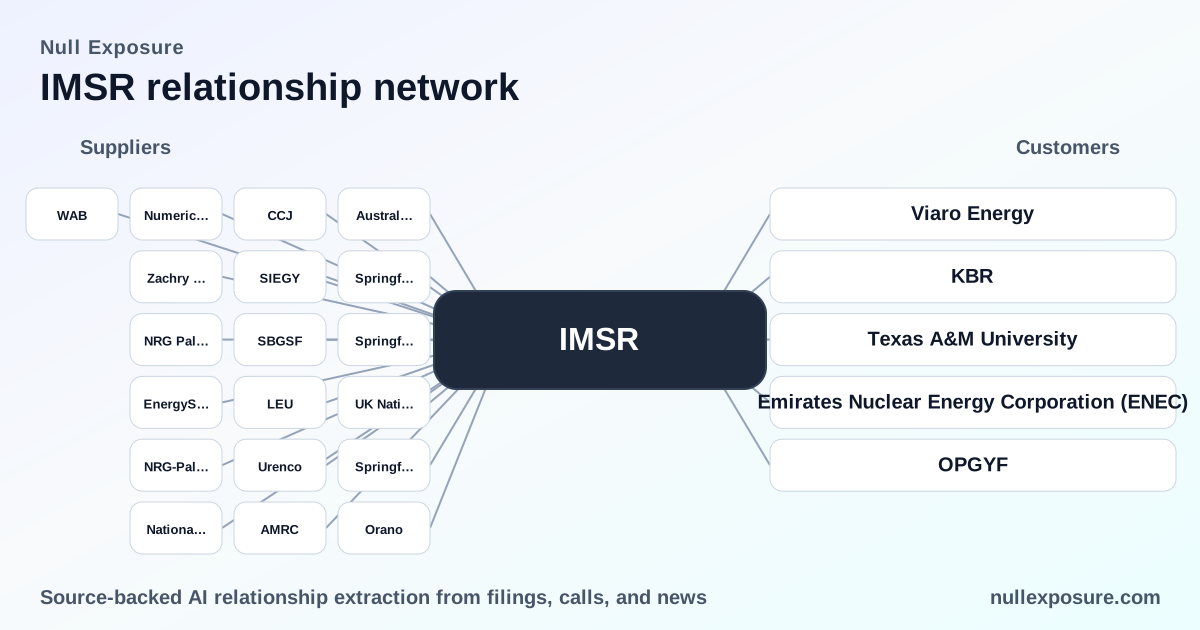
Terrestrial Energy (IMSR) — customer relationships that define early commercial traction
Terrestrial Energy operates as a developer and licensor of the Integral Molten Salt Reactor (IMSR), monetizing through project siting, systems supply, engineering services and strategic joint ventures with host sites and energy partners. The company’s commercial model is project-driven: early revenues and de‑risking milestones come from anchor customers, MOUs and government partnerships rather than steady retail electricity sales, and its market capitalization (~$943 million as of the latest public data) reflects investor pricing of optionality around first‑of‑a‑kind deployments and licensing progress. For a concise view of how customer relationships are unfolding, visit https://nullexposure.com/.
Executive snapshot — why customer relationships matter now
Terrestrial’s customer ledger reads like a roadmap from pilot to first commercial plant. Anchor site selections and government-funded pilot projects convert R&D into visible commercial milestones, which in turn shape partner co‑investment, regulatory momentum and supply‑chain commitments. Investors should evaluate these relationships for concentration risk, timeline credibility and the degree to which partners commit capital and permits versus non‑binding letter‑of‑intent language.
Customer relationships: who is signing up (and what they mean)
- Texas A&M University / Texas A&M (RELLIS campus) — Terrestrial was selected following a competitive process to site a full‑sized commercial IMSR plant at the RELLIS campus, establishing a flagship on‑campus reference project and a pathway to grid integration in ERCOT. According to company communications and multiple press reports, this selection was announced across FY2025–FY2026 in GlobeNewswire and The Globe and Mail coverage (FY2025–FY2026).
- U.S. Department of Energy (DOE) — Terrestrial secured an agreement with DOE for Project TEFLA, a pilot production facility for IMSR fuel salt, signaling federal support for fuel qualification and early supply‑chain scale-up. The arrangement was reported in company SEC‑filing coverage and news summaries in FY2026 (Investing.com copy of filings).
- Viaro Energy — Terrestrial signed MOUs and intends to form a joint venture with Viaro Energy to deliver IMSR projects in the United Kingdom, with Viaro providing infrastructure and investment while Terrestrial leads nuclear system development. This partnership was described in industry coverage and press reports dated FY2024–FY2025 (NeutronBytes, NucNet, PowerMag).
- Emirates Nuclear Energy Corporation (ENEC) — Terrestrial executed an MOU with ENEC in December 2023 to explore IMSR deployment in the UAE, representing regulatory and market entry engagement in the Gulf region. The ENEC MOU was referenced in PowerMag reporting (FY2025).
- KBR — Terrestrial signed an agreement with engineering firm KBR to explore hydrogen and ammonia production applications for the IMSR, reflecting a strategy to expand market use‑cases beyond baseload electricity. This collaboration was publicized in trade press (ANS coverage reporting the FY2022 agreement).
- OPG / OPGYF (Ontario Power Generation) — Terrestrial was selected as one of three vendors by OPG to advance engineering and design work, positioning the IMSR as a candidate for Canadian deployment and utility‑scale project evaluation. World‑Nuclear‑News covered this vendor selection (FY2021).
- Ameresco, Inc. — Terrestrial entered a collaboration agreement with Ameresco focused on delivering customized energy solutions for data centers and industrial users, including the use of a natural‑gas energy bridge to facilitate integration and staged deployment. This commercial collaboration was announced in GlobeNewswire communications (FY2025).
What these relationships imply for investors
These partner engagements translate into four practical investment signals about Terrestrial’s operating model and risk profile.
Contracting posture — project‑first, flexible commercial structures
Terrestrial’s contracts are project and partnership oriented: selection by host sites, MOUs and DOE agreements indicate a mixture of commercial contracts, JV frameworks and government‑backed pilot agreements rather than immediate recurring utility invoices. This posture accelerates capital commitments on a per‑project basis but also concentrates execution risk into discrete milestones.
Concentration — a handful of anchors determine near‑term progress
The customer set is concentrated around a few strategic partners (Texas A&M, DOE, Viaro, ENEC, OPG, Ameresco, KBR). That concentration gives investors clarity—land a Texas A&M or DOE project and you unlock referenceability and regulatory experience—but it also creates single‑project dependency for early revenue realization.
Criticality and value capture — high strategic importance, staged monetization
IMSR deployments are strategically critical infrastructure for host customers (universities, national utilities, sovereign programs) and therefore command high value if successful. However, revenue capture will be staged: engineering/design fees, licensing milestones, JV equity and eventual plant delivery rather than immediate kilowatt‑hour sales.
Commercial maturity and execution timeline — early commercialization with regulatory ramp
The relationships reflect early commercial traction and proof‑point building rather than mature revenue streams. DOE fuel projects and the Texas A&M site selection are high‑value steps toward permitting and asset construction, but they maintain a long horizon for cash generation and require capital intensity and regulatory approvals.
Risks and key catalysts to watch
- Execution risk on first‑of‑a‑kind builds: anchor customers reduce market risk but concentrate execution risk into these initial projects.
- Regulatory milestones: NRC or equivalent foreign approvals will materially de‑risk timelines; GlobeNewswire noted Terrestrial’s regulatory progress in FY2026.
- Partner commitment depth: MOUs and selection announcements are positive signals, but investors should monitor whether partners commit balance‑sheet capital and long‑term offtake or remain in early‑stage JV/cooperation agreements.
- Diversification into industrial use‑cases: relationships with KBR and Ameresco signal deliberate efforts to commercialize hydrogen/ammonia and data‑center applications, which could broaden addressable markets if demonstrated.
Bottom line for investors
Terrestrial Energy has assembled a credible set of anchor relationships that convert technological optionality into tangible commercialization pathways. The company’s business model is intentionally project‑centric and partnership‑dependent: early wins such as Texas A&M and DOE fuel projects materially de‑risk the technology stack but leave sizeable execution and regulatory work ahead. Track partner contractual commitments, regulatory milestones, and any movement from MOUs to binding commercial agreements.
For deeper customer intelligence and to monitor relationship evolution in real time, explore the full platform at https://nullexposure.com/.
Bold customers, staged monetization and regulatory checkpoints will determine whether Terrestrial’s early traction translates into sustained revenue growth and utility‑scale deployments.