Immatics (IMTX): How partner dynamics define revenue and clinical optionality
Immatics NV develops T-cell receptor (TCR)‑based cancer immunotherapies and monetizes through strategic collaborations, milestone payments and cost‑reimbursement arrangements with large biopharma partners while continuing internally funded clinical programs. Revenue is lumpy and partnership-driven — milestone receipts and contract terminations have produced material one‑time swings, while development cost‑reimbursement from partners funds near‑term programs. For investors evaluating customer relationships, the commercial story is as much about counterparty concentration and contract structure as it is about the science.
Learn more about how we track partner exposures at Null Exposure: https://nullexposure.com/
Quick financial context that frames partner risk
Immatics is a clinical‑stage biotech: Revenue TTM roughly $48.3M against operating losses, and market cap near $1.5B. The company’s top‑line moves are dominated by transactional items — milestone payments, accelerated recognition of deferred revenue tied to partner actions, and reimbursed trial costs. That pattern creates two practical investor realities: (1) short‑term cash and revenue volatility tied to a few large collaborators, and (2) research and development progress that is partially de‑risked by third‑party funding.
Relationships that move the P&L and clinical narrative
Bristol Myers Squibb — a material legacy collaborator and revenue driver
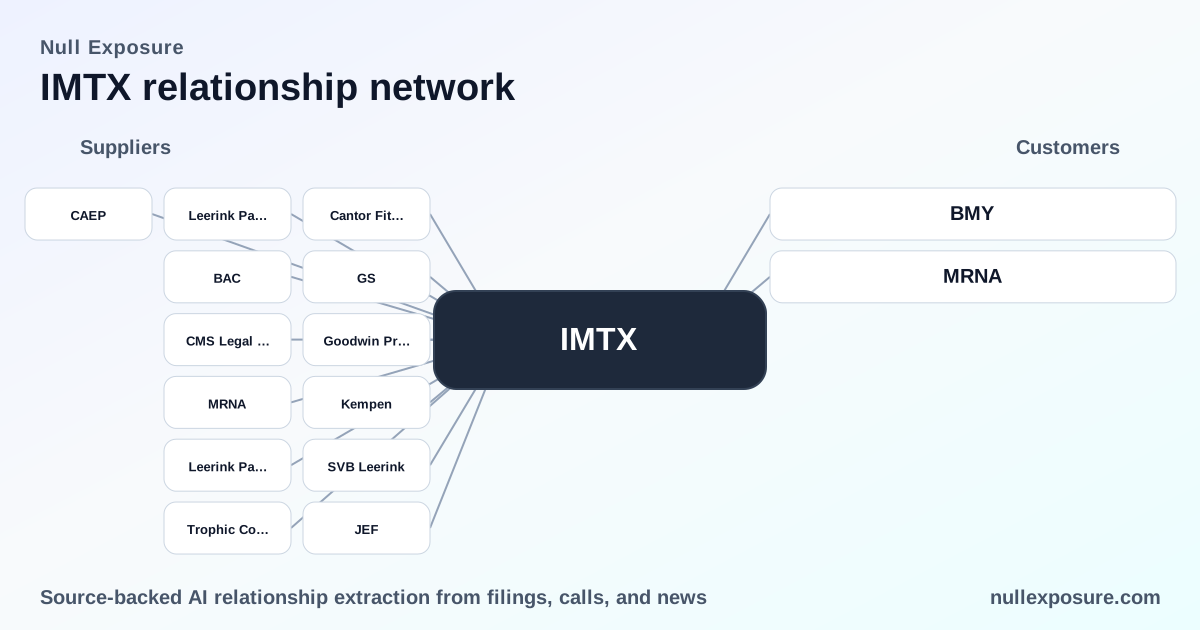
Bristol Myers Squibb (BMS) terminated the IMA401 and ACTallo® collaborations, and that termination produced a one‑time, non‑cash acceleration of deferred revenue recognized in the 2024 fiscal year, affecting Immatics’ reported revenues across FY2024–FY2026 disclosures. According to Immatics’ financial updates cited on GlobeNewswire and InvestingNews, the termination of those collaborations explains the large one‑time revenue entries in the company’s 2024 and subsequent reporting periods (disclosed in FY2025/FY2026 updates). (GlobeNewswire press release, March 2026; InvestingNews coverage, March 2026)
Moderna — milestone plus fully reimbursed Phase 1 trial costs
Moderna expanded its mRNA‑based TCER® collaboration with Immatics in December 2025, triggering a $5 million milestone paid in January 2026, and agreed that Immatics will run the Phase 1 trial with all associated costs fully reimbursed by Moderna. This arrangement supplies both a near‑term cash inflow and a de‑risked, partner‑funded clinical activity for Immatics’ TCER platform. (Immatics business update on GlobeNewswire, March 5, 2026; InvestingNews reporting, March 10, 2026)
Hopp Children’s Cancer Center Heidelberg (KiTZ) — academic/clinical use of Immatics TCRs
An individual experimental treatment at the Hopp Children’s Cancer Center Heidelberg used a PRAME‑directed TCR engineered by Immatics in a pediatric patient, an episode highlighted in recent press coverage. The center’s use of Immatics’ engineered TCRs underscores clinical access pathways outside of large pharma collaborations, with potential reputational and translational value when positive outcomes are reported. (GlobeNewswire press release, April 17, 2026; InvestingNews coverage, May 2026)
Heidelberg University Hospital (UKHD) — clinical partner in individual treatment attempt
Heidelberg University Hospital participated alongside KiTZ in the same experimental PRAME‑directed TCR treatment, which the company publicized as an individual treatment attempt using Immatics‑provided TCRs. This hospital relationship demonstrates Immatics’ engagement with major clinical centers in Europe that can generate real‑world clinical signals and case‑level evidence supporting its platform. (GlobeNewswire press release, April 17, 2026; InvestingNews coverage, May 2026)
What these relationships imply about Immatics’ operating model
- Contracting posture: Immatics operates primarily through structured collaboration agreements with milestone and reimbursement mechanics rather than volume product sales; contracts are designed to transfer development costs to partners while preserving upside via milestones. This is a deliberate commercial posture for a clinical‑stage developer.
- Concentration: A small set of large partners (notably BMS historically and Moderna currently) exert outsized influence on reported revenue and cash flows, creating high concentration risk in short‑term financials.
- Criticality: Partners are strategically critical: termination of a single large collaboration produced material one‑time accounting effects (BMS), while expansion by a partner (Moderna) directly funds and advances clinical work. These are high‑impact, relationship‑level events for the company’s financial and development trajectories.
- Maturity: The business model is still in a development phase with transactional monetization (milestones, reimbursements) rather than recurring commercial revenue; long‑term royalties or product sales are potential but not yet realized.
Note: there are no explicit contractual constraints or restrictions provided in the source payload beyond the transaction descriptions; the operating model signals above are company‑level interpretations drawn from reported partner events.
Key investment takeaways and risk profile
- Revenue will remain lumpy and event‑driven. Investors should underwrite Immatics’ top line for milestone timing and the possibility of additional one‑time accounting items driven by partner decisions. The BMS termination is a recent, concrete example.
- Partnerships de‑risk development but concentrate counterparty exposure. Moderna’s cost‑reimbursed Phase 1 trial materially lowers near‑term cash burn risk, but the reliance on a few collaborators increases single‑counterparty operational leverage.
- Clinical partnerships with leading hospitals create optionality beyond pharma deals. Use of Immatics’ PRAME TCRs at prominent centers like KiTZ and UKHD provides clinical evidence and visibility that can catalyze broader adoption or new deals.
- Monitor deal cadence and milestone schedules. The next meaningful valuation drivers will be additional milestones, the outcome of partner‑funded trials, and any new collaborations or license events.
How to watch the partnership story
- Track Immatics’ quarterly and annual updates for milestone receipts, deferred revenue movements and explicit reimbursement commitments (past GlobeNewswire releases highlighted these items for FY2025–FY2026).
- Monitor Moderna program milestones and trial start reporting; those items impact both cash flow (reimbursements) and development progress.
- Watch clinical disclosures from KiTZ/UKHD for single‑patient or investigator‑initiated results that could influence regulatory or partnership momentum.
If you want a concise partner exposure map and scheduled milestone calendar for Immatics, see our analytical coverage and partner tracking at Null Exposure: https://nullexposure.com/
Immatics’ value hinges on execution across a small number of high‑impact relationships: one partner can drive cash and one partner can change the development risk profile. Investors and operators should evaluate both the scientific readouts and the contractual mechanics that govern cash flow recognition and cost allocation.