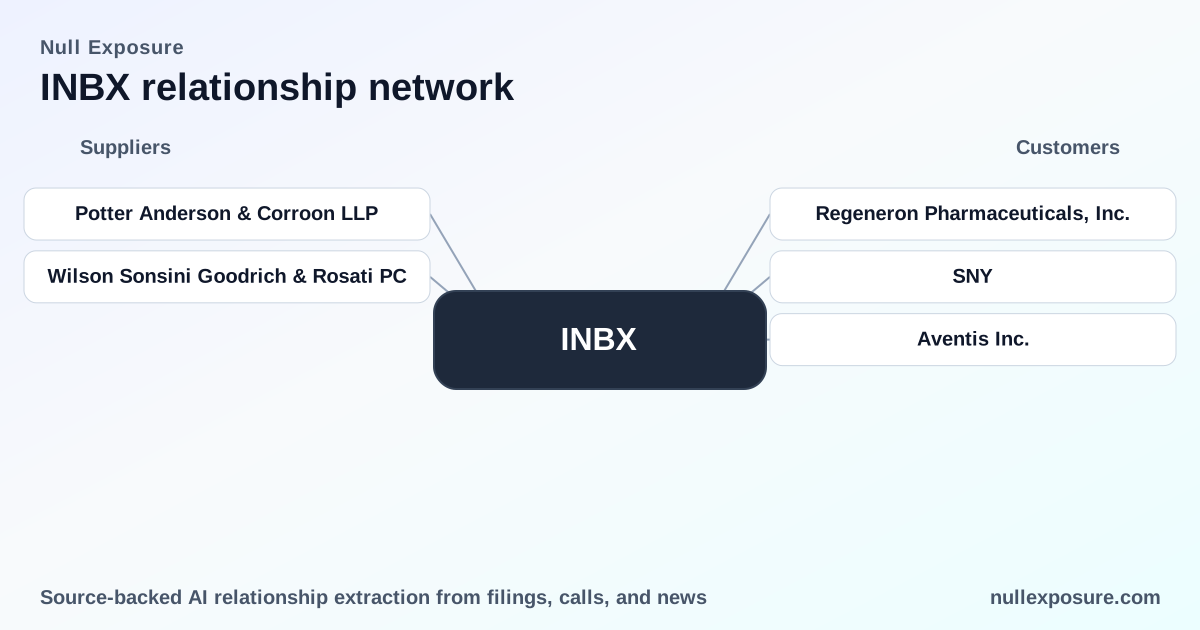
INBX: Customer relationships that define a clinical‑stage biotech’s commercial runway
Inhibrx Biosciences (INBX) is a clinical‑stage biotechnology company that monetizes primarily through licensing, collaboration agreements, grant funding and selective asset transactions rather than product sales. The firm’s economic profile is shaped by a large upfront asset sale to Sanofi, recurring license fees (notably from Scithera) and active partnership discussions with major pharma players that could generate milestone and royalty streams. For a deeper look at how these relationships map to valuation and risk, see NullExposure: https://nullexposure.com/
Why partner lists matter for clinical‑stage companies
For a company without marketed products, partner relationships are the core revenue engine and de‑risking mechanism. Inhibrx’s public record shows a mix of one definitive asset sale, ongoing license fee receipts, and continuing negotiations with multiple large pharma firms — a commercial posture that converts clinical upside into near‑term cash while preserving upside through retained programs.
Regeneron Pharmaceuticals, Inc.
Inhibrx’s FY2024 Form 10‑K lists Regeneron in the context of the company’s collaborative research and license arrangements, reflecting the firm’s reliance on partner‑driven R&D and licensing income streams. According to Inhibrx’s FY2024 10‑K filing, the company has historically generated revenue from license and collaboration agreements and lists collaborative partners such as Regeneron in that framework (inbx‑2024‑12‑31).
Takeaway: Regeneron represents the type of collaboration that supports Inhibrx’s R&D financing and technical development.
Sanofi S.A. (SNY)
Sanofi executed the most consequential transaction on Inhibrx’s record: the acquisition of the INBRX‑101 program and related consideration. Multiple press accounts describe Sanofi’s purchase at $30 per share in cash (about $1.7bn equity) with up‑to‑$2.2bn aggregate value, and note that Sanofi reimbursed approximately $68m of transaction costs; Inhibrx also undertook internal restructuring prior to the sale (ContractPharma; BioSpace; media coverage, March–May 2026). BioSpace and company filings describe a spin‑off and internal transfers that preceded the INBRX‑101 sale, leaving Inhibrx with remaining clinical assets like ozekibart.
Takeaway: The Sanofi transaction is a transformational monetization event that materially improved Inhibrx’s cash and repositioned the company as a smaller, program‑focused clinical player.
Ono Pharmaceutical (OPHLF)
Ono is cited among global pharmaceutical companies engaged in negotiations with Inhibrx for a potential cancer drug agreement that press reports value in the high‑single to low‑double digit billions range. Intellectia.ai and other media coverage (May 2026) list Ono as an interested counterparty in discussions for a potential large‑value oncology deal.
Takeaway: Ono’s inclusion signals credible global interest for Inhibrx programs in Asia, reinforcing the commercial option value of the pipeline.
Merck (MRK)
Merck is named alongside Ono in media reporting of active negotiations with Inhibrx for an oncology asset deal described as potentially “over $8 billion” in headline valuation terms (news coverage, May 2026). That interest from a top‑tier pharma buyer underscores the strategic competitiveness of Inhibrx’s clinical assets.
Takeaway: Engagement with Merck elevates the strategic leverage and potential upside for milestone‑and‑royalty structures.
Scithera
Public filings and subsequent news coverage indicate that Scithera generated the majority of Inhibrx’s reported revenue for the year, with Inhibrx recording roughly $1.3m in revenue driven primarily by a Scithera license fee (TradingView summary of company disclosures / FY2025–FY2026 results). This shows the firm’s present revenue base is concentrated and transactional.
Takeaway: Current revenue is immaterial relative to market cap but important as evidence of license monetization capacity.
Aventis Inc.
Aventis Inc., referenced in the same transaction context as Sanofi, is identified as the subsidiary that will acquire assets and liabilities associated with INBRX‑101 under the definitive agreement; corporate notices note that the acquirer structure involved an entity named Aventis (ContractPharma, March 2026). Reporting also references reimbursement of transaction costs tied to the acquisition.
Takeaway: The use of a Sanofi subsidiary for the acquisition is a deal‑structuring detail that investors should note for legal and payment‑flow clarity.
Operating and business‑model constraints investors should factor
The public relationship record and financials combine into a clear set of company‑level signals about how Inhibrx operates and how it will generate value going forward.
- Contracting posture: Inhibrx pursues partnerships, licensing and asset sales as primary commercialization mechanisms rather than internal commercialization, evidenced by the INBRX‑101 sale and ongoing pharma negotiations.
- Revenue concentration: Reported revenue is highly concentrated — the fiscal year revenue (~$1.3m) was driven primarily by a single license fee (Scithera), so revenue volatility is high and dependent on discrete transactions.
- Criticality of relationships: The sale to Sanofi and active talks with Merck/Ono demonstrate that partner relationships are critical to delivering material value and liquidity events for investors.
- Maturity and balance‑sheet profile: Inhibrx is clinical‑stage with negative operating margins and a net loss per share in the high single digits (company filings show EPS around -8.98 and RevenueTTM $1.3m), meaning cash injections from partners and milestone payments govern near‑term survivability.
- Concentration of strategic exits: The Sanofi transaction illustrates a willingness to monetize flagship programs via sale, which de‑risks some clinical outcomes while reducing potential future internal upside.
Risk highlight: Dependency on large, discrete transactions and ongoing negotiations with major pharma firms creates binary outcomes for valuation — either successful deals and milestones or extended cash burn and dilution.
For a concise dossier and tracking of partner disclosures, visit NullExposure for the raw signals and timeline: https://nullexposure.com/
Investment implications and near‑term watchlist
Investors and operators should watch three items closely:
-
Progress and announcement cadence on ongoing negotiations (Merck, Ono) that could convert pipeline value into milestone payments.
-
Any additional license fees or small deals similar to Scithera that shore up operating liquidity between large transactions.
-
Clinical readouts and regulatory milestones for remaining assets (for example, ozekibart programs) that determine the size and structure of future partner deals.
-
Positive scenario: Successful partnership deals and milestone receipts replicate or exceed the economics of the Sanofi transaction and materially de‑risk the pipeline.
-
Negative scenario: Failure to convert negotiations into deals combined with continued clinical spend would increase dilution risk given the company’s clinical‑stage financial profile.
Bottom line
Inhibrx’s customer and partner footprint tells a coherent story: value realization through targeted licensing and strategic asset sales supplemented by selective license fees and high‑value negotiations with global pharma. The Sanofi acquisition is the dominant monetization event to date, Scithera provides a modest license revenue precedent, and active interest from Merck and Ono positions the remaining programs for potential transformational deals. Investors should treat partner outcomes as the primary driver of near‑term valuation swings and monitor deal‑specific disclosures closely.