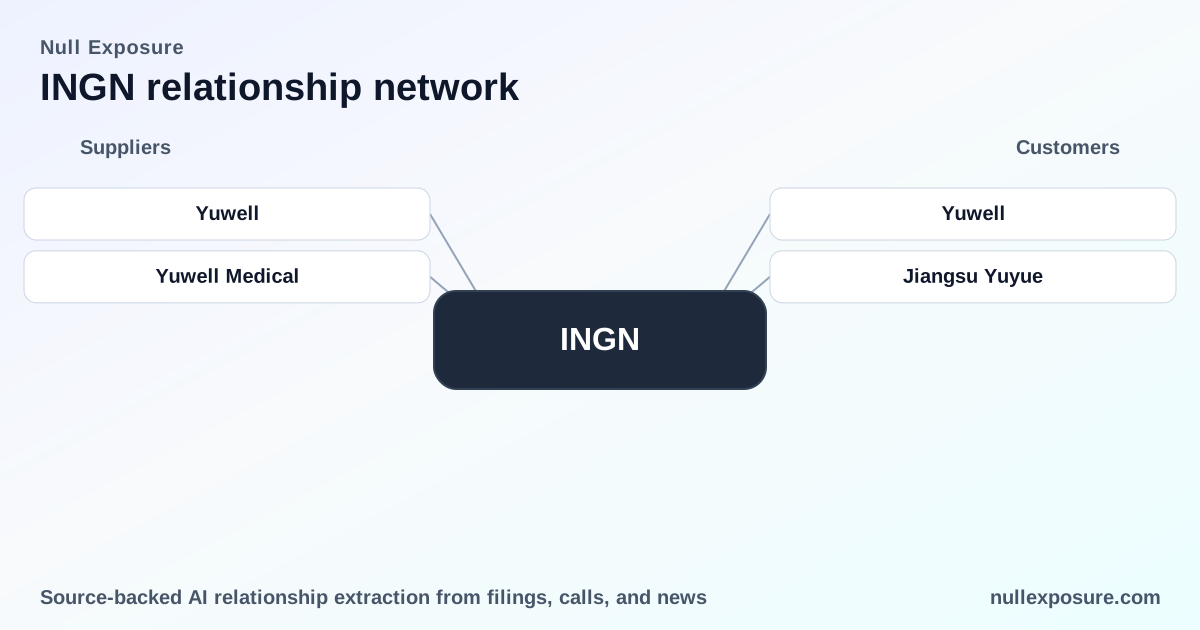
Inogen’s Customer Map: How partnerships in China and payor mix shape revenue risk and growth
Inogen sells portable oxygen concentrators (POCs) directly to consumers, to home medical equipment (HME) providers and distributors, and via rentals and private‑label arrangements — monetizing through device sales, rentals and aftermarket consumables. The company’s commercial strategy pairs direct DTC channels in the U.S. with distributor and private‑label partnerships internationally, while government payors (Medicare/Medicaid) and HME partners underpin a durable but concentrated revenue base. This article dissects the customer relationships disclosed in recent coverage, maps how they interact with Inogen’s operating constraints, and identifies the risk/reward implications for investors and operators.
For a concise overview of Inogen’s commercial footprint, visit https://nullexposure.com/.
Why the China partnerships matter now
Inogen is executing a two‑pronged international push: preserve stable rental and DTC revenue in North America while accelerating market entry into China through strategic distribution partners. These China arrangements are not marketing pilots — they represent an explicit route to scale in “a large and fast‑growing respiratory market,” and they are being positioned as margin‑accretive to Inogen’s business model.
Key takeaway: China partners expand addressable market and reduce unit cost exposure if distribution scales; however, they introduce execution and regulatory complexity beyond Inogen’s established North American channels.
Every disclosed customer relationship (concise, sourced)
Yuwell — China distribution under the Inogen brand
Inogen has agreed for Yuwell to distribute Inogen portable oxygen concentrators under the Inogen brand in China, positioning the partner as a channel to accelerate market entry and scale sales in a large respiratory market (reported March 2026). A Home Medical Equipment News article noted that Inogen expects a positive margin impact from the Yuwell collaboration as distribution volume ramps. (Home Medical Equipment News, March 2026 — https://www.hmenews.com/article/inogen-expects-positive-margin-impact-from-yuwell)
Jiangsu Yuyue — strategic partnership to strengthen product and distribution
Inogen’s relationship with Jiangsu Yuyue is described as strategic: it strengthens product development capabilities, augments global distribution and expedites entry into China, supporting Inogen’s long‑term growth thesis. This partnership is referenced alongside Yuwell in analyst and financial media pieces that highlight the China expansion narrative (TradingView / Zacks and Finviz coverage, March 2026). (TradingView/Zacks and Finviz reporting, March 2026 — https://www.tradingview.com/news/zacks:ce964381b094b:0-here-s-why-you-should-add-inogen-stock-to-your-portfolio-now/, https://finviz.com/news/295801/heres-why-you-should-add-inogen-stock-to-your-portfolio-now)
Note on overlapping press: multiple outlets repeated the same strategic framing for both Yuwell and Jiangsu Yuyue in March 2026, underscoring analyst focus on China partnerships as a near‑term growth vector. (TradingView and Finviz, March 2026)
What the company‑level constraints tell investors
The relationship constraints and company disclosures create a consistent portrait of Inogen’s operating model:
-
Payor concentration and counterparty mix: Government payors are a meaningful and stable source of rental revenue — Medicare reimbursement programs accounted for more than half of rental revenue in 2024 and represented a meaningful portion of total revenue. Inogen operates as an in‑network provider with contracts across Medicare, Medicaid and government/private payors, making reimbursement policy and regulatory change a core revenue risk.
-
Route to market is mixed and concentrated: International growth relies on distributors and large “house” accounts (gas companies, home oxygen providers) as well as private‑label partners; the company also sells directly to individual consumers through DTC channels and physician referrals. This multi‑channel model reduces single‑channel dependency but concentrates risk where major HME partners and government payors control access to end patients.
-
Global footprint with regional revenue balance: Approximately 35% of revenue in 2024 came from outside the U.S., with substantial invoicing in Euros for non‑U.S. sales, indicating meaningful exposure to EMEA FX and channel dynamics alongside the newly emphasized China relationships.
-
Contracting posture and customer roles: Inogen extends unsecured credit and varied terms to distributors, HMEs and resellers, which introduces credit and working capital risk tied to partner solvency and payment patterns. The company acts as both seller (direct sales) and supplier to resellers and distributors, making channel health vital for short‑term cash flow and long‑term unit economics.
These constraints are company‑level signals of operating characteristics — they are not tied to any single partner unless the original excerpt names that partner explicitly.
Commercial concentration and maturity: what investors should watch
Inogen’s revenue mix and fiscal profile (2025 latest quarter data: ~$348.7M revenue TTM, negative EBITDA, and negative EPS) indicate a company still investing to grow while managing margin pressures. Two structural themes warrant attention:
-
Reimbursement sensitivity: Rental income is sticky but policy‑sensitive; shifts in Medicare/Medicaid or payer adjudication can materially affect profitability and cash flow.
-
Channel execution risk in China: Partners like Yuwell and Jiangsu Yuyue deliver reach and local capability, but success depends on regulatory approvals, local distribution execution and pricing discipline.
Tactical implications for operators and investors
-
Prioritize monitoring operational KPIs tied to partners: shipment volumes to Yuwell/Jiangsu Yuyue, regional ASPs, warranty and after‑sales support costs, and sequential international revenue growth reported in quarterly commentary.
-
Stress test reimbursement scenarios: model revenue under alternative Medicare reimbursement outcomes and variable rental penetration, since rentals historically drive a disproportionate share of margin.
-
Watch credit exposure and receivable trends: Inogen sells on unsecured terms to HMEs/distributors; rising DSO or bad debt provisions would be an early warning sign of channel stress.
For a concise corporate and relationship monitoring checklist, visit https://nullexposure.com/.
Bottom line: growth vector with identifiable execution risks
Inogen’s strategic use of China distribution partners — Yuwell and Jiangsu Yuyue — is a clear growth vector intended to expand addressable market and improve margins. At the same time, reimbursement concentration, distributor credit exposure, and the operational complexity of new international channels are the principal execution risks. For investors, the decision is straightforward: the partnership strategy can materially re‑rate revenue growth if execution is clean and payor dynamics remain stable; conversely, adverse policy or channel execution failure would compress cash flow and extend the path to profitability.
Key near‑term indicators to watch: quarterly international revenue cadence, partner shipment disclosures, Medicare rental reimbursement updates, and changes in receivables or credit reserves.